A, An, The: English Articles for Kids
English uses three articles: a, an, and the. The first two, a and an, are indefinite and introduce any single countable noun, while the is definite and marks one specific object both speaker and listener already picture. Mastering English articles for kids early builds the grammar backbone of nearly every sentence, because an article sits in front of most nouns a child names.
📥 A, An, The Article Practice Pack
Kid-friendly printable practice for choosing the right English article before nouns.
Leave your email — we'll send the PDF to your inbox.No spam — the PDF plus one short reminder. Unsubscribe anytime.
Why English Articles for Kids Matter So Much
Articles rank among the most frequent terms in the language. The definite article the tops every English frequency list, and a sits inside the top ten. A young learner who skips these articles produces "I want apple" rather than "I want an apple," a grammar gap teachers notice instantly during reading aloud.
Across LearnLink lessons with 4,000+ families in 100+ countries, our tutors track one clear pattern: children who lock in English articles for kids early read aloud more fluently, because they no longer hesitate before each noun. Confident article habits also reinforce later grammar, much as steady verb to be practice reinforces complete sentences.
Data current as of July 2026.
The Grammar Rules Behind a, an, and The
Every article answers one grammar question: is the noun any member of a group, or one specific item? Indefinite a and an introduce a fresh, unidentified item. Definite the then takes over once that item becomes specific or returns for a second mention.
Choosing Between a and An
Pronunciation decides this pair, not spelling. Pick a before a consonant sound and an before a vowel sound. So a child writes "a cat," "a dog," and "a yellow ball," yet "an egg," "an orange," and "an hour" (the silent h leaves "hour" opening on a vowel). The British Council grammar guides reinforce this same vowel rule for young learners (Cambridge English Grammar).
Knowing When to Use The
Definite the fits whenever the noun is already clear. Three signals mark something as specific: a previous mention ("I spotted a fox; the fox looked red"), a one-of-a-kind object ("the sun," "the moon"), or a context that pins it down ("pass the salt" at dinner). Unique landmarks and superlatives also demand the, as in "the tallest tower." That same definite-versus-indefinite logic returns in topics like comparatives and superlatives for kids.
Spotting the Zero Article
Sometimes the correct grammar choice is no article whatsoever, the so-called zero article. Plurals and uncountable nouns in a general meaning stay bare: "Cats purr," "Water flows," "Children adore games." A learner who already handles plurals confidently, as kids do after solid animal vocabulary for kids, absorbs this exception fast.
How to Teach English Articles for Kids Step by Step
A tight teaching order keeps each lesson short. Every stage introduces one grammar idea, so a child never juggles all three articles at once.
- Name single objects: label real items with a and an ("a spoon," "an egg"), holding each object as the article links to something concrete.
- Sort by sound: split ten toys into a vowel-sound group and a consonant-sound group. Pronunciation, never the first letter, sorts the toys.
- Introduce the through story: narrate two lines, "I found a shell; the shell glowed pink," showing how a second mention flips the article.
- Hunt bare nouns: read plural sentences and let the child judge whether any article belongs.
- Blend all three: ask the child to describe a bedroom aloud, correcting gently rather than halting the flow.
This input-first, production-later sequence matches the method our tutors apply to other tricky grammar, including teaching irregular verbs to kids, and it suits articles equally well.
Common Article Mistakes Children Make
Most errors cluster into four grammar slips. The comparison below pairs each wrong version with its correction, so a child sees and copies the fix at a glance.
Practice Activities for a, an, and The
Brief daily drills outperform one long weekly session. The three exercises beneath progress from controlled gaps toward free speech, so a child gains confidence stage by stage. Question forms sharpen these tasks, which makes a quick refresher on question types in English for kids a natural companion.
🔤 Activity: Fill each gap with a, an, or the.
1. I spotted ______ owl inside the oak.
2. Please hand me ______ atlas on the shelf.
3. She opened ______ umbrella when rain fell.
4. We admired ______ sunset above the valley.
Answers: an, the, an, the.
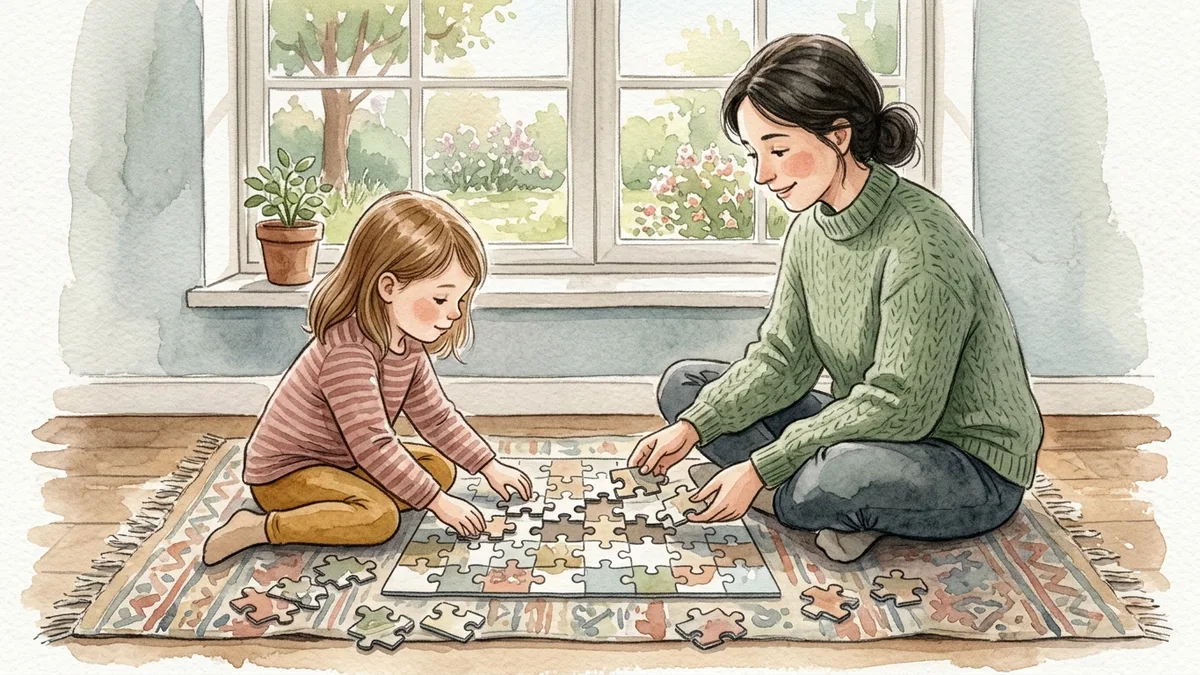
🔤 Activity: Use the picture above as a prompt and narrate the scene.
1. Build three sentences about whatever appears.
2. Choose a or an for a fresh noun and the for any noun repeated twice.
3. Read each sentence aloud and double-check every article.
🔤 Activity: Write original sentences from daily life.
1. Name three objects on the desk with a or an.
2. Choose one object again, now naming it with the.
3. Describe a one-of-a-kind object nearby, such as the sky or the ceiling.
How Do Articles Connect with Other Grammar?
Articles seldom stand alone inside a phrase. After a, an, and the feel automatic, the same phrases happily carry possessive adjectives for kids ("my dog," "her book") plus helper verbs such as modal verbs for kids ("I can grip the cup"). Even describing routines through adverbs of frequency for kids leans on confident English articles for kids inside each clause.
Parents of preschoolers frequently ask where articles belong in a beginner roadmap. A practical sequence of first grammar steps appears in our guide on how to teach English to a 5 year old, where articles arrive right after a child's first nouns.
Frequently Asked Questions About English Articles
What is the difference between a and an?
Both indefinite articles mean "one" and introduce a non-specific noun, yet pronunciation splits them. Choose a before a consonant sound ("a book") and an before a vowel sound ("an egg"). The opening sound of the next word rules the decision, which is why "an hour" wins despite the written h.
When should a child use the instead of a or an?
Definite the fits when the noun turns specific or already familiar. That happens after a first mention, with a unique object like the moon, or inside a setting that pins it down, such as the door of this room. Whenever the listener cannot yet identify which one, indefinite a or an stays correct.
At what age can kids start learning a, an, and the?
Children can begin English articles for kids around ages four to five, the moment they label single objects by name. Early practice stays playful, anchored to toys and pictures rather than formal grammar rules. By ages eight to ten, most learners explain the indefinite-versus-definite contrast themselves and apply it accurately in writing.
Bringing the Three Articles Together
These three tiny articles shape almost every sentence a child speaks, so confident English articles for kids pay off across all of grammar. With a clear order, daily examples, and gentle correction, a, an, and the turn automatic well before formal lessons begin. At LearnLink, our tutors fold article practice into live conversation, so each rule sticks through steady use, not memorisation.
Stay updated on our latest tips and resources by following us on Instagram LearnLink.
If your child needs steady speaking practice, start small. Choose a trial lesson.