English Airport Vocabulary for Kids

English Airport Vocabulary for Kids: Words and Activities covers travel words, short phrases, and games for each airport stage. Children need enough language to recognise signs, follow instructions, ask for help, and anticipate the next step. Choose words for your child’s age and travel experience, then practise with pictures, movement, and short role-plays.
📥 Airport Adventure Practice Pack
Learn useful airport words, practise travel phrases, and fix common mistakes.
Leave your email — we'll send the PDF to your inbox.No spam — the PDF plus one short reminder. Unsubscribe anytime.
Essential Words for Air Travel
Teach airport words in journey order: enter the terminal, check in, pass through security, board the plane, and collect a suitcase. The sequence gives each word context.
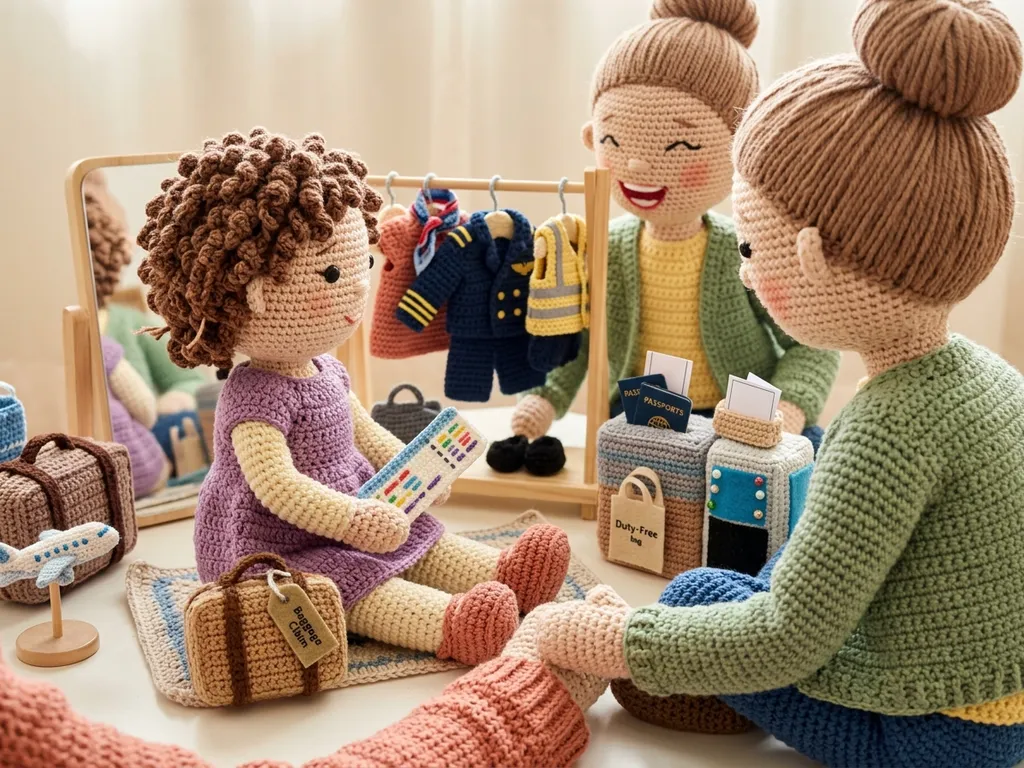
The English Airport Vocabulary for Kids: Words and Activities set works best when children pair nouns with actions: show a passport, put a bag in a tray, and find a gate. Give each word a visible meaning with a toy plane, small suitcase, or printed pictures.
Useful Phrases in Context
English Airport Vocabulary for Kids: Words and Activities turns single words into reusable sentences. Pair each question with its likely answer so children practise speaking and understanding airport staff.
- “Where is the check-in desk?”
- “May I see your passport?” — “Here it is.”
- “Which gate do we need?” — “Gate fourteen.”
- “Is the flight on time?” — “It is delayed.”
- “Can I have a window seat, please?”
- “Where should I put my bag?”
- “Please fasten your seat belt.”
- “Where is the baggage claim?”
Practise two-line exchanges before a full airport role-play. One person is a passenger and the other an airport worker: “Can I see your boarding pass?” “Yes, here you are.” Older children can solve a changed gate, delayed flight, or missing suitcase. Keep pretend documents free of real passport numbers, addresses, and private details.
Activities That Fit Each Age
Adapt practice by age. Younger children learn through objects and movement. Primary-age learners can follow a journey sequence; teenagers can solve realistic travel problems.
Keep English Airport Vocabulary for Kids: Words and Activities playful without making older learners’ language babyish. A nine-year-old may enjoy running a check-in desk; a fourteen-year-old may prefer planning an international connection. Multilingual children can compare terms across languages, then complete the task in English.
Simple Ways to Practise at Home
Practise briefly across several days. On the first day, introduce pictures and pronounce each word. On the next day, hide the labels for recall. Later, mix the cards and arrange the airport stages in order.
Use an airline itinerary, airport map, or sample boarding pass. Ask: “What is the flight number?”, “Where is the gate?”, or “Is this an arrival or a departure?” Cover private booking details on genuine documents.
Pack, Check in, and Board
Place a bag, pretend passport, boarding pass, and three gate signs around the room. Your child packs one item, checks in, passes through pretend security, and finds the correct gate. Speak English: “Put the bag in the tray,” “Show your boarding pass,” and “Go to gate three.” Swap roles for the second round.
Common Mistakes and Clear Fixes
Avoid teaching the whole word set at once. Start with passport, suitcase, boarding pass, gate, seat, and baggage claim. Add less urgent terms after your child uses the first group without prompts. Correct errors by modelling the phrase instead of interrupting every sentence.
- If your child says “two baggages,” model “two bags” or “two pieces of baggage.” Both baggage and luggage are normally uncountable.
- Keep ticket and boarding pass separate. A ticket records the booking; a boarding pass lets the passenger board a particular flight.
- Teach “The flight is delayed” as the standard airport phrase. “The flight is late” is understandable, but it is less common on official notices.
- Accept useful regional pairs: queue and line, hand luggage and carry-on, toilet and restroom.
Do not require one national accent. International airports feature many forms of English. Recognisable words, polite questions, numbers, and careful listening matter more than copying one accent. Teach: “Could you say that again, please?” for speech that feels too fast.
- Try naming five airport objects with children aged six to nine today.
- Practice correcting three common pronunciation mistakes using slow, clear repetition.
- Use picture cards to review ten words before reading an airport story.
- Role-play check-in with one parent, one child, and two toy suitcases.
- Repeat new airport words during a five-minute bedtime quiz.
When a word has several meanings or pronunciations, Cambridge Dictionary is a useful check before turning it into child-friendly examples.
Frequently Asked Questions
How Many Airport Words Should My Child Learn at One Time?
Use English Airport Vocabulary for Kids: Words and Activities as a menu. A younger beginner can start with five to eight words from one stage, such as check-in. An older or experienced learner may handle more. Add language after your child recognises the words and uses some without looking.
Can We Practise Airport English If We Are Not Travelling Soon?
Yes. Pretend travel gives words purpose without real-journey pressure. Turn a room into a terminal, make a boarding pass, and place gate signs on doors. Using pictures, your child can explain the sequence: check in, pass through security, board, fly, land, and collect baggage.
Should My Child Learn British or American Airport Terms?
Teach the term your family will probably hear, then introduce regional alternatives for recognition. A child might say queue but understand line, or use hand luggage while recognising carry-on. Signs and staff vary by country, so flexible understanding matters more than choosing one variety.
How Can Airport Vocabulary Help a Child Who Feels Nervous About Flying?
Knowing the sequence and instructions makes an unfamiliar trip more predictable, though vocabulary cannot remove every fear. Rehearse sights and speech from check-in, security, the gate, and the plane. Teach two help phrases: “Where do we go next?” and “Could you help me, please?”
A short one-to-one lesson can show what level and pace fit your child — book a trial English lesson.
Stay updated on our latest tips and resources by following us on Instagram LearnLink.