Clothing Names in English for Kids
Children can start with 20 to 30 clothing words in English before grammar rules: shirt, shoes, coat, dress, hat, socks, plus phrases for daily routines. Clothing Names in English for Kids: Words and Activities for Children matters because children meet clothes while getting dressed, packing, talking about weather, or describing pictures. For a 5-year-old, “Put on your shoes” is enough. For a 12-year-old, “I need a warm jacket because it is windy” builds fuller speech. The goal is not a long list. The goal is practical words in natural sentences.
📥 Clothing Names in English for Kids: Practice Sheet
Everyday clothing words and useful phrases for independent practice
Leave your email — we'll send the PDF to your inbox.No spam — the PDF plus one short reminder. Unsubscribe anytime.
Core Clothing Words to Teach First
Start with these core words and short examples before adding more specific vocabulary.
I wear a T-shirt on warm days.
He wears a blue shirt for school.
These trousers are too long.
Shorts are good for hot weather.
She chooses a red dress.
Put on clean socks.
Tie your shoes before you go out.
A hat keeps your head warm.
Wear a coat when it is cold.
Take a jacket for the evening.
The scarf goes around your neck.
Gloves keep your hands warm.
Start with clothes your child can see, touch, and wear. First words include T-shirt, shirt, sweater, jacket, coat, dress, skirt, trousers, shorts, jeans, socks, shoes, boots, hat, cap, scarf, and gloves. Add pajamas, swimsuit, uniform, and underwear when they fit family routines and your child’s age.
Teach clothing in small groups. One lesson can cover “things for feet”: socks, shoes, boots, sandals, slippers. Another can cover “warm clothes”: coat, sweater, scarf, gloves, hat. Clothing Names in English for Kids: Words and Activities for Children works when each new word has a real object, a picture, and one sentence.
Phrases Children Can Use at Home
Words become practical when children act on them. Start with short phrases: “Put on your socks,” “Take off your jacket,” “Where is your hat?” and “These are my shoes.” Repeat them during normal routines.
Older children can add size, color, season, and opinion: “This hoodie is too warm,” “I need clean socks,” or “My school uniform is in my bag.” In LearnLink lessons, tutors build vocabulary through actions, pictures, and short choices before longer speech.
Examples in Context
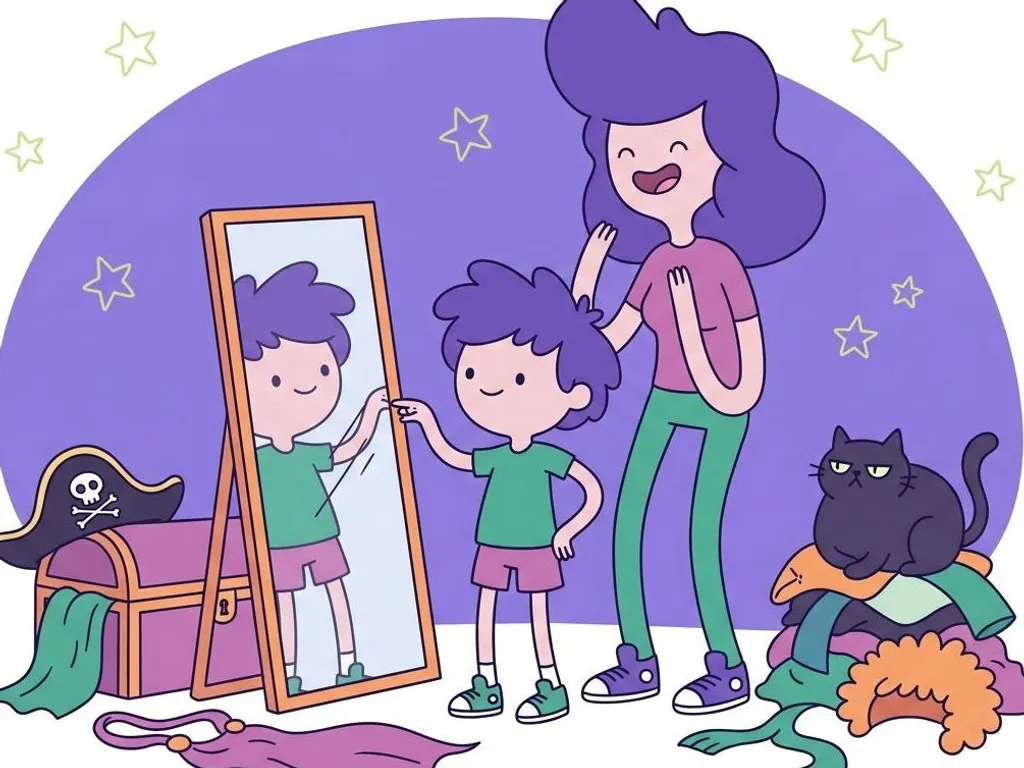
Use clothing words with color and weather. A younger child can say, “red shoes,” “green dress,” or “yellow hat.” A child ready for full sentences can say, “I wear boots when it rains” or “My brother has a black jacket.” Clothing Names in English for Kids: Words and Activities for Children should feel close to daily life, not like a spelling test.
Pictures help children notice singular and plural forms. Say “a sock” for one item, but “socks” when we wear them. Say “a shoe” for one shoe, but “shoes” for the pair. Trousers, shorts, jeans, and pajamas are plural in English: “My jeans are blue,” not “My jeans is blue.”
Try It: The Getting-dressed Sentence
Lay out four items: a T-shirt, socks, shoes, and a jacket. Ask your child to point and say one sentence for each item: “I put on my T-shirt,” “I put on my socks,” “I put on my shoes,” and “I put on my jacket.” Then change the order and let your child give you the instructions.
Activities by Age
For ages 4 to 6, keep the task physical. Ask your child to find a hat, touch the shoes, or choose the red socks. Use two choices first: “Do you want the blue T-shirt or the green T-shirt?” The child gets a sentence frame and a reason to answer.
For ages 7 to 10, sorting games work well. Children can sort clothes by season, body part, color, or place: school, beach, bedtime, sport. They can pack a pretend suitcase and explain each choice: “I need a swimsuit for the beach” or “I need boots because it is cold.”
For ages 11 to 15, make clothing vocabulary part of opinion and description. Ask learners to describe a character’s outfit, compare two styles, or plan clothes for a trip with mixed weather. Clothing Names in English for Kids: Words and Activities for Children can grow from “hat” and “coat” into “comfortable,” “formal,” “casual,” “striped,” and “waterproof.”
Practice Ideas That Do Not Feel Like Homework
Use the laundry basket. Children can name items as they fold: “two socks,” “one shirt,” “three T-shirts.” They can sort clean clothes into family pilesAcross LearnLink lessons, our tutors help children build confident, everyday English step by step. The routine gives short repetition without a worksheet.
Use photos and drawings. Ask your child to draw a person and label five clothing items. Then ask for two sentences: “She is wearing a purple dress” and “He has black boots.” For children who like screens, pause a cartoon or family video and describe one outfit together.
Try It: Weather and Clothes
Say one weather sentence: “It is rainy,” “It is hot,” or “It is snowy.” Your child chooses three clothes for that weather and says, “I need boots, a coat, and a hat.” For older children, add a reason: “I need boots because the ground is wet.”
Common Mistakes to Watch For
The first mistake is mixing “wear” and “put on.” “Put on your coat” means start wearing it now. “I am wearing a coat” means the coat is already on the body. “Take off” is the opposite of “put on”: “Take off your shoes at the door.”
The second mistake is forgetting plural forms. Children may say “two shoe” or “my trouser is blue.” Model the correct phrase without a lecture: “Yes, two shoes” or “Your trousers are blue.” Short correction keeps speech moving and protects accuracy.
The third mistake is learning a word outside the family’s English model. “Trousers” is standard in British English; “pants” is standard in American English. Teach the word your child will hear most, then add the other as a known variant. Clothing Names in English for Kids: Words and Activities for Children should match the English your family meets in school, media, travel, and online lessons.
How to Build a Simple Weekly Plan
Use four short sessions instead of one long vocabulary lesson. On day one, teach five real items. On day two, add color: “blue jeans,” “white socks.” On day three, add actions: “put on,” “take off,” “wear.” On day four, ask your child to describe an outfit from a picture or wardrobe.
Keep review light. A child can answer while getting ready, packing a sports bag, or choosing clothes for tomorrow. Clothing Names in English for Kids: Words and Activities for Children is easier to remember when the word connects to a real need: warmth, comfort, school, sport, sleep, or play.
- Choose five clothing words and teach them with shirts, socks, and hats.
- Read one picture book, pausing to name every outfit on each page.
- Practice sorting clean laundry into tops, bottoms, shoes, and accessories.
- Use dress-up play to ask, answer, and repeat simple clothing sentences.
- Review Friday with a ten-word drawing game before planning next week.
When a word has several meanings or pronunciations, Cambridge Dictionary is a useful check before turning it into child-friendly examples.
Frequently Asked Questions
How Many Clothing Words Should a Child Learn First?
Most children do well with 15 to 25 clothing words at the start. Choose weekly words: shoes, socks, T-shirt, coat, hat, jacket, pajamas, and school clothes. Add more when your child can understand and use the first set in short phrases. Clothing Names in English for Kids: Words and Activities for Children works better when the first list is small and active.
Should My Child Learn British or American Clothing Words?
Teach the version your child hears most, then mention the other form when it appears often. For example, “trousers” is standard in British English, while “pants” is standard in American English. “Sneakers” and “trainers” can vary too. Children do not need a language lecture. They need one note: “Some people say this word another way.”
What Is the Best Way to Teach Clothing Words to a 5-year-old?
Use real clothes and movement. Ask your child to touch, find, put on, or take off an item. Keep language short: “Find your socks,” “Put on your hat,” “Where are your shoes?” A 5-year-old learns faster when the word links to an action and an object, not a long paper list.
How Can Older Children Practise Clothing Vocabulary?
Older children need description and choice. Ask them to compare outfits, plan a suitcase, describe a sports uniform, or explain what they would wear in hot, cold, or rainy weather. Add adjectives such as comfortable, tight, loose, warm, smart, casual, striped, and plain. This moves clothing words from naming into speech.
Want to see how these ideas work in a real lesson — try a free LearnLink lesson.
Stay updated on our latest tips and resources by following us on Instagram LearnLink.