Speak Smart: How to Choose the Right English for Friends, Posts, and Applications
Linguistic register mastery involves differentiating between casual vocabulary for social peers and professional terminology for academic applications. This proficiency ensures message reception aligns with situational intent. Linguistic adaptation remains a fundamental component of effective communication across diverse social contexts.
📥 Tone Switch Cards: Formal and Informal English
Practice choosing friendly, polite, and application-ready phrases for real situations.
Leave your email — we'll send the PDF to your inbox.No spam — the PDF plus one short reminder. Unsubscribe anytime.
Why Learning Formal & Informal English Matters
Register selection conveys respect and social intent. Informal language fosters interpersonal connection, while formal language signals professional seriousness. Developmental milestones for register acquisition include:
Data current as of July 2026.
- Primary students: Acquisition of basic politeness markers and situational greetings for instructors.
- Secondary students: Elimination of contractions and slang in academic compositions and teacher correspondence.
- Advanced learners: Utilization of formal English for university applications and vocational documentation.
Register errors impact professional reputation. Slang in vocational contexts suggests lack of professionalism, whereas excessive formality in social groups may impede peer bonding. Precise tone switching facilitates social integration and clarity.
Understanding Formal vs. Informal English
Formal and informal English represent distinct linguistic frameworks. Selection depends on the relationship between the speaker and the recipient. The following guide outlines primary differences.
Communication medium influences register. Text messages are typically informal, while administrative emails require formal structures. Identifying the audience ensures confident communication. For specific terminology, consult the formal vs informal english for teens guide resources.
Avoiding Common Mistakes in Tone
Register confusion occurs when casual lexical choices appear in serious contexts. Adjusting tone based on the recipient is essential for effective message delivery.
Audience analysis determines word choice. Minor adjustments significantly impact social reception. Review common English phrases and expressions for further examples.
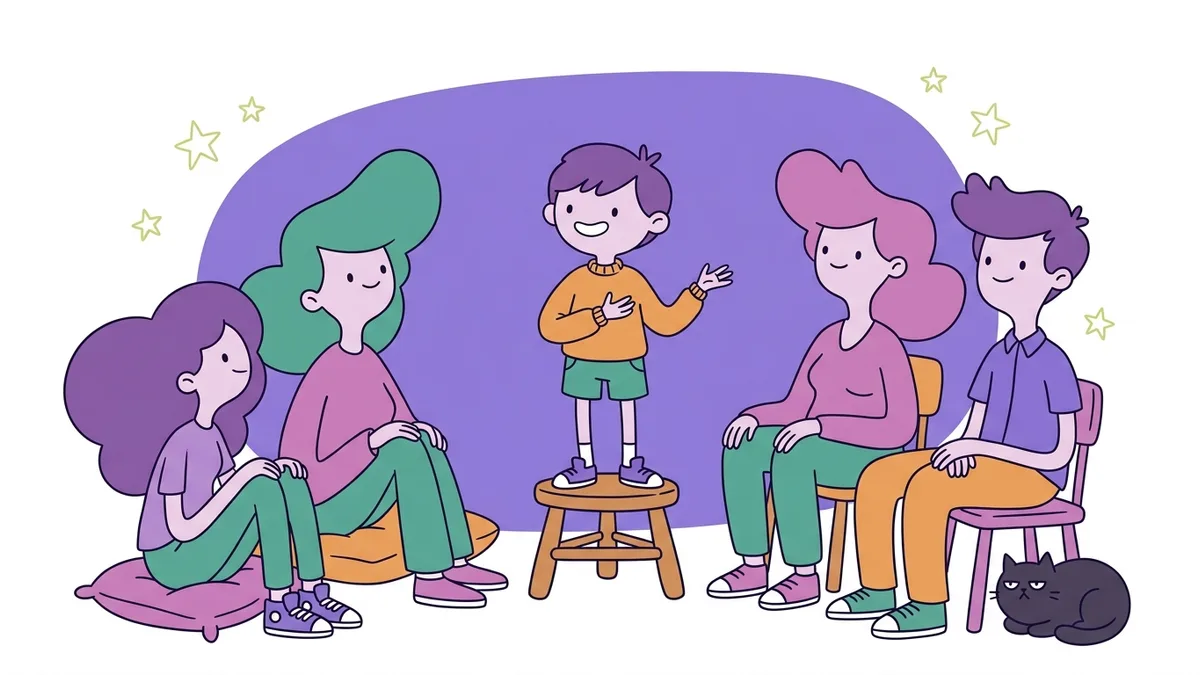
▶️ Task: Read each sentence. Decide if it uses Formal (F) or Informal (I) English. Then, rewrite it in the opposite tone.
1. What's up? I'm gonna swing by later. (I)
Rewrite: _____________________________
2. We regret to inform you that your application was unsuccessful. (F)
Rewrite: _____________________________
3. I have to submit this report before noon. (F)
Rewrite: _____________________________
4. Could you give me a hand with this? (I)
Rewrite: _____________________________
▶️ Task: Look at the image of the people in the coffee shop. Imagine two different conversations happening. Write 2-3 sentences for each.
1. Imagine two friends chatting informally. What might they say?
2. Now, imagine two colleagues discussing a work project formally. What words would they use?
3. Combine both ideas into one paragraph showing how the setting can influence tone.
How to Practice Using Different Tones in English
Register mastery requires systematic observation and application. Follow these five pedagogical steps:
1. Observation: Analyze vocabulary choices in varied media. Note differences between peer-to-peer dialogue and professional discourse in cinema or literature.
2. Transformation: Practice converting informal sentences into formal equivalents. Focus on replacing phrasal verbs with single-word Latinate verbs.
3. Guided Creation: Utilize prompts to simulate specific scenarios, such as vocational interviews or academic inquiries. Compare descriptions of identical events using different registers.
4. Application: Compose real-world correspondence for diverse audiences. Reference the 100 most common English vocabulary words for kids to diversify lexical selection.
5. Evaluation: Seek feedback from qualified instructors to refine tone. Reviewing recorded speech helps identify unintentional slang usage.
Why Parents Choose LearnLink
LearnLink supports 4,000+ families across 100 countries. With a network of 200+ tutors, the platform provides specialized instruction in register mastery. Proficiency in formal and informal English enables students to navigate professional and social environments with confidence. Consistent practice facilitates long-term linguistic success.
Stay updated on our latest tips and resources by following us on Instagram LearnLink.
When a word has several meanings or pronunciations, Cambridge Dictionary is a useful check before turning it into child-friendly examples.