Relative Clauses for Teens: Who, Which, That
Relative clauses for teens: who, which, that function as essential linguistic tools for combining independent thoughts into cohesive structures. These grammatical elements allow students to provide specific details about nouns without repeating subjects, facilitating a transition from basic to advanced English proficiency. For parents, master relative clauses combine sentences speak like a native works best when practice is short, visual, and repeated every week.
📥 Relative Clause Phrase Cards
Practice joining ideas with who, which, that, where, and whose.
Leave your email — we'll send the PDF to your inbox.No spam — the PDF plus one short reminder. Unsubscribe anytime.
Functions of Relative Clauses in Natural Speech
Native speakers utilize relative clauses to maintain conversational flow and eliminate redundant phrasing. A sentence such as "I saw a girl who was wearing a red hat" demonstrates higher linguistic efficiency than two separate, choppy statements. This technique mirrors the use of common English phrases and expressions to achieve fluency.
In classroom practice, a useful way to teach this function is to treat relative clauses as an “information-linking” tool rather than a grammar decoration. For learners school-age kids, a simple 3-step routine works well: first identify the repeated noun, then choose the correct relative pronoun, and finally place the extra information directly after the noun it describes. For example, “I met a teacher. The teacher speaks four languages” becomes “I met a teacher who speaks four languages.” This shows how the clause answers a natural listener question: which teacher? The same routine also helps students combine object-focused sentences, such as “This is the book. I borrowed the book yesterday,” into “This is the book that I borrowed yesterday.” In spoken English, this compression allows the speaker to add detail without stopping the conversation or sounding overly rehearsed.
A common mistake is placing the relative clause too far from the noun, which can make the sentence confusing: “I saw a man at the station who was carrying a violin” may sound as if the station was carrying the violin. A clearer version is “I saw a man who was carrying a violin at the station.” Another frequent error is using “which” for people or “who” for objects; learners should generally use “who” for people, “which” for things, and “that” for either in many everyday defining clauses. Teachers can build fluency with a 5-minute oral drill: give students pairs of short sentences, ask them to combine them aloud, then have a partner ask one follow-up question. For instance, “She has a cousin. He lives in Canada” becomes “She has a cousin who lives in Canada,” followed by “How often does she visit him?” This keeps grammar tied to communication. Relative clauses also support storytelling because they let speakers introduce characters, objects, and places with just enough detail: “We stayed in a hotel that had a rooftop pool” sounds more natural than pausing to add a second sentence after “hotel.”
💡 Key Idea
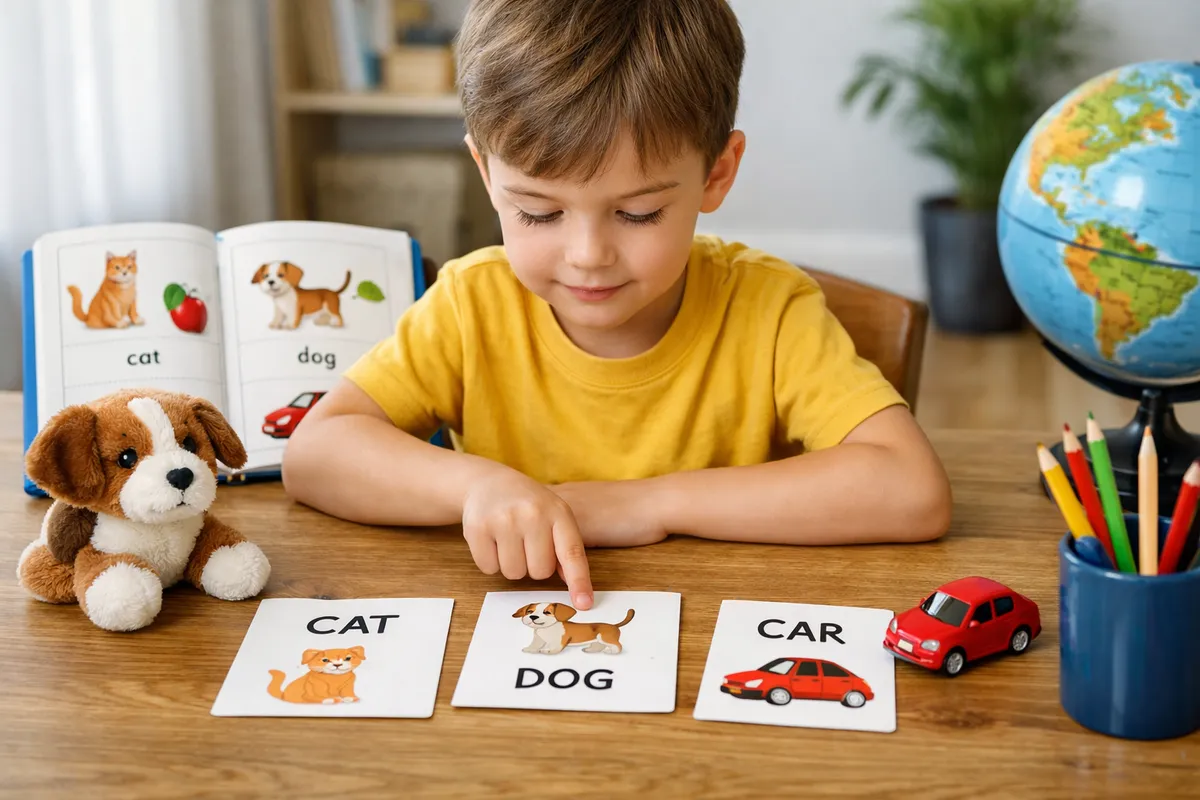
Relative clauses link related ideas, making English communication smoother and more natural for teenage learners.
For learners school-age kids, the key shift is seeing a relative clause as a tool for combining two short sentences into one clearer idea. Instead of saying, “I met a girl. Across LearnLink lessons, our tutors help children build confident, everyday English step by step. This small change helps speech sound less choppy and more connected. A useful classroom technique is the “2-to-1 sentence merge”: give students two simple sentences, ask them to find the repeated noun, then replace the second mention with who, which, that, where, or whose. For example, “This is the cafe. We studied there” becomes “This is the cafe where we studied.” After 8-10 examples, learners usually start noticing that the relative pronoun depends on the noun before it: who for people, which for things or animals, where for places, and whose for possession.
A common mistake is keeping both the noun and the pronoun, such as “The boy who he sits next to me is funny.” The sentence already has who, so he must disappear: “The boy who sits next to me is funny.” Another frequent issue is choosing where when the idea is not really about a place: “The book where I bought yesterday” should be “The book that I bought yesterday.” To speak more naturally, teenagers can practise with real-life topics: friends, teachers, games, music, places in town, and school routines. A simple 3-step speaking drill works well: first say two short sentences, then combine them slowly, then repeat the combined sentence at normal speed. For instance: “My cousin lives in Canada. She loves basketball” becomes “My cousin, who lives in Canada, loves basketball.” This practice builds both grammar control and fluency because students are not memorising rules in isolation; they are learning how to package information while speaking. The goal is not to make every sentence longer, but to choose a relative clause when it helps the listener understand exactly which person, thing, or place the speaker means.
Relative Pronoun Classification and Usage
A relative clause functions as an adjective by modifying a preceding noun. The choice of pronoun depends on the nature of the antecedent and the grammatical relationship within the clause.
- Who: References individuals (e.g., "The boy who is smiling").
- Which: References objects or animals (e.g., "The book which is on the table").
- That: References people or objects in restrictive clauses (e.g., "The dog that barks").
- Whose: Indicates possession (e.g., "The girl whose brother won").
- Where: Indicates geographical or physical locations.
- When: Indicates specific temporal points or periods.
Common Errors and Corrective Patterns
Learners often struggle with pronoun selection and punctuation. The following table outlines frequent mistakes identified in teenage English compositions:
Pedagogical Framework for Skill Development
Effective instruction follows a five-step hierarchy. This structured approach ensures students move from passive comprehension to active, error-free production in varied contexts.
- Input Exposure: Identify relative clauses in authentic texts, news articles, or podcasts.
- Controlled Practice: Complete fill-in-the-blank exercises focusing on pronoun selection.
- Guided Creation: Combine simple sentences into complex structures using specific prompts.
- Free Production: Compose original essays or narratives incorporating multiple relative clauses.
- Refinement: Utilize peer feedback and self-correction to improve grammatical accuracy.
1. Identify the student who is writing in the green notebook.
2. Describe the whiteboard which contains teacher notes.
3. Correct this sentence: "The clock, who is on the wall, shows 10:15."
Why Parents Choose LearnLink
LearnLink supports 4,000+ families across 100+ countries through a network of 120+ specialized tutors. To improve your child's grammar:
Data current as of July 2026.
- Review relative pronoun rules weekly.
- Practice combining sentences during daily conversation.
- Use visual aids to distinguish between 'who' and 'which'.
- Follow educational updates via Instagram LearnLink.
Frequently Asked Questions
When Should a Teen Use 'That' Instead of 'Which'?
'That' is used for restrictive clauses essential to sentence meaning, while 'which' often introduces non-essential information set off by commas.
How Do Relative Clauses Improve Academic Writing?
They allow for higher information density, enabling students to qualify nouns and establish complex relationships between ideas in formal essays.
When a word has several meanings or pronunciations, Cambridge Dictionary is a useful check before turning it into child-friendly examples.
Stay updated on our latest tips and resources by following us on Instagram LearnLink.