English Speaking Practice for Kids

Effective kids english speaking practice is a structured process for children to build English fluency, confidence, and accurate pronunciation through verbal use. It moves beyond passive listening to active language production in a supportive environment. Goal: consistent, low-pressure interaction fosters natural speaking. LearnLink tutors create this positive feedback loop, central to successful kids english speaking practice for young learners, particularly those in multicultural families navigating multiple languages.
Data current as of July 2026.
📥 Speaking Practice Cards for Kids
Useful words and phrases to help children start talking, ask questions, and feel confident in English.
Leave your email — we'll send the PDF to your inbox.No spam — the PDF plus one short reminder. Unsubscribe anytime.
A Step-by-Step Approach to Speaking
Structured progression helps children build skills without overwhelm. Journey begins with listening, moves methodically to independent speech. Our data (4,000+ families) shows gradual exposure works best.
- Phase 1: Active Listening. The child first needs to absorb the sounds and rhythms of English. This can be done through listening to English songs for kids or watching cartoons.
- Phase 2: Repetition. Start with single words and short, common phrases. Ask the child to repeat after you. This builds muscle memory for pronunciation.
- Phase 3: Guided Response. Ask basic questions requiring one or two-word answers. For example, “Is this ball red?” or “Do you want an apple?”
- Phase 4: Independent Sentences. Encourage the child to form their own basic sentences to describe or ask for things.
This structured approach ensures that kids english speaking practice is built on a solid foundation of understanding.
Active vs. passive learning is critical. Passive exposure is useful, but active engagement yields faster results.
Practical Examples and Activities for Kids
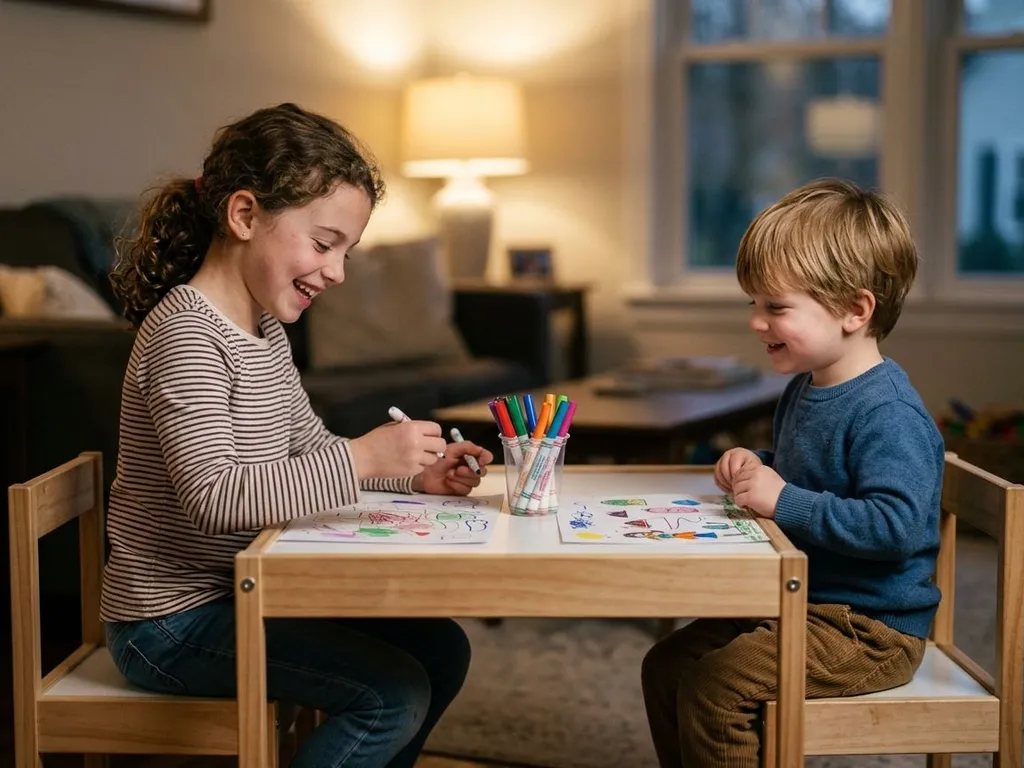
Making practice fun engages young learners. Incorporate language learning into playtime and routines. Using many fun and effective activities keeps the process fresh and exciting.
- Role-Playing: Pretend to be at a restaurant, a shop, or a doctor's office. Use basic dialogues and props. This is a fantastic form of kids english speaking practice because it mirrors real-life situations.
- Show and Tell: Ask your child to pick a favorite toy and describe it in English. You can prompt them with questions like “What color is it?” and “What does it do?”
- Storytelling Chain: Start a story with one sentence, for example, “A big dog saw a cat.” Then, have your child add the next sentence. Continue taking turns to build a collaborative story.
- Sing-alongs: Music is a powerful tool for language. Learning and singing basic English songs helps with rhythm, intonation, and memorizing basic English words.
Practice Exercise: Build a Sentence
Use the words below to make three different sentences about animals. Try to make each sentence at least four words long.
Words: the, cat, dog, big, small, runs, sleeps, under, table, happy
Example: The big dog sleeps.
- _________________________
- _________________________
- _________________________
Tips for Parents and Teachers
Environment is as important as activities. Child's willingness to speak depends on feeling supported, not judged. Patience and positive reinforcement are powerful tools.
First, model good language. Speak clearly, use English consistently during practice. Native speaker status isn't necessary; enthusiasm and consistency are key. Second, praise effort, not just correctness. When a child tries to speak, acknowledge effort with phrases like “Good try!” or “I like how you said that!” Correcting every error creates fear and hesitation. A focused session of kids english speaking practice should feel like a game. For more ideas, explore some fun games to learn English.
Here's a guide to helpful feedback.
Quick Recap and Next Steps
To summarize points for building strong speaking skills:
- Start with Listening: Build a foundation of comprehension with songs, stories, and English cartoons for learning.
- Encourage Repetition: Practice repeating words and basic phrases to build confidence and pronunciation skills. Check out our guide to English pronunciation exercises.
- Make it a Game: Use role-playing, storytelling, and other fun activities to keep your child engaged.
- Create a Supportive Space: Always praise effort over perfection to reduce anxiety and encourage participation in kids english speaking practice.
These steps provide a path toward developing a confident English speaker. Consistent, positive engagement is vital for effective kids english speaking practice.
When a word has several meanings or pronunciations, Cambridge Dictionary is a useful check before turning it into child-friendly examples.
Frequently Asked Questions
How Often Should My Child Practice Speaking English?
Consistency outweighs duration. Recommend short, daily 10-15 minute sessions. Regular exposure builds habit without fatigue or burnout. Integrating English into daily routines (meals, playtime) makes practice natural, effortless.
My Child Is Shy and Refuses to Speak. What Should I Do?
Never force a shy child. Focus on creating a low-pressure environment. Use puppets or stuffed animals to speak for them. Speak English, sing songs, make it a fun part of the day. When they see you enjoying the language, they'll eventually join. The goal of kids english speaking practice is comfort and confidence, which must be built slowly.
Is It Okay If My Child Makes Grammar Mistakes?
Yes, mistakes are a natural, crucial part of learning. Correcting every error can make a child afraid to speak. Instead of direct correction, model the correct form. If a child says, “I go to park yesterday,” respond with, “Oh, you went to the park? That sounds fun!” This gently reinforces correct structure.
What If I Am Not a Native English Speaker Myself?
Your proficiency level is less vital than enthusiasm and willingness to learn alongside your child. You can use high-quality resources like YouTube channels to learn English or apps. Provide a positive attitude and consistent encouragement. Your effort shows learning is a shared journey.
🎯 Not sure where your child stands?
Answer 5 questions about your child (4–15) and get a level guide — from Pre-A1 to B1 — with what to practise next.
Take the 2-minute quiz
Takes about 2 minutes. The result is a guide, not a formal assessment.
How to Build Speaking Confidence at Every Age
For younger children, kids english speaking practice should feel like play, not a lesson. Use short phrases during daily routines: “I want juice,” “Open the door,” or “It is red.” Praise effort more than perfect pronunciation, and repeat the correct version naturally so your child hears a clear model without feeling corrected.
Children can handle simple role-play and choice-based speaking. Ask them to order pretend food, describe a toy, or explain a favorite game in three sentences. For school-age kids, move toward real-life topics: hobbies, school plans, opinions, and short debates. This keeps kids english speaking practice relevant and helps older learners sound more natural.
- Try five-minute daily chats about breakfast, toys, or tomorrow's family plans.
- Read one picture book aloud, then ask three simple opinion questions.
- Practice two role-play scenes weekly, such as shopping or greeting a teacher.
- Use praise after each attempt, focusing on effort before correcting mistakes.
- Record a one-minute story monthly to notice clearer speech and confidence.
At LearnLink, our qualified tutors create personalized, engaging lessons that make speaking English fun and natural for children — book a trial lesson with LearnLink to see how our one-on-one approach can build your child's confidence and fluency.
Stay updated on our latest tips and resources by following us on Instagram LearnLink.