Afterschool English Classes Online for Kids
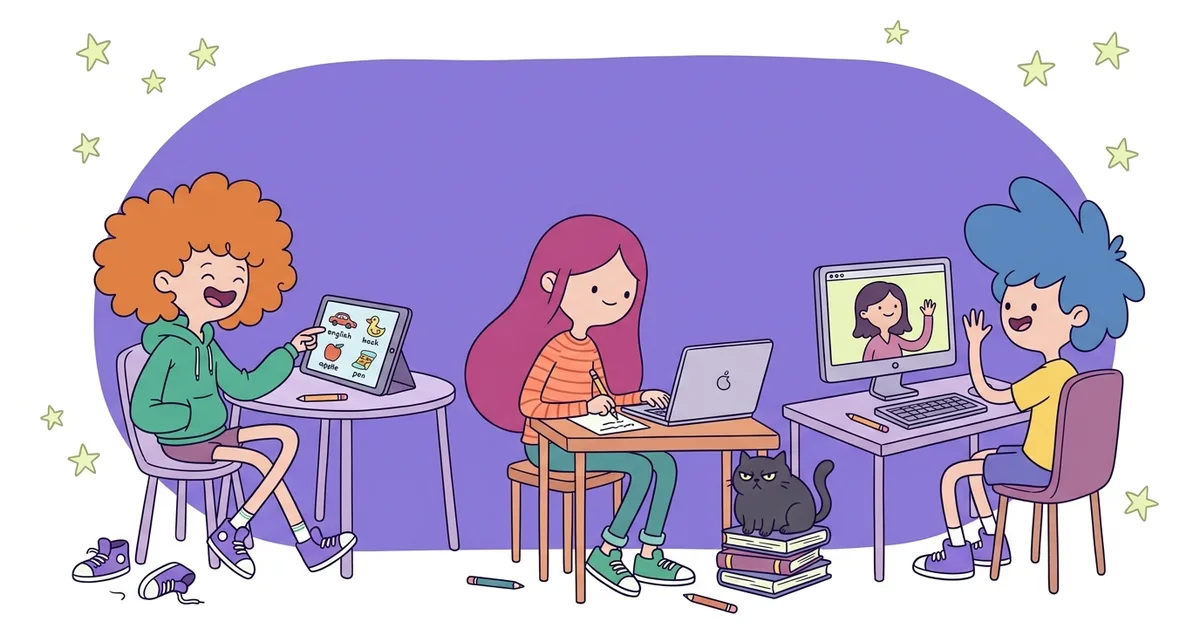
Afterschool english classes online are structured learning programs that help children improve their language skills outside of regular school hours. A key benefit of these programs is the focused attention on pronunciation, which builds a strong foundation for clear, confident communication. For young learners, especially those in multicultural families, mastering English sounds early prevents the formation of lasting errors. Quality afterschool english classes online use proven methods to teach children how to shape sounds correctly, making their speech understandable to native speakers globally.
📥 After-School Pronunciation Practice Pack
Kid-friendly sound groups, speaking phrases, and a weekly tracker for clearer English practice at home.
Leave your email — we'll send the PDF to your inbox.No spam — the PDF plus one short reminder. Unsubscribe anytime.
Why Afterschool English Classes Online Matters for Pronunciation
Early focus on pronunciation is critical for long-term language acquisition. It prevents the development of fossilized errors—mistakes that become permanent habits and are difficult to correct later. A child's brain is highly adaptable to new sounds, making the 5-9 age range an ideal time for this training. Structured afterschool english classes online provide a consistent and correct model for speech. This regular, guided practice helps children develop the muscle memory in their mouths needed for accurate English sounds, a process that is much harder to achieve as an adult learner. This foundation supports better English reading for kids and listening comprehension skills.
What to Look for in a Pronunciation-Focused Program
When selecting a program, parents should look for specific features that target pronunciation. A quality curriculum will include native-speaking tutors who provide an authentic accent model. The program should explicitly teach phonics, connecting letters to their sounds. Look for lessons that use minimal pairs—words that differ by a single sound, like 'ship' and 'sheep'—to train the ear. Interactive games to learn English for kids also make practice engaging. The best afterschool english classes online integrate these elements smoothly, making learning feel like play while building essential skills.
A Step-by-Step Approach to Key English Sounds
Mastering English pronunciation involves learning sounds that may not exist in a child's native language. Our tutors focus on these methodically. For the 'th' sound (/θ/), we teach children to place their tongue lightly between their teeth and blow air. For the English 'r', we show them how to curl the tongue back without touching the roof of their mouth. The distinction between the long 'ee' in 'feet' and the short 'i' in 'fit' is taught by contrasting jaw and lip positions. Consistent practice in afterschool english classes online makes these new movements automatic. This detailed work is part of a strong English homeschool curriculum.
Practice Exercise: Tongue Twisters
Tongue twisters are a fun way to practice specific sounds. Have your child repeat these sentences slowly at first, then try to get faster. This helps build muscle memory for difficult sound combinations. For the 'th' sound: "Thirty-three thirsty thieves thought that they thrilled the throne." For the 'sh' and 's' sounds: "She sells seashells by the seashore." Regular practice with these makes kids English speaking practice much more effective.
Practical Pronunciation Drills for Young Learners
Repetitive, game-like drills are highly effective for children. One core technique is using minimal pairs to train auditory discrimination. The tutor says two similar words, like 'pen' and 'pan', and the child points to the correct picture. This active listening sharpens their ability to hear subtle differences. Another drill involves call-and-response, where the tutor says a word and the child repeats it, getting immediate feedback. These activities, central to many afterschool english classes online, build accuracy in a low-pressure environment. They are more engaging than simple printable English worksheets alone.
Tips for Parents: Supporting Pronunciation at Home
Parental support magnifies the benefits of formal lessons. Your own accent is not a barrier; your encouragement is what matters. Create an English-rich environment by watching English cartoons for learning English or listening to children's audiobooks together. When your child speaks, focus on praising their effort rather than correcting every mistake. You can gently model the correct pronunciation. For example, if they say "I see a sip," you can respond, "Yes, you see a big ship!" This positive reinforcement, combined with professional guidance from afterschool english classes online, creates a powerful learning ecosystem. Discover more ways to teach English to kids with our guide.
Quick Recap and Next Steps
To summarize the key points for improving your child's English pronunciation:
- Listen actively every day — Use top English podcasts for kids or songs for 10-15 minutes of daily exposure to native speech.
- Focus on one dialect — Choose either British or American English to start, providing a consistent model for at least six months.
- Practice through play — Use games, tongue twisters, and repetition to build muscle memory for new sounds.
- Seek guided instruction — Enroll in a program where tutors can provide expert feedback and structured lessons.
These steps form a reliable framework for developing clear and confident English speech.
For the child-development context behind this advice, American Academy of Pediatrics gives a broader reference point for parents.
Frequently Asked Questions
Should My Child Learn British or American Pronunciation?
The most important factor is consistency. Choose one accent and stick with it initially to avoid confusion. Both are understood globally. Many online platforms, including LearnLink, have tutors from various regions, so you can often choose the accent model you prefer. The key is exposure to a clear, consistent native speaker, regardless of the specific dialect.
My Child Is Shy. How Can Online Classes Help Their Speaking Confidence?
One-on-one online lessons provide a safe, private space for shy children to practice. There is no peer pressure, and the tutor can build a strong rapport with the child. Tutors use praise and positive reinforcement to encourage speaking. Interactive games and activities also help children relax and forget their shyness, making our afterschool english classes online an ideal environment for building confidence step-by-step.
At What Age Should a Child Start Focusing on English Pronunciation?
Children can start learning sounds as soon as they begin speaking, but a more focused approach to pronunciation is effective from ages 4-5. At this stage, they are developing their phonetic awareness and can more easily mimic new sounds. Early instruction helps prevent bad habits from forming. Our English lessons for 5 year old kids are designed to make this process fun and engaging.
At LearnLink, our certified tutors create personalized lesson plans that make learning to speak English correctly a fun and rewarding experience for your child — book a trial lesson with LearnLink learn how our one-on-one classes can build your child's confidence.