House Vocabulary for Kids
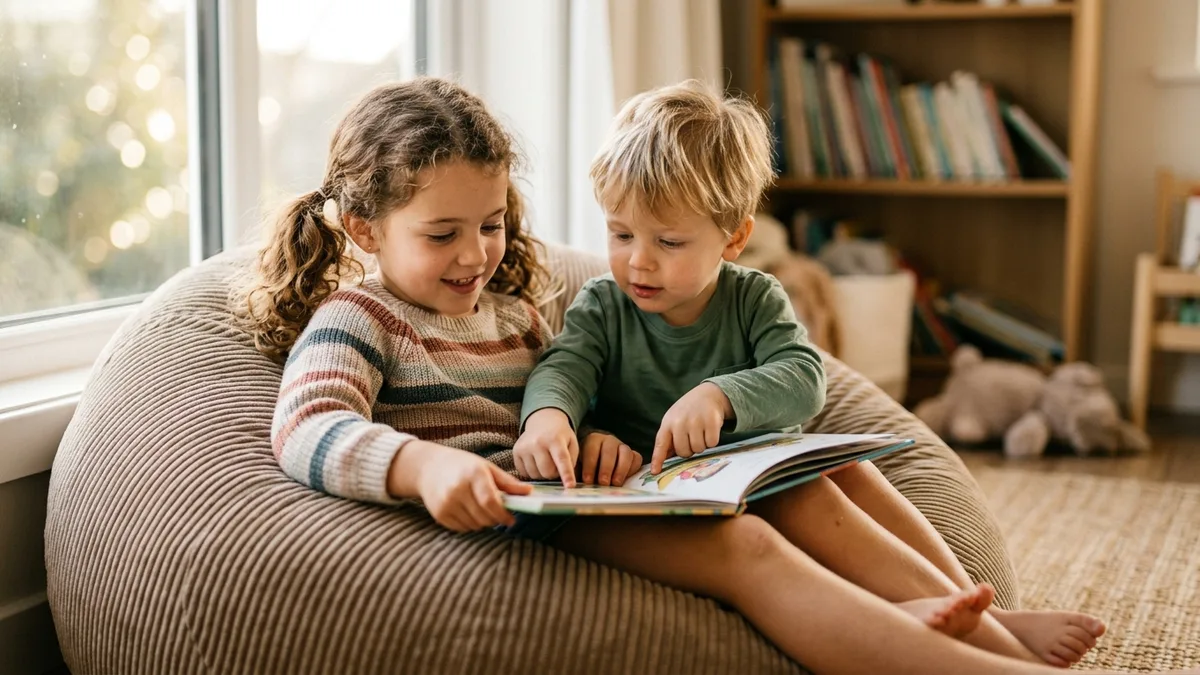
A typical home has 5 main rooms a child names first: kitchen, bedroom, bathroom, living room, and hall. House vocabulary for kids covers those rooms plus the everyday objects inside them — bed, table, chair, sofa, lamp, door, and window. Most learners aged 4-15 can name 20 household words after two short practice sessions, because every word points to something they touch each day. The hard part is not the nouns: the trouble starts with the small words around them, such as in the kitchen, on the table, and under the bed. Young learners say "house" when they mean "home," and they mix "stairs" with "floor," so this guide pairs each room and object with short examples and quick drills that fix both problems fast.
📥 House Vocabulary Mini Cards
Practice useful room and home words with kid-friendly hints and a weekly tracker.
Leave your email — we'll send the PDF to your inbox.No spam — the PDF plus one short reminder. Unsubscribe anytime.
Rooms of the House and the Words Inside Them
Begin with rooms, not single items. When a child links a noun to a place, recall jumps. Below is the core set our beginners learn first, with pronunciation and one concrete example each. This is the backbone of house vocabulary for kids, and it maps onto a real home, so practice can happen anywhere. The British Council LearnEnglish Kids word games reinforce the same room words through play.
Numbers help here. LearnLink works with 4,000+ families across 100+ countries, and our beginner data shows the same six rooms appear first in nearly every home, whether the child lives in a flat or a house. That overlap is why these words anchor a strong first lesson. For a playful warm-up before the lesson, an alphabet treasure hunt activity gets young learners moving and labelling objects at the same time. It also pairs well with activities to improve English listening skills, since a child hears each word before saying it.

Furniture and Household Objects Flashcards
Once the rooms are solid, add the objects inside them. Keep each card to one item, one picture, one short clue. The grid below shows the furniture and household objects beginners meet most. Reviewing 8 cards a day keeps the load light and steady, and it makes house vocabulary for kids feel like a game rather than a test.
You sleep on a bed at night.
Sit on a chair to eat dinner.
The whole family fits on the sofa.
Open the window for fresh air.
Close the door when it rains.
Turn on the lamp to read a book.
Put the plates on the table.
The cartoon is on the TV.
Objects pair well with action verbs: open a door, sit on a chair, turn on a lamp. Linking each item to a verb teaches a sentence, not just a noun. Children who already practise basic English animal words for learners often pick up household nouns faster, because the labelling habit is already there. To stretch a strong reader, mix in countable and uncountable nouns for kids so they notice that "two chairs" works but "two furniture" does not.
How Do You Teach House Vocabulary for Kids Step by Step?
Teach house vocabulary for kids in short loops. Each loop is name, point, say a sentence. Three loops a day beat one long study block, and they fit between dinner and bedtime. Here is the routine our tutors use with beginners.
- Walk and name. Move through the home, say each room out loud: "kitchen, hall, bathroom."
- Touch and label. Point at three objects per room: "bed, lamp, window."
- Build a sentence. Add a verb and a place word: "The lamp is on the table."
- Swap and ask. Your child asks: "Where is the chair?" Answer, then switch roles.
- Review at night. Recall 8 words, no looking. Quick wins build confidence.
Place words carry a lot of weight when teaching house vocabulary for kids. "In the bedroom," "on the sofa," and "under the bed" appear in almost every house sentence, so drill them early. A focused look at possessive adjectives and pronouns for kids also helps, since "my bed" and "her room" come up the moment a child describes a home. For learners who enjoy turning words into play, our fun vocabulary games and activities turn the same word set into a quick contest.
1. bed →?
2. cooker →?
3. sofa →?
4. towel →?
5. shoes →?
Answers: 1. bedroom, 2. kitchen, 3. living room, 4. bathroom, 5. hall.
Common Mistakes with Home and Household Words
Two errors show up again and again. Children swap "house" and "home," and they drop or change the place word. The table below shows the fix.
• Stick paper labels on real objects for one week: bed, door, lamp, window.
• Sort cards by room: kitchen pile, bedroom pile, bathroom pile.
• Sing the six rooms in order to a tune your child already knows.
Older beginners can connect home words to time and routine. Pairing this set with how to tell time in English lets a child say "I read in my room at eight o'clock," which blends two skills into one natural sentence and keeps practice meaningful.
When a word has several meanings or pronunciations, Cambridge Dictionary is a useful check before turning it into child-friendly examples.
Frequently Asked Questions
At what age can a child start learning house vocabulary?
Children from age 4 can name rooms and a few objects, because the words match things they already see daily. LearnLink teaches learners aged 4 to 15. Beginners of any age start with the same six rooms, then move to objects and place words.
How many household words should a beginner learn first?
Start with about 20: six rooms and roughly two objects each. A short list keeps recall high. Add more once the first set is solid, usually after three or four practice sessions.
What is the best way to practise these words at home?
Walk through the home, name each room and object out loud, then build one short sentence with a place word: "on," "in," or "under." Five minutes daily beats one long weekly session. Paper labels on real objects turn the whole home into a quiet study tool.
House vocabulary for kids gives beginners a fast, real win: every word points to something nearby, so practice never needs a worksheet. Name the rooms, add a few objects, drill the place words, and your child describes a whole home in clear English within a week. For more word sets to learn next, our English food vocabulary for kids follows the same method.
Stay updated on our latest tips and resources by following us on Instagram LearnLink.
Data current as of July 2026.
A short one-to-one lesson can show what level and pace fit your child. Book a free English lesson.