Adjective Order for Kids
Adjective order means putting describing words in the natural English sequence before a noun, such as “a small red bag,” not “a red small bag.” Adjective Order for Kids: A Practical Guide helps children hear and use that sequence without turning each sentence into a grammar test. In English, the order is opinion, size, age, shape, color, origin, material, purpose, then noun. Most children do not need nine labels at once. They need examples, short practice, and listening time until “three old wooden chairs” sounds right.
📥 Adjective Order for Kids
A printable practice sheet for building natural noun phrases
Leave your email — we'll send the PDF to your inbox.No spam — the PDF plus one short reminder. Unsubscribe anytime.
What Children Need to Understand First
An adjective gives detail about a noun. In “a blue bike,” the noun is “bike,” and “blue” describes it. Young learners can start with one adjective: “a big dog,” “a cold drink,” “a funny story.” This builds the base before two or three adjectives appear together.
The harder part is that English does not place adjectives in any order we like. We say “a lovely little house,” not “a little lovely house.” Both words describe the house, but English listeners expect opinion before size. Adjective Order for Kids: A Practical Guide first helps children notice what sounds natural.
For ages 5 to 9, keep the rule concrete: feeling words come before facts. “A beautiful old castle” works because “beautiful” is an opinion and “old” is a fact. Older children and teens can learn the full order and use it in writing, stories, and speaking tasks.
How Adjective Order Works
The order is: opinion, size, age, shape, color, origin, material, purpose, noun. A classroom version is “what we think, then what we can measure or see, then what it is made for.” That wording is easier than a long grammar label list.
Here is the pattern with examples. Children do not need every column in one sentence. In natural English, two or three adjectives are enough.
Some adjectives sit close to the noun because they name the type. In “a tennis ball,” “tennis” tells us the purpose or kind of ball. We do not say “a ball tennis,” so “purpose” comes just before the noun.
Rules and Examples That Feel Natural
Start with two adjectives. Children hear the rhythm in short phrases: “a big yellow bus,” “a funny old book,” “a clean white shirt.” Ask which word is an opinion and which word is a fact. This keeps Adjective Order for Kids: A Practical Guide practical, not abstract.
Move to three adjectives when the child is ready. Useful examples are “a beautiful small silver ring,” “three old round coins,” and “a soft blue wool sweater.” If the sentence sounds heavy, remove one adjective. Natural English is not about stacking describing words.
Commas can help older children. When adjectives are from the same kind, we may use a comma: “a long, quiet road.” When adjectives follow the normal order and build toward the noun, we do not: “a quiet long road” sounds unusual, while “a long quiet road” is smoother. For younger learners, spoken practice matters more than comma rules.
Common Mistakes Children Make
The most frequent mistake is copying word order from another language. A child who speaks Spanish, French, Hebrew, Arabic, German, or another home language may expect color, size, or type to move differently. That is normal. Treat language transfer as learning, not carelessness.
Another mistake is placing color too early: “a red big car” instead of “a big red car.” Children may reverse opinion and fact: “an old lovely house” instead of “a lovely old house.” In Adjective Order for Kids: A Practical Guide, these are useful correction moments because the child has the right words and only needs to move them.
A third mistake is using too many adjectives in one noun phrase. “A beautiful big old round red Italian wooden toy box” may follow the order, but it sounds forced. Children should learn that grammar can be correct and still weak in style. In real speech, “a big old wooden box” is enough.
How to Teach It at Home Without Pressure
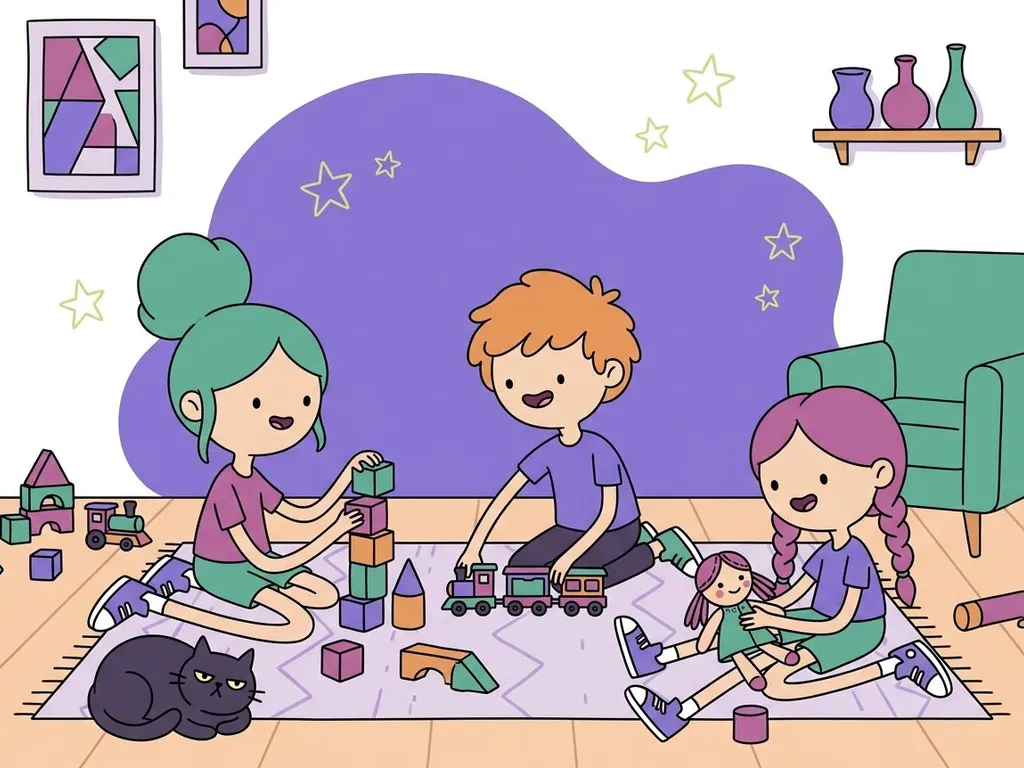
Use real objects first. Put three things on the table: a small blue cup, an old brown book, and a soft green toy. Say one phrase and let your child point to the object. Then switch roles. This gives quick feedback without a worksheet mood.
For children who read, use sorting cards. Write adjectives on slips: “funny,” “big,” “new,” “round,” “red,” “French,” “plastic,” “school.” Ask your child to build noun phrases such as “a funny big red school bag.” Then ask, “Can we make it shorter?” That question builds style, not just grammar.
Example: a funny little story
Example: a big red bus
Example: a new school bag
Example: a round wooden table
Example: a small red kite
Example: a lovely French song
Example: a green plastic bottle
Example: a new school bag
Across LearnLink lessons, tutors tie adjective order to speaking and stories. A child might describe a picture, a room, a pet, a game character, or a lost object. The aim is not chart recitation. The aim is word order that English speakers understand fast.
Practice Activities
Use these short tasks after a child has seen several examples. Keep the pace light. If a child gets stuck, say both options aloud and let them choose the one that sounds better.
Put the Adjectives in Order
Rewrite each phrase: 1. a red small kite 2. a wooden old chair 3. a round pretty mirror 4. a school new bag 5. a blue lovely dress. Possible answers: a small red kite; an old wooden chair; a pretty round mirror; a new school bag; a lovely blue dress.
When checking answers, ask your child to explain one choice. A 6-year-old may say, “small goes before red.” A 12-year-old can say, “size comes before color.” Both answers show learning.
Choose the Natural Phrase
Pick the better phrase in each pair: 1. a little funny cat / a funny little cat 2. a plastic green bottle / a green plastic bottle 3. an old square table / a square old table 4. a racing red car / a red racing car. Answers: a funny little cat; a green plastic bottle; an old square table; a red racing car.
This choice task helps bilingual children listen for English rhythm instead of translating word by word. It lowers the load for first-time online learners who may be managing lesson format and grammar together.
Describe and Shorten
Choose one object near you. Write or say three adjectives before the noun, then remove one adjective to make the phrase sound more natural. Example: “a lovely big yellow backpack” becomes “a big yellow backpack” or “a lovely yellow backpack.”
Examples by Age
For ages 4 to 6, use two-word descriptions and real objects: “big teddy,” “red apple,” “soft scarf.” At this stage, one-adjective answers are fine. The adult can model the full phrase: “Yes, it is a soft scarf.”
For ages 7 to 10, two adjectives become the main target. Picture prompts work well: “a small black cat,” “a funny old robot,” “a long green pencil.” This is the best time to introduce Adjective Order for Kids: A Practical Guide as a sound pattern: opinion before size, size before color, material near the noun.
For ages 11 to 15, connect adjective order to writing quality. Teens can edit sentences, compare versions, and notice overloaded phrases. They can learn exceptions and style choices, such as why “the big bad wolf” is fixed by story tradition even though not every phrase follows the chart perfectly.
For the rule wording, Wikipedia — English Grammar is a useful reference while the practice examples here stay adapted for children.
Frequently Asked Questions
How Many Adjectives Should a Child Use Before One Noun?
In everyday English, one or two adjectives are enough. Three can work when each word adds meaning, as in “a small red school bag.” More than three often sounds heavy, especially in speech. Adjective Order for Kids: A Practical Guide should help your child describe clearly, not stack words to impress the listener.
Does My Child Need to Memorize the Full Adjective Order Chart?
Not at the beginning. Young children learn better through hearing and using short phrases. Start with frequent pairs: size before color, opinion before size, material before the noun. Older children can use the full chart when they write longer descriptions. The chart is a tool, not the whole lesson.
Why Does My Child Say Adjectives in the Wrong Order?
Children may use the pattern of another language they know. That is a normal stage for multilingual learners. Instead of saying only “wrong,” give the natural English version and repeat it in a short sentence: “We say a big red car. I can see a big red car.” This keeps correction calm.
Are There Exceptions to Adjective Order in English?
Yes. Some fixed phrases, story phrases, and brand-like names do not follow the chart neatly. “The big bad wolf” is a familiar example. Children do not need a long exception list. They need the standard order first, then they can notice special phrases in books, songs, and lessons.
How Can We Practise Adjective Order During Online Lessons?
Use pictures, toys, clothes, room objects, and quick choice tasks. A tutor can ask your child to describe what they see, then guide the order gently: “Try size before color.” In one-to-one lessons, the pace can change for a shy 5-year-old, a confident 9-year-old, or a teen who needs cleaner writing.
A short one-to-one lesson can show what level and pace fit your child — book a free English lesson.
Stay updated on our latest tips and resources by following us on Instagram LearnLink.