English Writing Activities for Kids
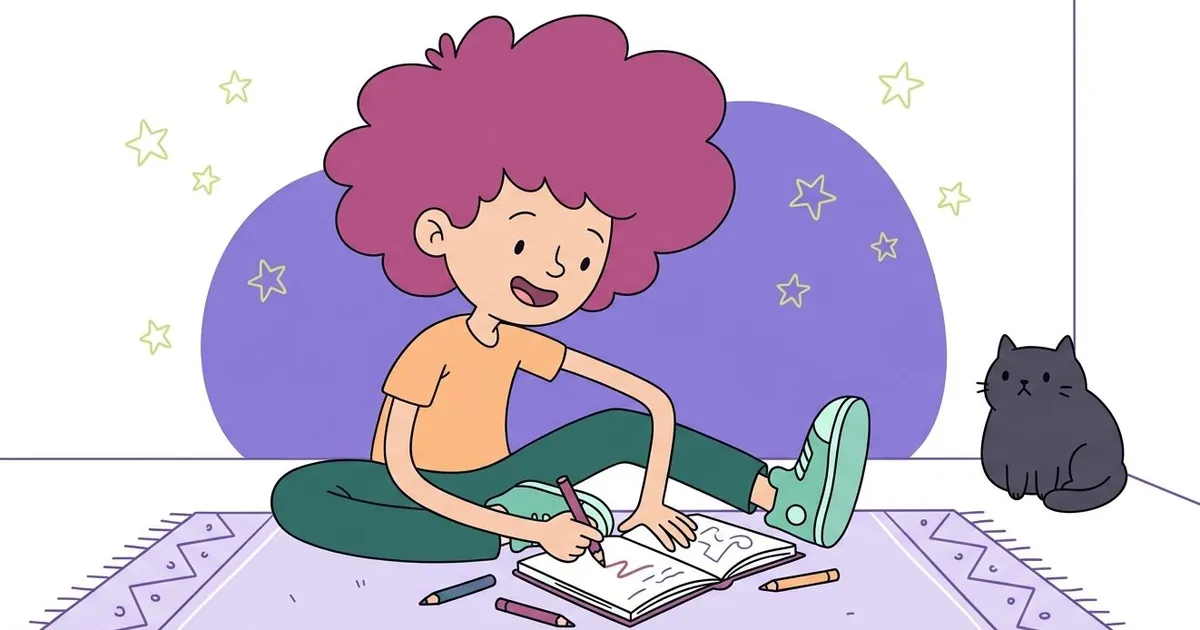
English writing for kids helps children turn spoken English, known words, and ideas into marks, letters, sentences, and short texts they can read back. A 5-year-old may draw a birthday card and copy “Happy birthday.” A 10-year-old may write five sentences about a pet. A teenager may plan a paragraph, check verbs, and choose precise words. The goal is not perfect spelling on day one. The goal is steady control: hand, sound, word, sentence, and message working together.
📥 Writing Practice Activity Sheet
A printable set of short, low-pressure writing tasks for children learning English at home.
Leave your email — we'll send the PDF to your inbox.No spam — the PDF plus one short reminder. Unsubscribe anytime.
What Families Need to Know First
Writing grows after listening and speaking. A child who has heard “I like apples” often can write it with more sense than a child who only sees the sentence on a worksheet. That is why english writing for kids should not start with long grammar rules. It starts with practical language, repeated in warm settings.
Children need time for the physical side of writing. Some 4- to 6-year-olds are still building pencil grip, left-to-right movement, and letter shape memory. Older children may write neatly in their home language but still need support with English spelling patterns, silent letters, and sentence order.
Across LearnLink lessons, tutors treat writing as part of a wider language habit. Children say the sentence, read a model, write their version, and use it again in a short task. That cycle keeps writing tied to meaning, not copying alone.
Start with the Right Kind of Writing
Start with short, practical writing. A shopping list, a picture label, a message to a cousin, or a two-line diary gives the child a reason to write. English writing for kids works when the child sees why the words belong on the page.
For younger children, use frames: “I see a ___,” “This is my ___,” “I like ___.” For children who already speak some English, add choice: “I like ___ because ___.” Teenagers can use paragraph frames: topic sentence, two details, one closing sentence.
Do not rush from words to essays. A child who can write ten true sentences about daily life has a strong base. Accuracy can grow from that base; confidence is harder to rebuild after months of red marks.
Examples by Age
Age matters, but language level matters more. A bilingual 7-year-old may understand stories in English but spell like a beginner. A 12-year-old may know grammar terms from school but freeze when asked to write freely. Use the child’s real level, not only the birthday.
This table gives a practical starting point for english writing for kids at home. Move up only when the current step feels steady most of the time.
How to Use Writing at Home
Keep writing short and frequent. Ten calm minutes, three times a week, helps more than one long Sunday session. Choose one focus each time: capital letters, sentence order, new words, or added detail. If every error is corrected at once, children stop trying.
A home routine can work like this: talk first, read a model, write one version together, then let the child write one alone. For example, talk about breakfast, read “I had eggs and toast,” write one shared sentence, then ask the child to write their own.
When helping with english writing for kids, correct in layers. First ask, “Can I understand the message?” Then check one or two points. For a young child, that may be spacing and capital letters. For an older child, it may be verb tense and paragraph order.
Practical Activities That Do Not Feel Like Homework
Use real family moments. Ask your child to write the cinema snacks list, a note for a grandparent, rules for a made-up game, or three treasure hunt clues. These small tasks make english writing for kids part of daily life, not only schoolwork.
Pictures work at every age. A 6-year-old can label five things in a drawing. A 9-year-old can write four sentences about the picture. A 14-year-old can write a short scene with setting, action, and feeling. One picture can serve siblings at different levels.
For children who dislike writing, lower the writing load but keep the thinking. Let them dictate a sentence first, then copy one key part. Let them choose between two sentence starters. Use a five-minute timer and stop while the task still feels manageable.
Try a Three-sentence Picture Task
Choose one family photo or a picture from a book. Ask your child to write three sentences: one sentence that names what they see, one sentence with an action, and one sentence with a feeling. Example: “This is a small boat. The girl is waving. She feels happy.” Older children can add “because” to the third sentence.
Common Mistakes Parents Can Avoid
The first mistake is correcting too much too soon. If a child writes “I lik my dog,” the message is understandable. You can say, “Good sentence. In English, we write like with an e.” That teaches without turning the page into a problem.
The second mistake is using writing as a test before the child has enough language. A child cannot write freely about animals if they only know “cat” and “dog.” Build vocabulary first. Say the words, sort them, read them, then write them.
The third mistake is treating spelling as proof of intelligence. English spelling is hard because sound and spelling do not always match. In english writing for kids, spelling should improve through patterns, reading, and repeated use, not shame.
How Online Lessons Can Support Writing
Writing at home is strongest when linked to speaking. In a live lesson, a tutor can hear where the child’s sentence begins, guide word order, and help the child write it down. Worksheets alone cannot replace that support.
In LearnLink lessons, children aged 4-15 work with general English through speaking, reading, and writing tasks that fit their level. A younger learner may write labels after a game. An older learner may plan a short opinion paragraph after a discussion.
For families new to online learning, start small. One written sentence after a lesson is enough at first: “Today I learned ___.” Over time, that sentence can become a short lesson journal, then a paragraph. This is a steady path for english writing for kids without pressure.
When a word has several meanings or pronunciations, Cambridge Dictionary is a useful check before turning it into child-friendly examples.
🎯 Not sure where your child stands?
Answer 5 questions about your child (4–15) and get a level guide — from Pre-A1 to B1 — with what to practise next.
Take the 2-minute quiz
Takes about 2 minutes. The result is a guide, not a formal assessment.
Frequently Asked Questions
What Age Should a Child Start Writing in English?
Children can start early with marks, letters, names, and copied words, but formal writing should match their motor skills and spoken English. Many 4- to 6-year-olds are ready for tracing, labels, and short copied phrases. Longer sentences come later. For english writing for kids, the stronger question is not “How young?” but “Can the child understand and say the words they are asked to write?”
Should Parents Correct Every Spelling Mistake?
No. Correcting every error can make writing feel unsafe. Choose one focus for each task. If the goal is sentence building, ignore small spelling mistakes unless they block meaning. If the goal is spelling, use a few target words. A calm correction such as “We write play with ay” teaches more than a page covered in marks.
How Can Bilingual Children Avoid Mixing Languages When They Write?
Some mixing is normal, especially for children who use two or three languages at home. Before writing, build a small English vocabulary for the task. For example, before writing about a park, list “swing,” “tree,” “run,” “friend,” and “sunny.” If the child uses a home-language word, give the English word and ask them to use it in the next sentence.
What If My Child Hates Writing?
Start with less writing, not easier thinking. Let your child say the answer first, choose a sentence starter, or write only the final word in a shared sentence. Use topics they care about: football, pets, music, games, food, or family jokes. Stop after a small success. Confidence grows when the child finishes the task and feels in control.
How Often Should We Practise at Home?
Two or three short sessions a week are enough for many families. Keep each session focused: one model, one task, one small correction. Add natural writing during the week, such as a list, card, message, or caption. Regular light practice supports english writing for kids better than rare long sessions that end in tiredness.
If your child needs steady speaking practice, start small — choose a trial lesson.
Stay updated on our latest tips and resources by following us on Instagram LearnLink.