English Routine at Home for Kids
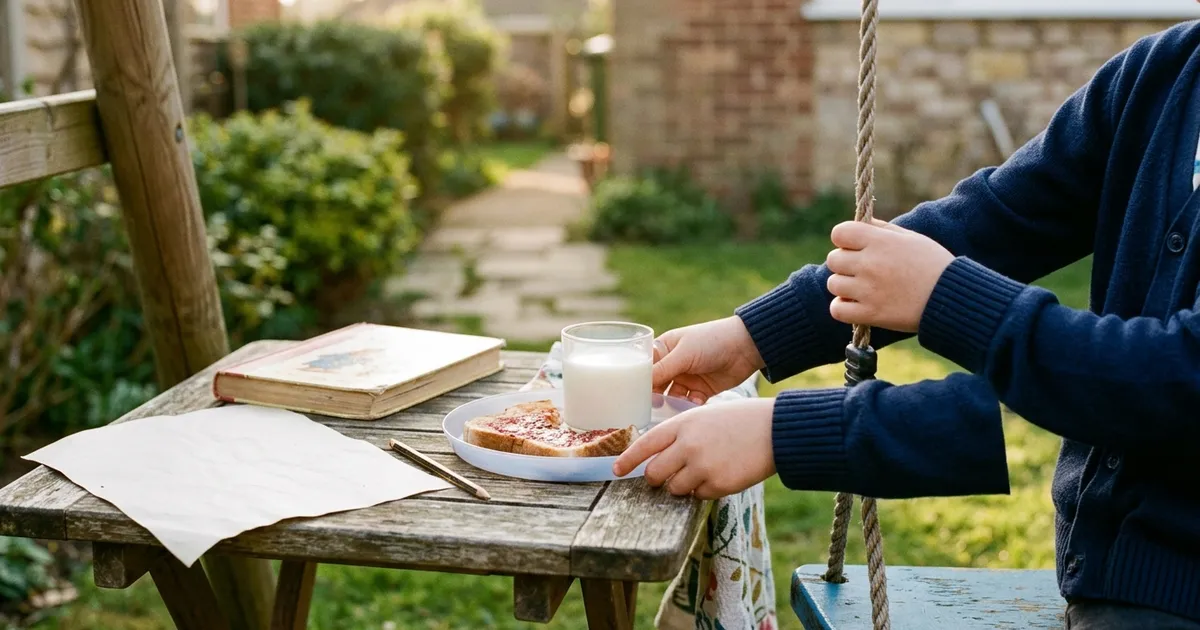
An English Routine at Home for Kids is a predictable daily period for hearing, speaking, reading, or writing English. Ten focused minutes each day are easier to sustain than one long weekly session. Instead of recreating school at the kitchen table, weave English into family life through songs, picture books, games, conversation, and short tasks. Build each session around a familiar cue, one activity, and an ending. Match the routine to your child’s age, skills, energy, and home languages.
📥 The Everyday English Routine Kit
Simple daily activities to turn a few minutes at home into steady English progress
Leave your email — we'll send the PDF to your inbox.No spam — the PDF plus one short reminder. Unsubscribe anytime.
Why a Small Daily Habit Matters
Children need repeated contact before using language confidently. A steady English Routine at Home for Kids brings words and sentence patterns back at regular intervals. Your child might hear “Put on your shoes” during a morning game, meet the phrase in a story, and use it later while playing.
Predictability lowers pressure. When English follows breakfast or precedes the bedtime story, your child knows what to expect. Parents need less negotiation, preparation, and daily activity planning.
Give each session a purpose. One day may focus on listening; another may ask your child to describe a drawing. Progress comes from revisiting familiar language, not filling every minute with new words.
Build a Routine Your Family Can Keep
Choose an established time in the day. Breakfast, the journey to school, bath time, and bedtime work well. Avoid periods when your child is hungry, rushed, or tired. An English Routine at Home for Kids should feel dependable, not like an extra test.
Use the same four-part pattern:
- Start cue: play one short song, show a familiar card, or ask the same greeting question.
- Main activity: read, play, listen, draw, act, or talk in English.
- Quick review: recall two useful words or one sentence from the activity.
- Clear finish: use a closing phrase such as “English time is finished. See you tomorrow.”
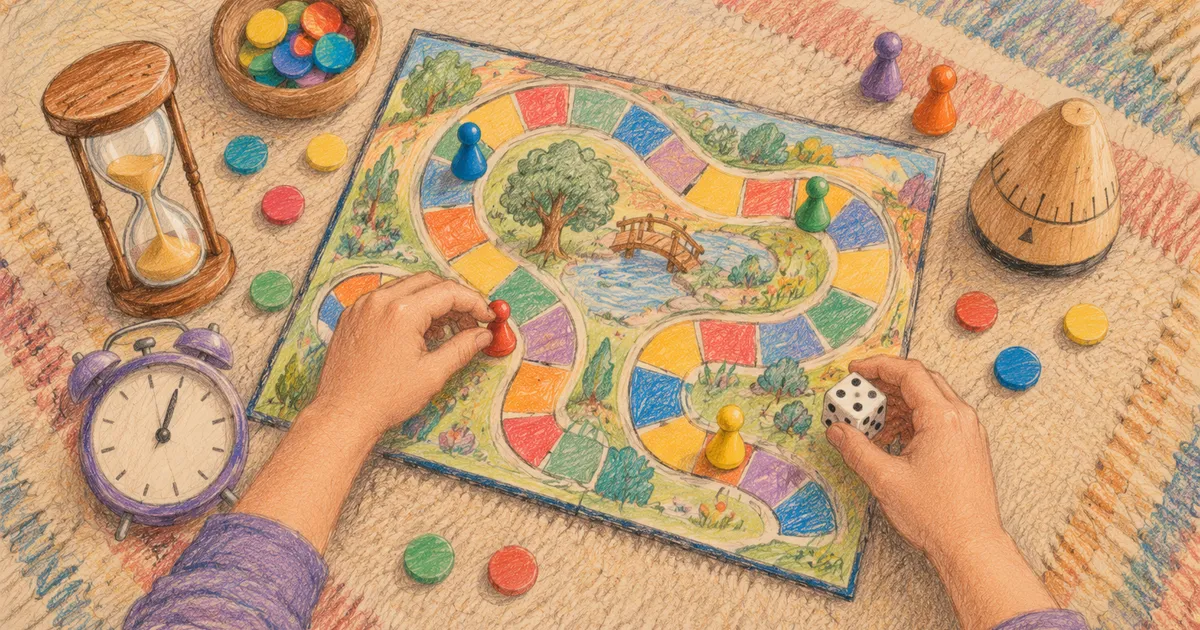
Keep materials nearby. A small box can hold picture cards, dice, crayons, and two books. Older children may save links to an audio story, word game, and shared vocabulary list on a phone or tablet. Ready materials remove a barrier to regular practice.
Match the Routine to Age and Attention Span
A five-year-old and a fourteen-year-old need different plans. Younger children learn through movement, rhythm, pictures, and repetition. School-age children can handle short reading tasks and guided conversation. Teenagers need more choice and language connected to personal interests.
Treat these times as guides, not enforced targets. Stop while your child remains engaged. A calm eight-minute activity beats twenty minutes of correction and resistance. When attention fades, shorten the task or add movement instead of pressure.
Turn Listening into Real Language Use
Videos, songs, and stories provide language input, but children need reasons to respond. Pause before a repeated line for your child to complete it. Ask for a point, choice, movement, drawing, or short answer. Even one spoken word counts as active use.
Build questions in stages. Start with a choice: “Is the dog big or small?” Continue with recall: “Where is the dog?” Later, invite a personal answer: “Would you like this dog? Why?” Gradual progression encourages speech without an overly broad opening question.
During an English Routine at Home for Kids, correct selectively. If confidence is the goal and your child says, “He go to school,” answer naturally: “Yes, he goes to school.” Your response models the correct form without interrupting the exchange. Reserve direct explanations for errors that block meaning or patterns your child is ready to study.
Support English in a Multilingual Home
English need not replace your family’s existing languages. A strong home language supports family bonds, knowledge, and complex thought. Give English a defined place while preserving the languages family members use for full communication.
Connect languages to support understanding. After an English story, your child can explain the plot in another language, compare two words, or examine question formation. Such comparisons develop language awareness without undermining English practice.
If your child already studies with LearnLink tutors, revisit lesson language through play or daily life. Label lesson items, repeat a dialogue with toys, or use one new phrase at dinner. The English Routine at Home for Kids should reinforce lessons without duplicating them.
Keep Progress Visible Without Testing
Track changes in your child’s abilities: following directions faster, joining a song, retelling part of a story, or speaking longer before switching languages. Record one brief observation each week. “Asked for water in English without a prompt” reveals more than a general score.
Refresh a stale routine while keeping its usual time and opening cue. Change the activity, book, or theme, and let older children choose between two options. After several missed days, restart with a familiar activity instead of replacing every lost session.
- Track five new words weekly on a colorful chart for ages six to nine.
- Display one finished picture book each Friday and celebrate consistent reading aloud.
- Record a thirty-second monthly voice note to notice clearer pronunciation and confidence.
- Use stickers after ten-minute sessions, rewarding effort instead of correct answers.
- Review the English Routine at Home for Kids chart together every Sunday.
When a word has several meanings or pronunciations, Cambridge Dictionary is a useful check before turning it into child-friendly examples.
Frequently Asked Questions
How Often Should My Child Practise English at Home?
A short session on most days is practical, but consistency matters more than a perfect schedule. Busy families can begin with three or four days a week. Connect practice to an existing habit and keep it brief. Once the English Routine at Home for Kids feels normal, add another day or extend an enjoyable activity.
Should We Speak Only English During the Routine?
No. Use enough English for meaningful practice, but permit another family language when your child needs help understanding instructions, expressing a complex idea, or avoiding distress. Repeat the key phrase in English, then continue. Growing familiarity will gradually reduce support needs.
What Should I Do If My Child Refuses to Take Part?
Check the timing, length, and difficulty. Offer two brief choices, such as a song or picture book, while keeping the scheduled time. Participate instead of watching and correcting. If resistance continues, pause for several days, then restart with a familiar, playful, shorter activity.
Do I Need Fluent English to Help My Child?
No. Use trusted audio, illustrated books, songs, and materials from your child’s lessons. Learn several phrases together and check pronunciation when needed. Protect the routine, show interest, and create a safe space for practice. When unsure about a rule, save the question for a tutor.
How Will I Know Whether the Routine Is Working?
Watch for stronger understanding, quicker recall, longer answers, and greater willingness to speak without prompts. Compare your child with their earlier performance, not siblings or classmates. After four to six weeks, review brief examples of language your child can now understand or say.
Start your child's English journey today — book a trial lesson with LearnLink.
Stay updated on our latest tips and resources by following us on Instagram LearnLink.