Toys in English for Kids
A strong starter set for toys in english for kids is 25 to 40 words: toys children hold, build, push, cuddle, trade, and clean up each week. the child vocabulary works because meaning sits in your child’s hands. A 5-year-old can point at a ball before saying “ball.” A 9-year-old can compare a board activity and a video title. Older children can describe rules, materials, preferences, and fair play. In LearnLink lessons, toy words connect speech with action, choice, turn-taking, and play.
📥 Toy Words Speaking Pack
Practice favorite toy words, simple phrases, and weekly speaking habits for kids.
Leave your email — we'll send the PDF to your inbox.No spam — the PDF plus one short reminder. Unsubscribe anytime.
Why Toy Words Help Children Speak
Start with these core words and short examples before adding more specific vocabulary.
| Word | Example |
|---|---|
| toy | A toy is something a child can play with. |
| teddy bear | The teddy bear sits on the bed. |
| doll | The doll wears a small dress. |
| blocks | Blocks can build a tall tower. |
| puzzle | A puzzle has many small pieces. |
| kite | A kite flies in the wind. |
| drum | Tap the drum softly. |
| train set | The train set goes around the track. |
| yo-yo | A yo-yo moves up and down. |
| board game | A board game is fun with family. |
the child vocabulary gives children a real reason to use English. They can ask for a toy, name what they have, choose a colour, count pieces, and say whose turn comes next. That makes toys in english for kids classroom and home language, not a word list.
Younger children use toy words for short sentences: “I have a car,” “This is my doll,” and “The ball is red.” Older children can stretch the topic: “I prefer building blocks because I can make different houses,” or “This activity is fair when everyone follows the rules.”
Toys also fit family cultures. Children in Spain, Israel, France, Italy, Germany, the United States, or multilingual homes may use different brands or local play activities, but the core English words stay practical: ball, blocks, puzzle, kite, teddy bear, robot, cards, and game. These words travel from living-room play to online lessons, school activities, and playdates.
Top Toy Words with Child-Friendly Examples
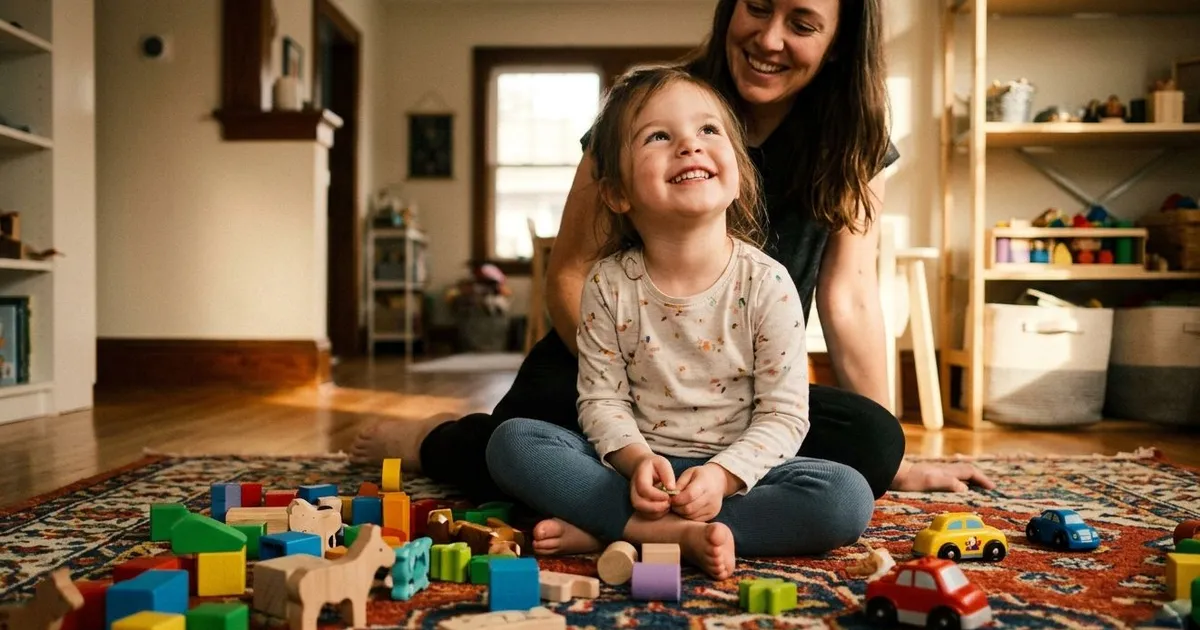
Start with toys your child sees at home. Real objects beat pictures because children can touch, move, sort, and clean them up. Say the word, show the toy, then use one short sentence: “Ball. This is a ball. Roll the ball.”
Here is a practical starter set for toys in english for kids. Use five to seven words at a time, not the whole list in one sitting. Children remember small sets repeated through play.
Useful first words include ball, car, doll, teddy bear, blocks, puzzle, train, robot, kite, plane, boat, yo-yo, frisbee, puppet, board game, card set, video title, marbles, toy animals, and toy food. Add words from your child’s real life: scooter, skateboard, slime, stickers, action figure, craft kit, or building bricks. The best list is not longest. The best list gives your child something to touch and use in a sentence today.
Children need phrases, not only nouns. Teach “Can I have the car?”, “It’s your turn,” “Where is the puzzle piece?”, “I want the red block,” and “Let’s clean up.” These lines help a child join play in English without long grammar explanations. For toys in english for kids, a phrase often matters more than one perfect isolated word because it gives vocabulary a job.
How to Build the Vocabulary by Age
For ages 4 to 6, keep language concrete. Use one toy, one action, one sentence. “Car. Push the car.” “Ball. Catch the ball.” Praise the attempt, then model the full sentence: “Yes, it is a red ball.” Young children learn through rhythm, repetition, and pressure-free play.
For ages 7 to 9, add choice and description. Ask, “Which toy do you want?” “Is it big or small?” “Can you put the robot under the chair?” This age group can start using adjectives, prepositions, and short reasons: “I like blocks because I can build.” They can also sort toys by colour, size, material, owner, or action.
For ages 10 to 15, toy vocabulary still works through play, design, collecting, and hobbies. Older children can compare toys, explain rules, describe a favourite childhood toy, or write a short board game review. The topic feels less babyish when the task asks for opinion, planning, memory, or problem-solving: “Design a new toy,” “Explain how the activity works,” or “Compare a digital activity with a board game.”
Memory Tricks and Word Patterns
Group words by action. Put “ball, frisbee, kite” together because they move through air. Put “blocks, bricks, puzzle pieces” together because children build or fit them. Put “doll, teddy bear, puppet” together because children use them for pretend play. These groups give the brain a pattern, not a random word pile.
Use sound and movement together. A child may remember “train” by saying “choo-choo train” first, then dropping the sound later. For “blocks,” stack each block while counting: “one block, two blocks, three blocks.” This joins vocabulary with number practice and keeps toys in english for kids active, not passive.
Point out helpful word patterns. “Board game,” “card activity,” and “video play title” share the idea of structured play, while the first word names the type. “Puzzle piece” and “train track” work similarly. These patterns help children understand new toy words without memorising each one alone.
Practice Activities at Home
A short daily routine works better than one long weekly lesson. Five minutes with toys in english for kids can be enough if your child speaks, moves, and hears the words. Keep the mood calm. When play feels like a test, speech often shrinks.
Try “toy shop” with real objects. Put five toys on a table and give each one a price with play money or counters. The parent says, “Hello. What do you want?” The child answers, “I want the train, please.” Older children can add, “How much is it?” “Can I buy two toys?” and “I don’t have enough money.”
Five-Minute Toy Basket Practice
Choose six toys and place them in a basket. Ask your child to pull out one toy and say, “It is a ___.” Add one detail: colour, size, action, or owner. For example: “It is a small car,” “It is my teddy bear,” or “The robot can walk.” Put the toy back and repeat another day with two new words.
Another activity is “find and say.” Give an instruction: “Find something round,” “Find a toy with wheels,” or “Find three blocks.” Your child brings the toy and says a sentence. This builds listening, vocabulary, and early grammar together. For older children, add a timer, reason, or comparison: “Find the most useful toy and explain why.”
Common Pitfalls Parents Can Avoid
The first pitfall is teaching too many words in one sitting. A long list looks efficient to an adult, but blurs for a child. Choose a small set, use it in action, then return to it the next day. Repetition makes words available for speech.
The second pitfall is asking only “What is this?” This question has a place, but can feel like a quiz. Mix it with tasks: “Give me the ball,” “Put the doll on the chair,” “Build a tall tower,” and “Choose a play activity.” Children speak more when English helps them act.
The third pitfall is correcting every error at once. If your child says “two car,” answer naturally: “Yes, two cars.” If meaning stays clear, model the correct form and keep play moving. Over-correction can make careful children go silent, especially first-time online learners. With toys in english for kids, confidence and repetition usually fix more than interruption does.
Quick Recap and Next Steps

Start with real toys, small sets, and practical phrases. The aim is not naming every toy in a room. The aim is English your child can use to ask, choose, describe, share, and clean up. That is why toys in english for kids works as an early speaking topic.
A direct path is enough: pick six familiar toy words, add two action verbs, practise three short phrases, then repeat across the week. In LearnLink lessons, tutors build from the child’s age and confidence, so the same topic can support a 5-year-old naming objects or a 12-year-old explaining play rules.
For home practice, keep a visible toy word list near the play area. Add a tick when your child uses a word in a sentence. After ten ticks, change two words. Slow growth still counts when the child can use language without prompts. This steady approach keeps toys in english for kids useful beyond one lesson.
When a word has several meanings or pronunciations, Cambridge Dictionary is a useful check before turning it into child-friendly examples.
Frequently Asked Questions
What Are the Best First Toy Words to Teach in English?
Begin with toys your child owns or sees often: ball, car, doll, teddy bear, blocks, puzzle, train, robot, cards, and game. These words are easy to show and repeat during play. For toys in english for kids, real objects help more than a printed list because your child can touch the toy while hearing and saying the word.
How Many Toy Words Should a Child Learn at Once?
For ages 4 to 6, five to seven words usually suit one practice cycle. Ages 7 to 9 can often manage eight to ten if words are grouped by action or type. Older children may learn more, but still need sentences and tasks. A child has not fully learned “puzzle” until they can say something like “I need one more puzzle piece.”
Should Parents Translate Toy Words into the Home Language?
Translation can help when a child gets stuck, especially in multilingual families. Use it briefly, then return to English with the object in hand. For example: say the home-language word once, then “Yes, teddy bear. This is a teddy bear.” The goal is not banning home language. The goal is attaching English to meaning, not only another word.
How Can Toy Vocabulary Support Speaking, Not Just Memorising?
Pair each toy word with a phrase or action. Instead of only saying “blocks,” ask your child to “build a tower,” “count the blocks,” or “give me the yellow block.” Turn-taking phrases help too: “It’s my turn,” “Your turn,” and “Let’s play again.” This turns toys in english for kids into communication.
Start your child's English journey today — book a trial lesson with LearnLink.
Stay updated on our latest tips and resources by following us on Instagram LearnLink.