New English Game for Kids
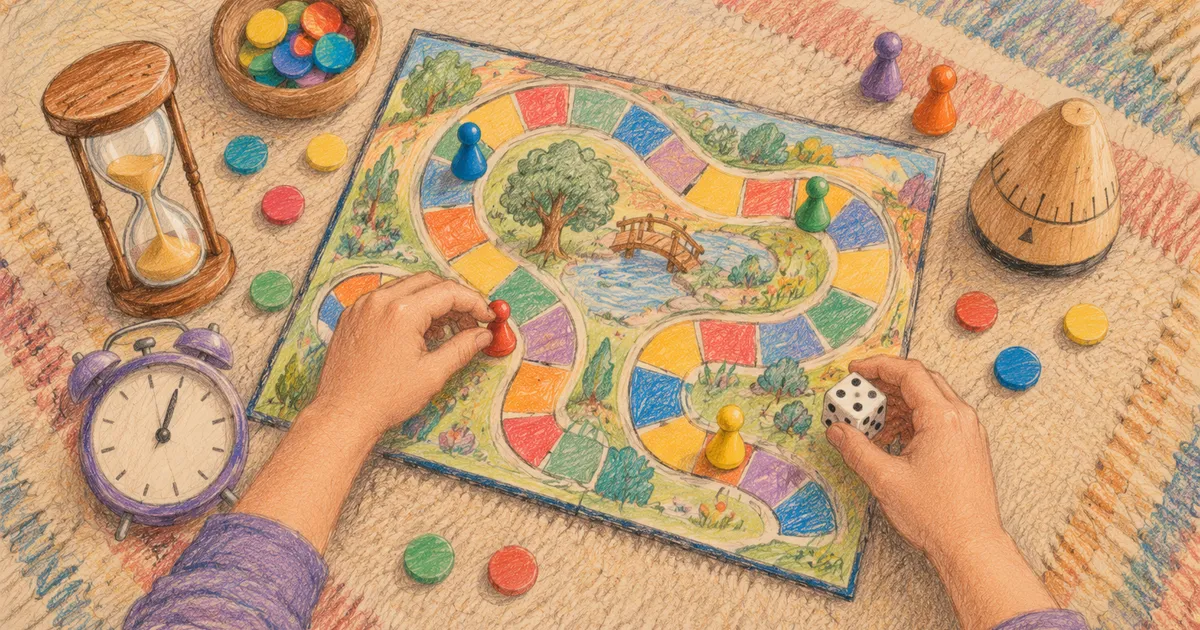
A new english game for kids works best when it teaches 6-12 words through play, sound, movement, and short turns. For children aged 4-15, success does not mean “winning English” in one sitting. Success means hearing a word, using it in a sentence, then meeting it again until it feels familiar. At home, try picture cards, a dinner guessing round, or an online matching task after school. The word list below gives parents a practical starting point.
Why Games Help Children Learn New Words
Children remember words when each one links with action, picture, sound, or choice. “Jump,” “red,” “apple,” and “sister” stick when a child points, moves, sorts, draws, or answers. A game gives each word a job.
A new english game for kids should keep pressure low. First-time online learners may need lessons before free speaking feels possible. Teachers often start with recognition: “Show me the cat,” “Choose the blue one,” or “Is it big or small?” Speaking grows from that base.
For multilingual children, games reduce word-by-word translation. A child can match “dog” with a picture, act out “sleep,” or sort “mother” and “brother” into a family group. Meaning comes first; the English label follows.
A Starter Word List for Play
This 36-word list gives enough range for early games and short practice. Younger children can start with 6-12 words. Older children can reuse those words in longer sentences, questions, and small stories.
Do not teach the whole table at once. Pick one row and make it active. With animals, a 5-year-old can make sounds or choose pictures. With food, an 8-year-old can ask, “Do you like rice?” A 12-year-old can compare: “Milk is cold, but bread is not.” A new english game for kids works better with one lively theme than with a crowded list.
How to Introduce the Words
Begin with listening. Say the word, show the picture or object, and let your child point. Use three words first: “cat,” “dog,” “fish.” Then ask, “Where is the dog?” A child can understand a word before saying it.
Next, move into short spoken answers. A new english game for kids can use fixed sentence frames: “It is a cat,” “I like apples,” or “The ball is red.” Sentence frames prevent list-like play and repeat English word order.
Older children need choice. Give two or three words and ask for a true, funny, or personal sentence: “My brother can jump,” “The rabbit is small,” or “I drink water after football.” The sentence can stay short. It must stay exact.
Game Ideas by Age and Confidence
For school-age kids, keep turns short and use the body. Place three picture cards on the floor and say, “Jump to green,” “Touch the dog,” or “Sit by the apple.” Movement helps young children stay with the task, especially when online learning feels new.
For school-age kids, add memory and choice. Put six words on the table, cover one, and ask, “What is missing?” Or play “odd one out”: apple, banana, milk, dog. The child explains, “Dog is not food.” Vocabulary practice becomes thinking, not copying.
For school-age kids, use the same words in richer tasks. Ask your child to design a café menu, write clues for an animal quiz, or make a two-minute family tree talk. A new english game for kids can suit older learners when the language target stays exact and the task respects their age.
Choosing the Right Game Format
Games train different skills. Matching builds fast word recognition. Guessing builds speaking. Spelling games train letter control. A balanced week can include two or three short formats.
If your child is shy, start with matching and sorting. If your child likes talking, use guessing and role play. A new english game for kids should meet the child’s level, then stretch it one step. A new english game for kids should feel doable first, challenging second.
Practice Game: Three Words, One Sentence
Choose three words from the table, such as “dog,” “small,” and “happy.” Your child makes one sentence: “The small dog is happy.” For younger children, give the sentence frame: “The ___ is ___.” For older children, add a reason: “The small dog is happy because it has food.”
How to Keep Practice Calm and Useful
Ten focused minutes beat forty tired minutes. Use a small word set, repeat it across several days, and change the task before patience drops. Repetition works when action changes: point, say, sort, draw, ask, answer.
Correct gently and briefly. If your child says, “It a dog,” answer with the full model: “Yes, it is a dog.” Then move on. Long grammar talks during vocabulary games can stop risk-taking. Give the right model often instead.
Across structured English lessons, vocabulary connects with speaking, reading, and listening. A child may learn “green” with a picture, use it in “The frog is green,” then answer, “What color is your bag?” That path turns memory into active use. A new english game for kids should support that path without turning practice tense.
How Parents Can Support Online Vocabulary Lessons
Before a lesson, choose one small theme: food, animals, colors, family, or actions. Put a few objects nearby if possible. Real things connect screen learning with home life: a cup of water, a red pencil, a family photo, or a toy animal.
During the lesson, let the tutor lead. Parents can help with the device, but children need space to answer. If a child looks at you after every question, smile and wait. Quiet waiting shows that their own answer matters.
After the lesson, play one short round using the same words. A new english game for kids works when school, tutor, and home practice point in one direction. Ask for one sentence at dinner, in the car, or while packing a school bag: “I have a blue book.”
- Try one new english game for kids after school for ten focused minutes.
- Practice five game words aloud during snack time with your six-year-old.
- Use picture books to find three matching words after each lesson.
- Ask your child to teach you two new words before bedtime.
- Track weekly progress with stickers for every ten remembered vocabulary words.
For extra child-friendly songs, games, or stories around the same skill, Reading Rockets — Reading Resources is a useful companion resource.
Frequently Asked Questions
How Many New English Words Should My Child Learn at Once?
For young beginners, 3-6 new words in one sitting is enough. Children may manage 6-10 when words share one theme. Older children can learn more, but they still need time to use words in sentences. The goal is not a long list. The goal is quick understanding and steady use.
Should We Translate Every Word into Our Home Language?
Translation can help when a child feels stuck, but it should not become the only route to meaning. Use pictures, objects, actions, and examples first. If you translate, keep it brief and return to English: “Yes, rabbit. The rabbit is small.” Multilingual children can handle more than one language, but each word needs context.
What Is a Good New English Game for Kids Who Do Not Like Speaking Yet?
Start with games that allow silent answers: pointing, matching, sorting, drawing, or choosing between two pictures. Then add one-word answers, such as “cat” or “blue.” After that, use a short frame: “It is blue.” A new english game for kids should build confidence step by step, not force a full sentence too early.
How Can I Tell If My Child Really Knows a Word?
A child knows a word when they understand it in more than one setting and use it without heavy prompting. Test lightly. If they learned “apple” from a picture card, later ask for “apple” near real food or in a sentence: “I like apples.” Flexible use is stronger than one correct answer in one game.
Use these takeaways before choosing the next activity:
- Start with 3-6 words from one theme, then repeat them for several days.
- Try one listening task, one movement task, and one sentence task with the same words.
- Practice short answers first, then build toward full sentences when your child is ready.
A short one-to-one lesson can show what level and pace fit your child — book a free English lesson.
Stay updated on our latest tips and resources by following us on Instagram LearnLink.