Participial Noun Phrases for Kids: Examples
A participle noun phrase uses a participle to describe a noun, as in “the girl in a red hat” or “the broken toy on the floor.” In this guide to participle noun phrase for kids, parents get rules, child-friendly examples, and quick home practice. The aim is not instant grammar-label mastery; it is helping your child see how English adds exact detail without making a sentence heavy. This skill strengthens reading, writing, and speech with precise meaning.
What a Participial Noun Phrase Means
A noun phrase is a noun plus detail. In “the small dog,” “dog” is the noun; “the small” adds detail. A participle noun phrase works similarly, but uses a verb form to describe that noun: “the dog barking outside.”
The participle looks like a verb yet works as description. In “the child reading quietly,” “reading quietly” tells us which child. In “the cake baked yesterday,” “baked yesterday” tells us which cake.
For younger children, say: “This phrase points to the exact person, animal, or thing.” That meaning matters before the grammar name.
Two Main Types Children Need First
Children first need two types: present participle phrases and past participle phrases. Present participles usually end in “-ing” and often show action happening now or nearby in time: “the boy kicking the ball.”
Past participles often describe a finished state or something done to a noun: “the window broken by the ball,” “the letter written in pencil.” They can feel harder because many past participles are irregular: “written,” “taken,” “made,” “seen.”
When teaching participle noun phrase for kids, start with the “-ing” type. Children can hear it, act it, and draw it. Move to past participles once your child can spot the noun being described.
How to Spot the Noun First
The safest method: find the noun before the participle. In “the woman carrying two bags,” ask, “Who or what are we talking about?” Answer: “the woman.” Then ask, “Which woman?” Answer: “carrying two bags.”
This order prevents a common mistake: treating every “-ing” word as the sentence verb. In “The boy is running,” “is running” is the verb. In “the boy running near the gate,” “running near the gate” only describes the boy.
Across LearnLink lessons, tutors use picture prompts for this step. A child can point and say, “the cat sleeping on the chair,” “the man carrying a box,” or “the door painted green.” Grammar grows from visible meaning.
Where the Phrase Goes in a Sentence
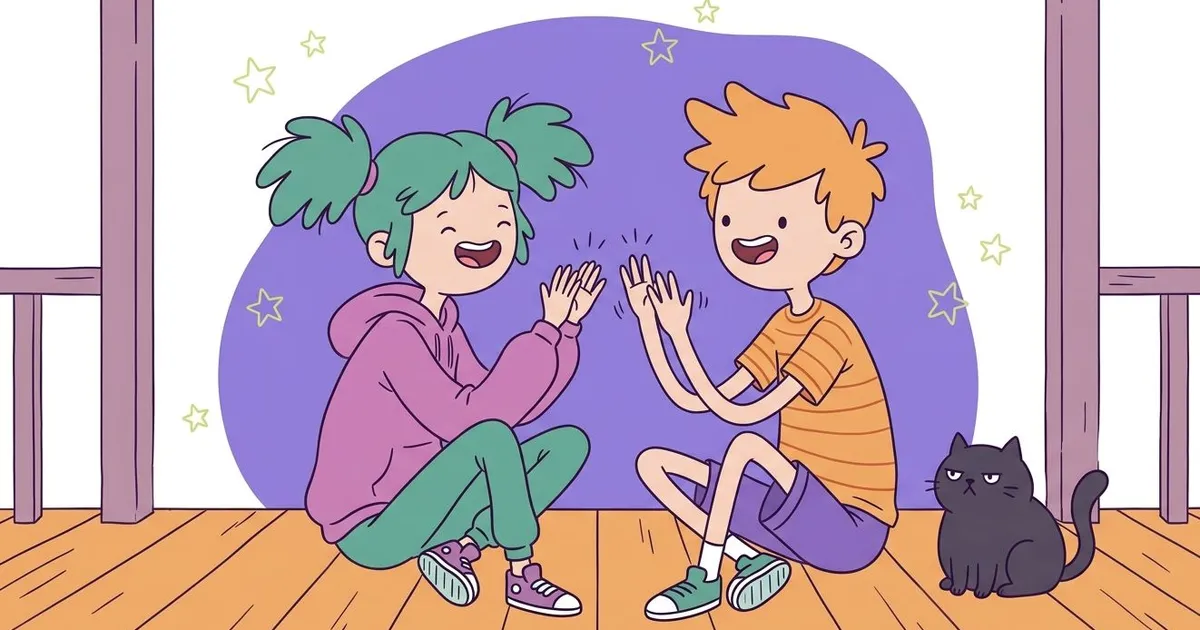
A participle noun phrase can sit inside the subject: “The child in a yellow coat is my brother.” The full subject is “the child in a yellow coat,” and the verb is “is.”
It can also sit inside the object: “I saw the child dressed in a yellow coat.” Here, the phrase identifies which child the speaker saw. This pattern appears in stories, school reading, and everyday speech.
For older children, compare two sentences: “The child wore a yellow coat. The child waited outside.” We can join the detail: “The child wearing a yellow coat waited outside.” That is a practical reason to teach participle noun phrase for kids: children gain more sentence choice.
Clear Examples by Age and Level
For school-age kids, keep examples short and physical: “the sleeping dog,” “the running boy,” “the painted egg.” Children can act them out or choose the matching picture. At this stage, meaning comes first; the grammar name can wait.
For school-age kids, use longer phrases after the noun: “the girl drawing a house,” “the shoes left by the door,” “the bird sitting on the fence.” Ask your child to circle the noun and underline the describing phrase.
Across LearnLink lessons, our tutors help children build confident, everyday English step by step.
Common Mistakes and How to Fix Them
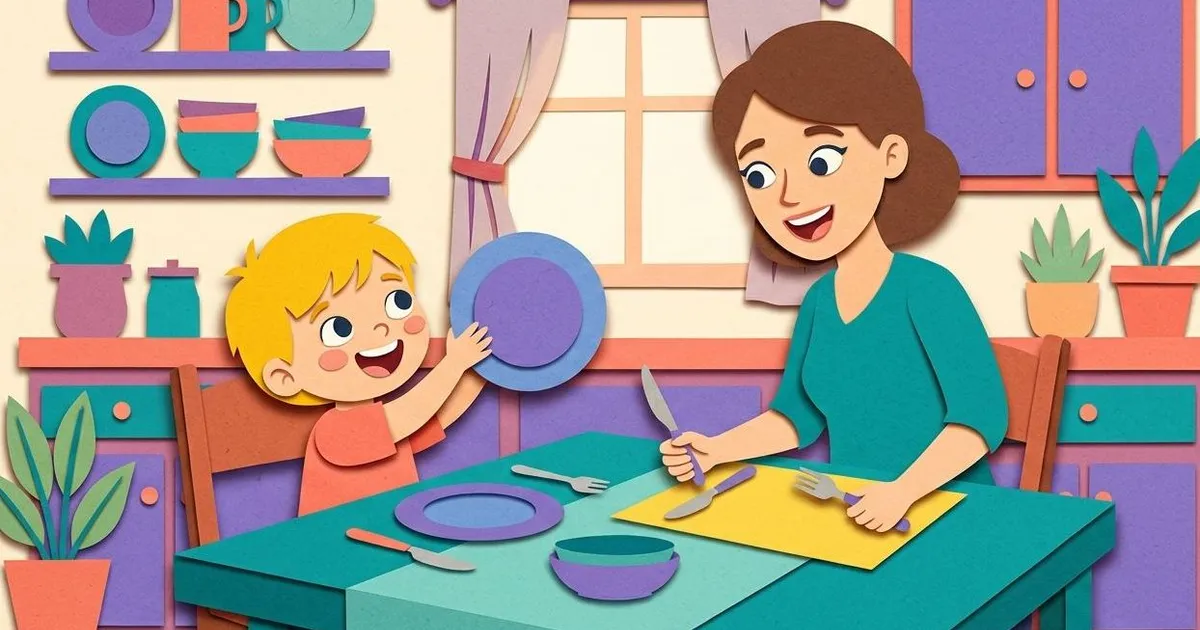
The first mistake is a missing verb. “The boy with glasses” is a phrase, not a full sentence. It needs a verb: “The boy wearing glasses is Sam” or “The boy with glasses waved.”
The second mistake is unclear reference. In “I saw the dog walking to school,” the dog sounds like the walker. If a person was walking, say: “Walking to school, I saw the dog.” For young learners, use: “I saw the dog while I was walking to school.”
The third mistake is detail overload. “The girl in a coat carrying a bag standing near the bus” is hard to read. Split it: “The girl wearing a coat stood near the bus. She was carrying a bag.” A good guide to participle noun phrase for kids protects clarity, not just grammar.
Practice 1: Find the Noun
In each phrase, find the noun first. Then find the participle phrase describing it: 1. the baby sleeping in the car 2. the cup broken by the fall 3. the children playing near the tree 4. the homework finished before dinner 5. the woman holding a map
How Parents Can Practise at Home
Use real objects before worksheets. Put three items on a table and say, “Give me the pencil lying beside the book.” Then switch roles and let your child give the instruction. The grammar becomes practical, not abstract.
Picture books work well. Pause on a page and ask, “Which child?” Answers might include “the child sitting on the floor” or “the child holding the red cup.” If the answer is too short, model a fuller phrase and ask your child to repeat it naturally.
For writing, ask your child to improve a plain sentence. Start with “The dog barked.” Add detail: “The dog standing near the gate barked.” This gives direct participle noun phrase for kids practice without a long grammar lecture.
Practice 2: Complete the Phrase
Choose a participle phrase to complete each sentence: 1. The boy _____ is my cousin. 2. The cake _____ tasted sweet. 3. The children _____ laughed loudly. 4. The picture _____ is on the wall. 5. The bag _____ belongs to Dad. Try these choices: playing cards, baked this morning, hanging above the sofa, in blue shoes, left on the train.
From Phrases to Better Sentences
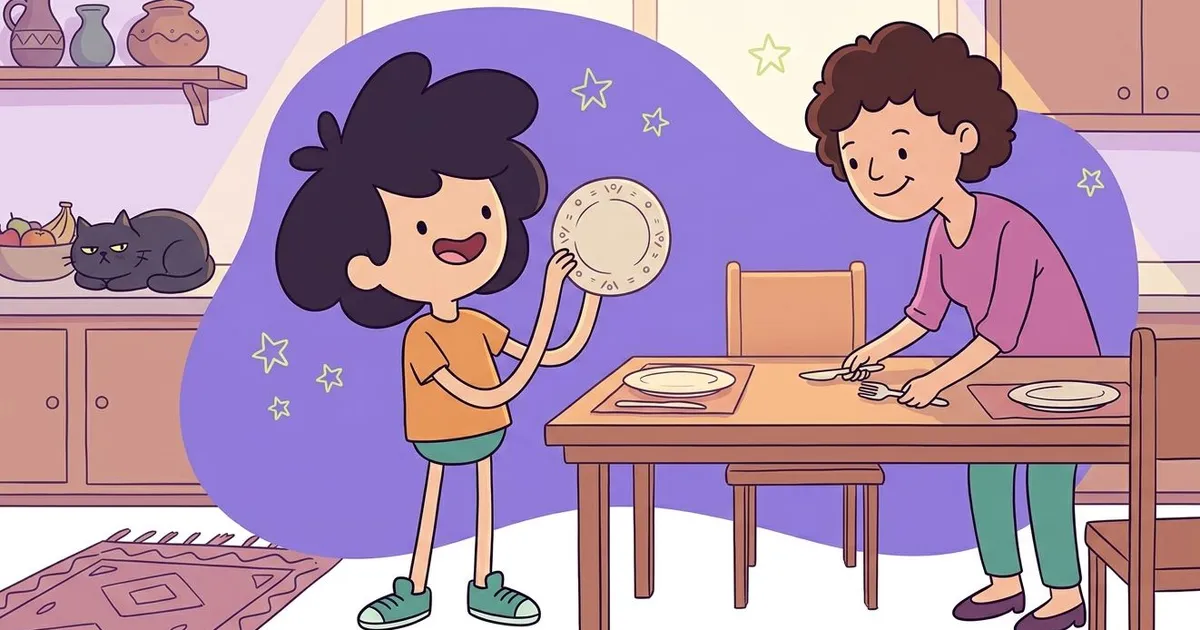
Participle noun phrases help children add detail without repeating the same noun. Instead of “I saw a girl. The girl was riding a bike,” a child can write, “I saw a girl riding a bike.” The sentence becomes shorter and smoother.
This supports reading too. Storybooks and school texts use phrases such as “the man standing at the door” or “the treasure hidden under the floor.” When children unpack the phrase, they understand who acts, what happens, and which noun the writer means.
In online lessons, a tutor can match the task to age. A 6-year-old may describe pictures. A 10-year-old may combine sentences. A 14-year-old may edit a paragraph for clarity. The goal stays constant: use the phrase when it helps the reader. Participle noun phrase for kids should build control, not clutter.
Practice 3: The Child the Sentences
the child each pair using a participle noun phrase: 1. The girl is singing. She is on the stage. 2. The toy was made of wood. It is on the shelf. 3. The boys are waiting outside. They are in green shirts. 4. The letter was written in Spanish. It arrived today. 5. The cat is hiding under the bed. It is black and white.
For the rule wording, Wikipedia — English Grammar is a useful reference while the practice examples here stay adapted for children.
Frequently Asked Questions
What Age Should a Child Learn Participle Noun Phrases?
Children can understand short examples from about age 6 when practice is oral and picture-based, such as “the sleeping dog.” The grammar label can wait. Most children can name and write participle noun phrases around ages 8-10, depending on reading level and first-language background.
Is a Participle Noun Phrase the Same as an Adjective?
It works like an adjective because it describes a noun, but it comes from a verb form. In “the broken chair,” “broken” describes “chair.” In “the chair broken during the move,” the longer phrase describes “chair.” For children, say: “It tells us which one or what kind.”
Why Is Participle Noun Phrase for Kids Useful in Writing?
Participle noun phrase for kids is useful because it helps children combine ideas without choppy sentence chains. “The boy opened the box. The box was hidden under the bed” can become “The boy opened the box hidden under the bed.” Meaning stays exact, and the writing sounds more mature.
How Can I Tell If My Child Has Written a Fragment?
Check whether the sentence has a verb. “The girl with a red scarf” is not complete because nothing happens yet. Add a verb: “The girl wearing a red scarf smiled.” Ask, “What did the person or thing do?” Without an answer, the sentence may be a fragment. Participle noun phrase for kids practice should always end with clear meaning.
A short one-to-one lesson can show what level and pace fit your child — book a free English lesson.
Stay updated on our latest tips and resources by following us on Instagram LearnLink.