How To Improve English For Kids
Research from Cambridge University shows language learning is effective when consistent and integrated into daily life, not confined to formal lessons. This core principle guides how to improve english for kids: creating a rich, supportive environment where English is a natural part of their world. Parents often feel pressure to find the perfect method, but success comes from a blend of enjoyable activities that build confidence. Our experience across 4,000+ families shows how to improve english for kids involves joyful discovery, not intensive drills.
Data current as of July 2026.
📥 7-Day English Habit Cards for Kids
Printable word and phrase cards to build daily English practice at home
Leave your email — we'll send the PDF to your inbox.No spam — the PDF plus one short reminder. Unsubscribe anytime.
Setting a Strong Foundation: Daily Habits
Consistency is paramount over intensity. Short, daily English exposure is more effective than one long weekly lesson. Integrate English into routines your child already enjoys, such as listening to English songs for kids during breakfast or watching a short English cartoon before bedtime. Make the language a normal, expected daily part. This low-pressure approach is essential for parents wondering how to improve english for kids without causing burnout. Build a positive association with the language from the beginning.
Making Learning Fun: Play-Based Methods
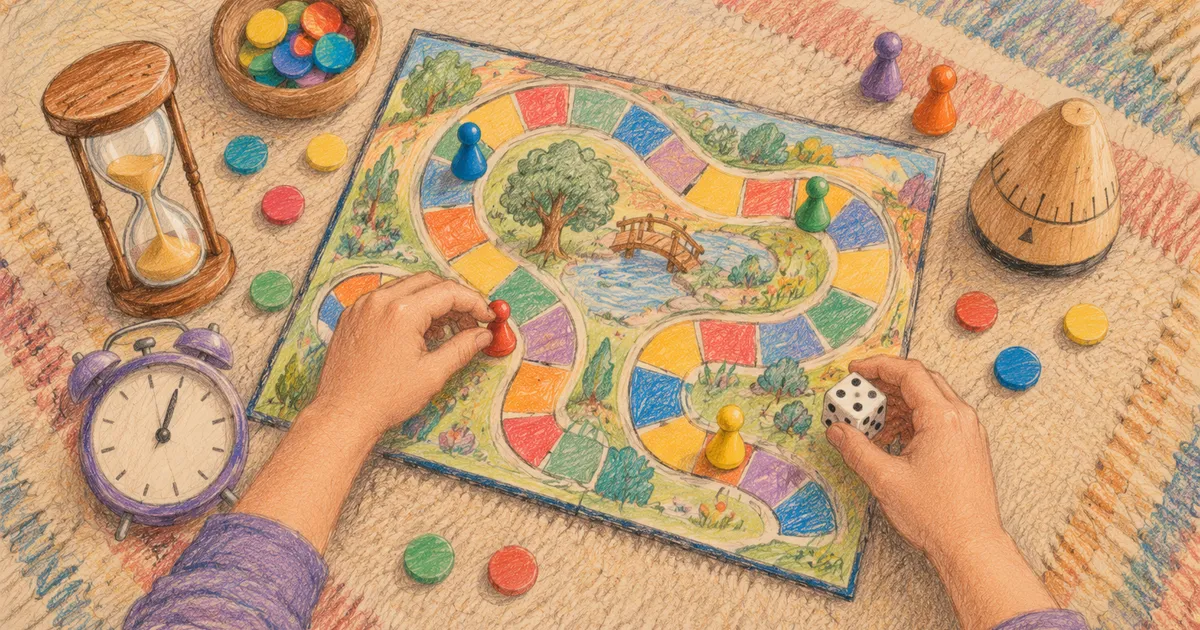
Play is the best way for children to learn. When engaged in fun activities, they absorb language naturally. Instead of flashcards, try games: board games, role-playing with toys, or English learning apps for kids. Such methods connect words to actions and emotions, aiding memory retention. This playful strategy empowers parents seeking effortless ways to improve english for kids. We find interactive learning is essential for kids to stay motivated.
Activity: The English Scavenger Hunt
Here’s a game to practice vocabulary at home. Choose a category, like "colors" or "shapes." Say, "Find something red!" in English. Your child then finds a red object and brings it back. Expand this to "Find something small and blue" or "Find something round." Connecting English words directly to physical objects in their environment makes learning concrete and fun.
The Four Core Skills: A Balanced Approach
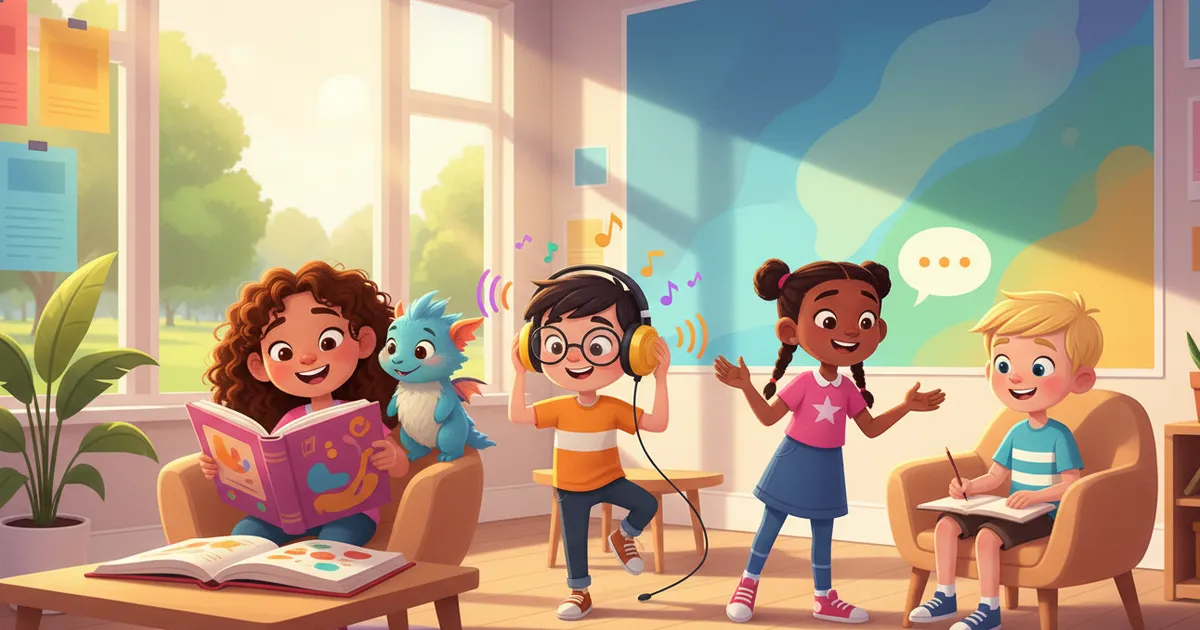
A complete language education addresses four areas: listening, speaking, reading, and writing. Develop these skills in a balanced way. For young learners (school-age kids), focus on listening and speaking. They absorb sounds and rhythms naturally by watching cartoons to learn English or listening to audio stories. Encourage speaking through questions and repeating phrases. As they get older (school-age kids), introducing English reading for kids with picture books and English writing exercises is essential. A well-rounded plan is the sustainable way to approach how to improve english for kids for long-term fluency.
Measuring Progress: Understanding English Levels for Kids
Understanding progress is helpful as your child learns. Schools and programs worldwide use the Common European Framework of Reference for Languages (CEFR). For children, this usually starts with "Pre-A1 Starters," "A1 Movers," and "A2 Flyers" levels from Cambridge English Qualifications. These levels provide clear goals, recognizing achievements. Understanding these benchmarks helps parents and tutors create a targeted learning plan. This roadmap removes guesswork from how to learn English for kids, providing milestones to celebrate.
Here is a breakdown of what these early levels look like:
Is Your Child Ready? A Quick Self-Assessment
Before considering a formal test or moving to the next level, see where your child stands. This isn't a test, but a checklist to help you gauge their comfort with English. An honest assessment is essential for figuring out how to improve english for kids because it shows where to focus efforts. A qualified tutor can provide a more detailed evaluation, but this is a good starting point for parents. For more personalized advice, understand how to choose the right English tutor.
Informal Progress Check (A1 Level)
Read these statements and assess if your child can do them comfortably (Yes) or still needs practice (Not Yet).
- Can they say their name and age in English?
- Can they point to and name 5-10 common objects in the room (e.g., chair, table, window)?
- Can they understand simple commands like "Sit down" or "Open the book"?
- Can they name primary colors in English?
- Can they sing a simple English song like "Twinkle, Twinkle, Little Star"?
Answering "Yes" to most indicates a solid Pre-A1/A1 foundation!
Key Takeaways and Next Steps
Main points:
- Make it a daily habit. Just 15 minutes of consistent, enjoyable English exposure daily is more effective than a long weekly lesson.
- Focus on play, not pressure. Use games, songs, and stories to create positive associations. Learning should feel fun.
- Build all four skills. Start with listening and speaking, then gradually introduce reading and writing as confidence grows.
- Track progress gently. Use informal checklists and CEFR levels as a guide, not a race. Celebrate small victories.
These steps provide an evidence-based framework for your child's bilingual development. For more ideas, explore printable English activities for young learners.
When a word has several meanings or pronunciations, Cambridge Dictionary is a useful check before turning it into child-friendly examples.
Frequently Asked Questions
What Is the Best Age to Start Learning English?
There is no "best" age, but the period from birth to age 10 is often a "window of opportunity" for language acquisition. Children's brains are adept at learning new sounds and structures during this time. Starting for school-age kids is common, allowing them to build a strong foundation before formal schooling becomes more demanding. Start when it feels right for your family and keep the experience positive and playful.
How Much Time Should My Child Spend on English Each Day?
For young children (school-age kids), consistency trumps duration. Aim for 15-20 minutes of focused, fun English activity daily. This could be reading a book together, playing a language app, or watching an educational cartoon. This daily habit builds momentum, keeping the language fresh without leading to fatigue or resistance. It's more effective than a long session once a week.
What If I'm Not a Native English Speaker Myself?
You can still be a great help in your child's learning journey! Your enthusiasm is paramount. Learn alongside your child. Use resources like English podcasts for kids, watch movies with English subtitles, and read books together. Show your child that learning English is a valuable, enjoyable activity. Modeling your own learning process can be a strong motivator.
My Child Speaks Two Languages Already. Will Adding English Confuse Them?
No, this is a concern, but research consistently shows the opposite. Children are capable of learning multiple languages. Children from multilingual homes develop enhanced cognitive skills, such as improved problem-solving and multitasking. The brain naturally "codeswitches" or separates the languages. An effective strategy for how to improve english for kids in a multilingual household is consistency—for example, one parent might speak English, or English is used during specific activities like reading before bed.
Ready to see how a personalized approach can boost your child's confidence — book a trial lesson with LearnLink with a LearnLink tutor and get a tailored learning plan.