British English Phonics for Kids
Phonics starts with 6 letter-sound links, then moves into digraphs such as sh, ch, and th. British English phonics for kids teaches how letters and letter groups match British pronunciation patterns, so children can read, spell, and speak with stronger links. Children hear the spoken unit first, then connect it to print. This supports international learners because English spelling is not fully transparent. In British English, the map includes short /ɒ/ in hot, long /ɑː/ in car, and endings in fish, jumped, and books.
📥 British English Phonics Practice for Kids
Sound groups, home practice, age examples, and short independent tasks
Leave your email — we'll send the PDF to your inbox.No spam — the PDF plus one short reminder. Unsubscribe anytime.
What Families Need to Know First
British phonics is not about copying an accent perfectly. It means hearing the target, saying it so others understand, and using that pattern when reading and spelling. A child may keep a home or local school accent and still build strong English. The goal is clear speech, not performance.
British English phonics for kids starts with single units: /s/, /a/, /t/, /p/, /i/, /n/. Children blend them into words such as sat, pin, and tap. Later, they meet digraphs: two letters making one spoken unit, as in sh in ship, ch in chair, th in thin, and oo in moon.
For bilingual and multilingual children, one pronunciation pattern may need extra time because it is absent from the home language. A Spanish-speaking child may work on final consonants in desk. A French-speaking child may practise /h/ in hat. A Hebrew-speaking child may need support with short vowels such as /ɪ/ in ship.
British Sounds That Often Need Practice
Start with contrasts that change meaning. The short vowel in ship differs from the long vowel in sheep. The vowel in cot differs from cut. Children need to feel the mouth shape and hear pairs, not study phonetics.
Use small contrast sets. Say ship, sheep. Ask your child to point to a sketch or choose one card. Then swap roles. Keep the pace light: listening comes before accurate speech. If the child cannot hear the contrast, louder repetition will not help. Slow down and use a gesture, picture, or movement.
In British English phonics for kids, the /ɑː/ vowel in car, park, and star matters. In many British accents, written r is not strongly pronounced after a vowel. Children can learn the spelling pattern without forcing a hard final /r/.
How to Use This at Home
Five minutes is enough for young children. Choose one phonics target, one spelling pattern, and three to six words. Example: sh with ship, shop, shell, fish. Say the target, blend a word, read it, then use it in a short sentence.
Make pronunciation visible. Use a mirror for lips and tongue. Use toy cars to “drive” through phonemes: /sh/ + /o/ + /p/ becomes shop. For school-age kids, add spelling choices: ai in rain, ay in day, a-e in make. Older children can compare British and American pronunciation when it affects listening.
Across online English lessons for children, phonics practice works when it stays tied to real speech. A child reads star, says it in a phrase, then uses it in a question. British English phonics for kids is strongest when reading and speaking grow together.
Practice 1: Listen and Choose
Say one word from each pair: ship/sheep, cot/cut, fan/van, thin/sin. Your child points to the word you said, then says it back in a short phrase: a big ship, three sheep, a red van.
A big ship is on the sea.
Three sheep are in the field.
We go to the shop.
The chair is by the table.
I can count to three.
We play in the park.
Examples by Age
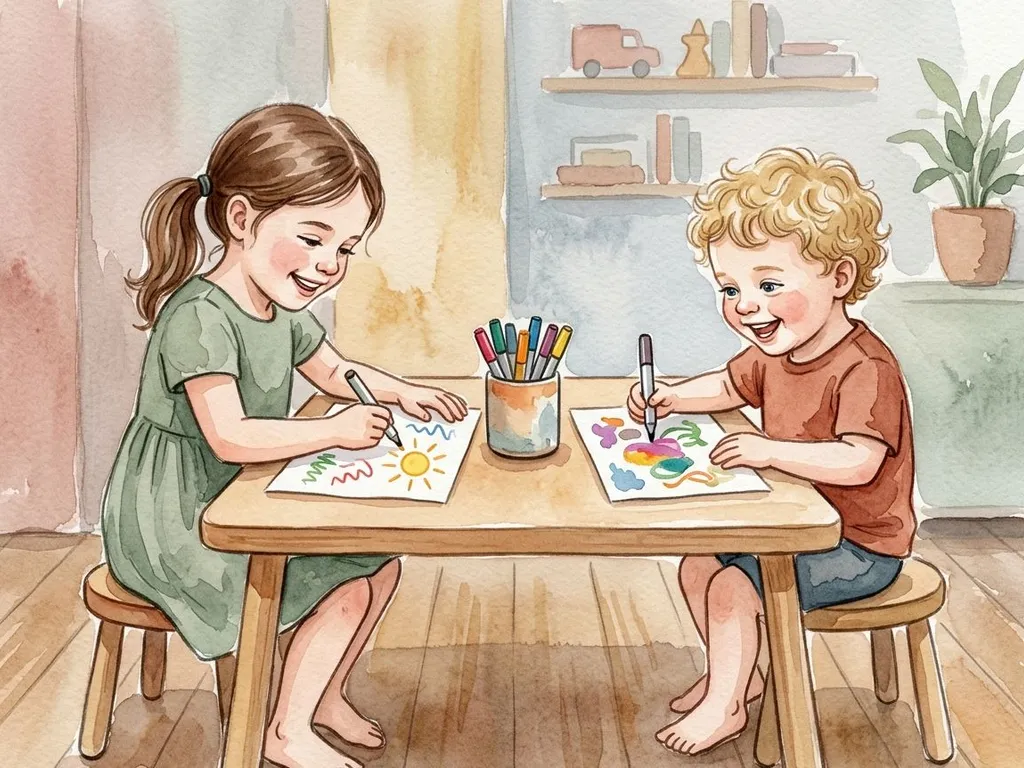
A child in the early years needs play, movement, and a small set of phonics targets. Use rhymes such as cat, mat, sat. Ask the child to clap once for each part in fish: /f/ /i/ /sh/. Avoid long written work at this stage. Oral work is the lesson.
School-age kids can handle short reading chains. Try shop, ship, chip, chin, thin. Change one part at a time and ask what changed. This builds attention to the front, middle, and end of words. British English phonics for kids also supports spelling because one pronunciation change can change the whole word.
Older learners often need sharper explanations. They may ask why phone starts with /f/ or why school has ch but no /ch/ pronunciation. Give the rule when there is one, and be honest when a word must be learned as a pattern. Older learners do well with word families, short dictation, and self-correction after recording their reading.
British and American Pronunciation Without Confusion
Children hear British and American English through school, games, films, and online videos. The mix becomes a problem only when the child treats every difference as a mistake. Teach that English has several standard accents, and lessons may choose one main model for consistency.
British English phonics for kids can include comparison. In British English, after, bath, and class may have a longer /ɑː/ vowel in many accents. In American English, these words often use a shorter /æ/ vowel. Both can be understood. For reading, spelling stays the same, so the child should learn the word shape and pronunciation.
Keep comparison short. Say, “In our lesson we will practise the British version, and you may hear another version in films.” This removes pressure and helps children who move between countries or attend international schools.
Practice 2: British Sound Check
Read these words aloud slowly: car, park, star, farm. Ask your child to stretch the vowel and keep the written r soft. Then use each word in a sentence: The car is red. We went to the park.
Practical Activities for Steady Progress
Use “sound boxes” for short words. Draw three boxes for ship: one for /sh/, one for /i/, one for /p/. Children push a coin or button into each box as they say each part. This works because sh is two letters but one spoken unit.
Try a weekly word hunt. Choose ch, sh, or ee. During reading, your child finds five examples and reads the whole word aloud. Then sort the words: beginning, middle, or end position. Sorting makes children think, not copy.
Tongue twisters help only when short and clean. Use She sells shells for /sh/ and /s/, or Three thin thieves for /th/. Say them slowly first. Speed comes later. A rushed tongue twister can train the wrong habit.
Practice 3: Fill the Sound
Choose sh, ch, or th: _ip, _air, _ree, fi_, lun_, ba_. Answers: ship, chair, three, fish, lunch, bath. Ask your child to read each answer in a phrase, not as a single word only.
When a Child Gets Stuck
If a child keeps mixing two patterns, reduce the task. Work on listening only for a few days. Then move to single-word repetition, phrases, and sentences. Speech accuracy is built in layers; each layer needs success before the next one.
Do not correct every word in free conversation. Choose one target for the week and praise careful attempts. If the child says sink for think, model the word naturally: “Yes, I think so.” Conversation stays alive while the child hears the right model.
British English phonics for kids should support confidence. A watched child may speak less. A child who knows the next small step will try again.
- Try three-minute blending practice with five CVC words before reading.
- Use one British English phonics sound card for daily review.
- Read one decodable book twice, praising accurate sounds each time.
- Pause after mistakes, then model the sound and retry together.
- Practice tricky words with tracing, saying, and reading aloud.
When a word has several meanings or pronunciations, Cambridge Dictionary is a useful check before turning it into child-friendly examples.
Frequently Asked Questions
Should a Child Learn British Phonics If the Family Uses Another Accent?
Yes, if British English is the school model, tutor model, or reading programme the child follows. British English phonics for kids gives one stable pronunciation system for practice. A home accent can stay. The useful aim is stable listening, clear reading, and speech that others understand.
What Age Is Best for Starting Phonics?
Children can start light phonics play at pre-school age, especially with rhymes, songs, and picture cards. Formal reading work should match attention span and school stage. Older children can still benefit from British English phonics for kids, particularly if they read English words but guess pronunciation from spelling.
How Much Should Children Practise Each Day?
For younger children, five focused minutes often beats a long session. Older children may manage 10-15 minutes if the task is clear. Use one pattern at a time. End while the child can still succeed, not after mistakes pile up.
Should British and American Differences Be Corrected?
Correct only when the lesson has a chosen model or when meaning is unclear. If a child uses an American-style vowel but communicates well, explain that it is a different standard form. Then practise the British version for consistency. Children can understand variation without feeling that one form is “bad English.”
- Start with one clear contrast, such as ship and sheep.
- Practise for five minutes with listening, reading, and one short phrase.
- Use pictures, movement, or a mirror before asking for perfect speech.
- Keep British English phonics for kids linked to real words, not isolated drills.
If your child needs steady speaking practice, start small — Try a trial lesson with LearnLink.
Stay updated on our latest tips and resources by following us on Instagram LearnLink.