Clothes Vocabulary for Kids: A Guide
Clothes vocabulary for kids covers words children use to name garments and discuss dressing. Start with everyday tops, bottoms, footwear, outerwear, and accessories. Then connect nouns to verbs such as wear, put on, take off, and fit. Real garments, brief choices, and short patterns beat translated lists. Your child should find, describe, and name each item during daily routines.
Start with Useful Everyday Words
Build clothes vocabulary for kids around items your child can see and touch. Begin with familiar clothes before adding formal wear, sports kit, or another season’s garments.
T-shirt, shirt, blouse, sweater, jumper, hoodie.
trousers, pants, jeans, shorts, skirt.
dress, suit, uniform, pyjamas, swimsuit.
coat, jacket, raincoat.
socks, shoes, boots, trainers, sneakers, sandals.
hat, cap, scarf, gloves, belt, tie, bag.
Choose a small group from one or two categories. After your child can point to and name each item, add colour, size, or material: a red coat, small boots, or a cotton shirt. Teach underwear through pictures or clean laundry, not by asking what a child is wearing.
Put the Words into Short Sentences
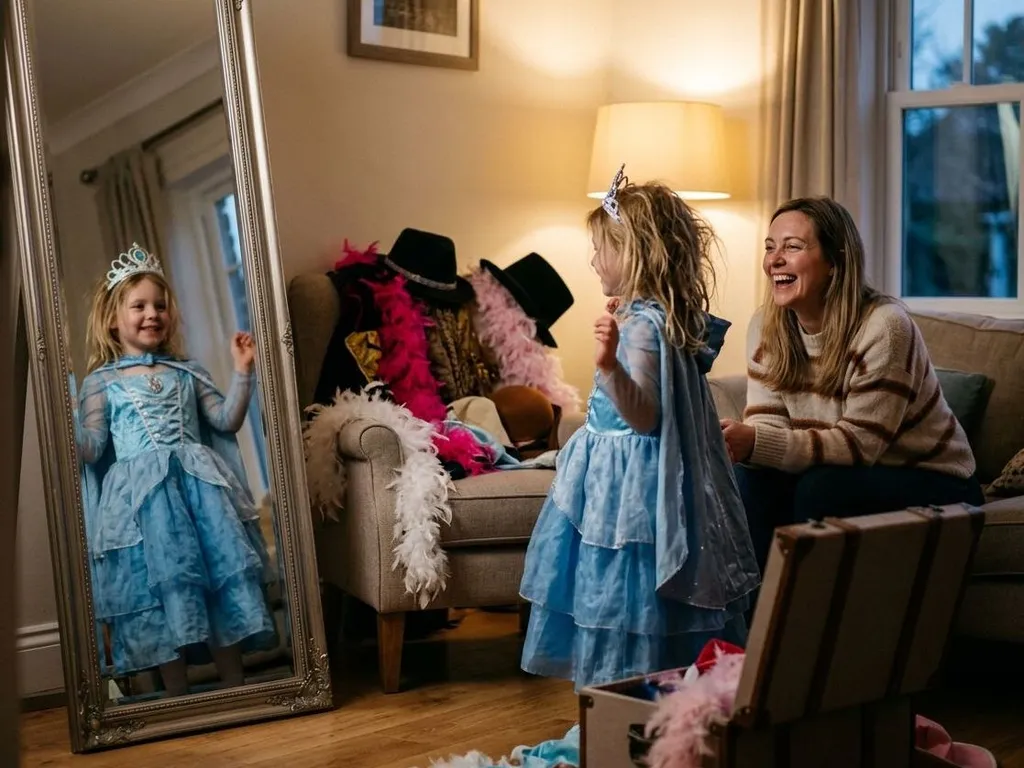
Clothes vocabulary for kids becomes practical inside repeatable sentence frames. Model one pattern, change one word, then use the pattern while dressing or packing.
- “What are you wearing?” “I’m wearing a blue T-shirt.”
- “Put on your coat, please.”
- “Take off your shoes.”
- “These trousers are too long.”
- “This jacket fits me.”
- “Whose hat is this?” “It’s mine.”
Contrast wear with put on: a child puts on a sweater, then wears it. Use is wearing for current clothing: “Dad is wearing a green shirt.” Older learners can add reasons and opinions: “I chose my boots because it is raining” or “This hoodie feels warmer than that one.”
Understand British and American Clothing Words
International learners meet British and American English. A short comparison prevents confusion when videos, games, tutors, and school materials use different varieties.
Both versions belong in clothes vocabulary for kids. Your child can speak the variety taught at school and recognise the alternative. Explain that British pants often means underwear, while American pants means trousers. Context identifies the intended meaning.
Match Activities to Age and Confidence
Choose activities by language experience and age. A multilingual seven-year-old may master naming tasks quickly, while a first-time online learner may need more pointing, repetition, and wait time. Keep clothes vocabulary for kids playful without making older children feel the work is too young.
- school-age kids: Dress a toy and name each item. Give two choices: “Red socks or blue socks?” Play “Touch the coat” or ask the child to find an item in a clean laundry basket.
- school-age kids: Set up a pretend clothes shop. One person asks, “Do you have a green T-shirt?” and the other replies, “Yes, here you are.” Children can also choose suitable clothes for pictures showing rain, snow, heat, or wind.
- school-age kids: Plan an outfit for a school day, celebration, trip, or sports session. Ask the learner to explain each choice, compare two outfits, or pack a small suitcase from a written list.
Age bands are guides, not limits. Let confident younger children explain choices in full sentences. Give older beginners a practical role-play with simple language. Families can compare clothes for local weather, school rules, or celebrations without treating one custom as the norm.
Build a Short Practice Routine
Practise clothes vocabulary for kids in brief rounds across a few days. Move from recognition to naming, then sentences. Show a scarf, hide it, ask for the word, then prompt: “When do you wear a scarf?” Review older words while introducing new ones.
Try the Suitcase Challenge
Place clothes on a bed or show pictures. Name a destination and its weather. Your child chooses suitable items, packs an imaginary suitcase, and says, “I’m taking a jacket because it may be cold.” Change the weather and repeat.
Across LearnLink lessons, our tutors move from recognition to guided conversation. At home, parents can use dressing, laundry sorting, or holiday packing. Each routine gives words a purpose and avoids lengthy explanations.
Correct Common Mistakes Without Interrupting Speech
Errors arise as children build clothes vocabulary for kids. Correct the key word or structure, request one calm repetition, and continue the conversation. Constant interruption turns speaking practice into a test.
- Say “My clothes are clean,” because clothes is plural.
- Use clothing as an uncountable noun: “warm clothing,” not “a clothing.”
- Use a piece of clothing or name the item when one object is meant.
- Remember that trousers, jeans, shorts, and pyjamas normally take plural verbs.
- Do not reject a correct regional word such as trainers because a course uses sneakers.
- Avoid teaching only picture labels; add a verb or sentence frame from the start.
Give pronunciation gentle attention. Model the natural form instead of demanding repeated attempts. In clothes, the final sound may be hard to hear, so use a distinct phrase such as “clean clothes.” Praise the message, then refine one detail.
- Try recasting one incorrect clothes phrase naturally during play, without requesting repetition.
- Practice clothes vocabulary for kids aged five to eight with picture-book role-play.
- Praise meaning first, then model the correct word casually in your response.
- Repeat the corrected phrase later during a three-minute dressing game.
- Choose three common errors and correct only one per conversation.
When a word has several meanings or pronunciations, Cambridge Dictionary is a useful check before turning it into child-friendly examples.
Frequently Asked Questions
How Many Clothing Words Should a Beginner Learn at Once?
Start with six to ten familiar items and two sentence patterns. Choose a set your child can recognise and use without guessing. Add words when most answers are secure. A long clothes vocabulary for kids list works as a reference, but teach it in small, connected groups.
What Is the Difference Between Clothes, Clothing, and an Outfit?
Clothes is the everyday plural word for things people wear: “Her clothes are dry.” Clothing is a broader uncountable term: “Bring warm clothing.” An outfit is a set of clothes worn together. Practise the distinction by choosing items and saying, “This is my rainy-day outfit.”
Should My Child Learn British or American Clothing Words?
Use the variety followed by your child’s school or main course, but teach alternatives for recognition. A child need not switch between trousers and pants in every sentence. Consistent speaking builds confidence; recognising both forms helps with books, travel, videos, and international conversations.
What Can We Do If a Child Knows the Words but Cannot Make Sentences?
Use one stable frame, such as “I’m wearing ___” or “Put on your ___.” Offer two visible choices and wait before helping. Once the frame feels easy, add colour, weather, or a reason. This turns clothes vocabulary for kids from passive knowledge into speech without requiring a full original sentence.
If your child needs steady speaking practice, start small — choose a free trial lesson.
Stay updated on our latest tips and resources by following us on Instagram LearnLink.