Daily English Phrases for Kids
Daily English phrases for kids are short sentences children can use at home, in class, online, and with friends: “Good morning,” “Can I have water?” “I need help,” and “Let’s play.” For ages 4-15, the strongest phrases are practical, repeatable, and tied to daily life. This guide gives parents daily English phrases for kids, context examples, and age-based activities. The aim is steady use, not flawless speech on day one.
📥 Daily English Phrases for Kids
Everyday phrases for home, lessons, and kind social moments
Leave your email — we'll send the PDF to your inbox.No spam — the PDF plus one short reminder. Unsubscribe anytime.
Core Phrases Children Can Use Every Day
Start with phrases your child can use several times a day. Repetition matters more than quantity. A 5-year-old may learn three phrases in a week; a 10-year-old can handle more when phrases fit real routines.
Use this starter set across meals, play, lessons, and bedtime:
- Good morning.
- Good night.
- Hello.
- Bye.
- How are you?
- I’m fine, thank you.
- Please.
- Thank you.
- You’re welcome.
- Can I have water?
- I’m hungry.
- I’m tired.
- I need help.
- I don’t understand.
- Can you repeat that?
- It’s my turn.
- Your turn.
- Let’s play.
- I like it.
- I don’t like it.
- Where is my book?
- I’m ready.
- Wait, please.
- Well done.
- See you tomorrow.
These daily English phrases for kids work because each phrase has a purpose. The child can ask, answer, join a game, solve a problem, and show manners without building a new sentence from scratch.
How to Introduce Phrases Without Pressure
Choose one daily moment and attach English to it. Breakfast might use “Good morning,” “Can I have water?” and “Thank you.” A lesson might use “I don’t understand,” “Can you repeat that?” and “I’m ready.” Keep the first step small enough for success.
Say the phrase in a warm, normal voice, then let your child answer with one word, a gesture, or the full phrase. For younger children, a nod after “Are you ready?” counts as a first response. For older children, ask for the whole sentence once the phrase is familiar.
Across LearnLink lessons, our tutors build daily English phrases for kids into routines: greeting, checking materials, choosing a game, asking for help, and closing the lesson. Children get a script first, then room to speak more freely.
Examples in Real Family and Lesson Contexts
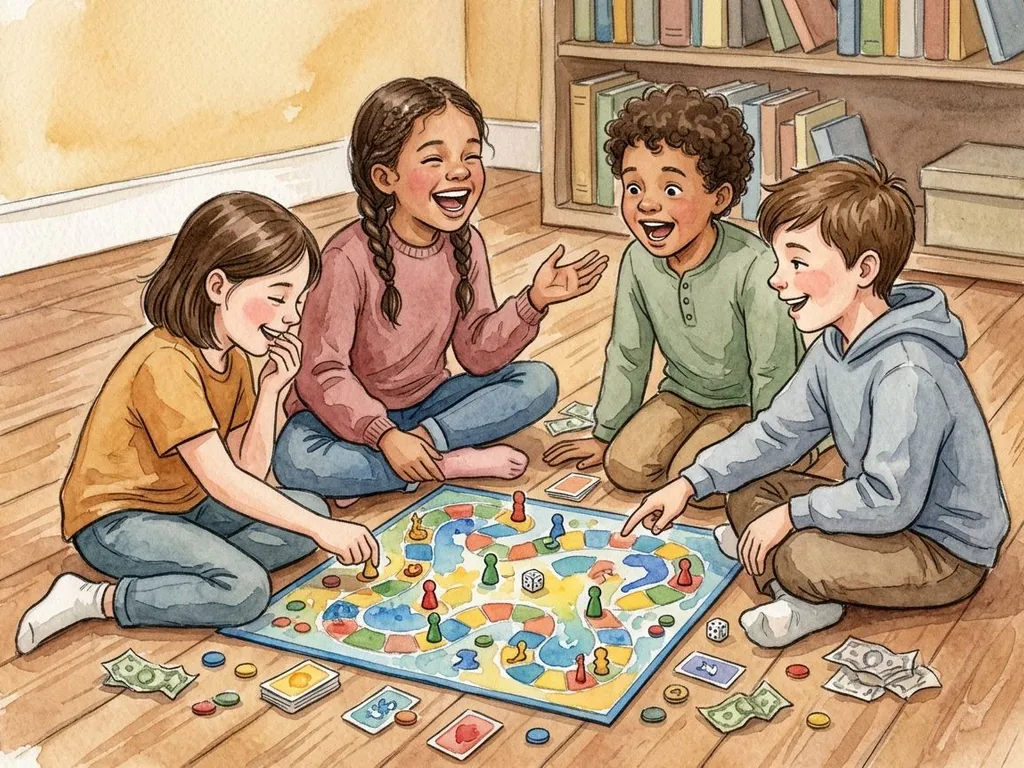
Children remember phrases when they hear them in a scene. Instead of drilling “I need help” alone, use it when a pencil breaks, a page feels hard, or a game rule is unclear.
For bilingual or multilingual children, a mixed first answer is fine. A child may say, “I need help con esto,” or “Can I have agua?” Treat that as a bridge. Repeat the full English phrase once, then continue the activity.
Activities by Age
For preschool children, make phrases physical. Wave for “Hello,” point to a cup for “Can I have water?”, raise a hand for “I need help,” and pass a toy for “Your turn.” Short phrases plus action link sound and meaning.
For school-age kids, use choice games. Put phrase cards on the table and ask your child to pick the sentence that fits the moment. If you spill crayons, the right card might be “I need help.” If a game starts, the right card might be “Let’s play.”
For older kids, keep phrases practical but less childish. Add fuller forms such as “I’m not sure,” “Could you say that again?”, “I agree,” “I don’t agree,” and “Can I ask a question?” Older learners need language that respects their age, even at an early English level.
Five-minute Phrase Swap
Choose five daily English phrases for kids and write each one on a small card. Say a home situation: “You want juice,” “The lesson is hard,” “The game is starting.” Your child chooses the matching card and says the phrase aloud. Repeat the same five cards for three days before adding new ones.
Practice Ideas for Home Routines
The easiest practice is a phrase routine. Use “Good morning” every morning, “I’m ready” before a lesson, and “Good night” before bed. The phrase becomes part of the day, not a test.
You can build an “English corner” on the fridge or wall. Add five phrases at a time. When your child uses one naturally, put a mark next to it. The visible record shows progress without turning each phrase into a prize.
Role-play works when it is brief. Parent and child can act out a shop, a classroom, a video call, or a playground. Keep each scene to one minute. The goal is to make daily English phrases for kids ready for real speech.
Common Mistakes to Avoid
The first mistake is teaching too many phrases at once. A long list may look helpful to an adult, but it can overload a child. Ten phrases used often beat fifty phrases seen once.
The second mistake is correcting every sound. If your child says “tank you” instead of “thank you,” model the phrase and move on. Save pronunciation work for short moments. Children speak more when adults do not stop every sentence.
The third mistake is using phrases only during “study time.” Daily English phrases for kids should appear during snacks, toys, chores, screens, and bedtime. When English belongs to normal life, children understand why the words matter.
How to Grow from Phrases to Full Sentences
Once a phrase is easy, add one change. “I like it” can become “I like this book,” “I like this game,” or “I like the blue car.” “Can I have water?” can become “Can I have water, please?” and later “Can I have cold water, please?”
Use sentence frames for older children. Write “I need help with ___,” “I want to ___,” and “I think ___.” These frames move children beyond memorized language while keeping support.
Do not rush from phrase to grammar lesson. Children can learn patterns before they can name grammar. Later, point out that “Can I have.?” is a polite request or that “I don’t.” makes a negative sentence.
- Start with three daily English phrases for kids during breakfast routines.
- Expand each phrase into one full sentence your child can repeat.
- Use picture books for school-age kids to model simple sentence patterns.
- Practice five-minute question-and-answer turns after school or bedtime.
- Praise complete sentences, then gently repeat shorter answers in full form.
When a word has several meanings or pronunciations, Cambridge Dictionary is a useful check before turning it into child-friendly examples.
🎯 Not sure where your child stands?
Answer 5 questions about your child (4–15) and get a level guide — from Pre-A1 to B1 — with what to practise next.
Take the 2-minute quiz
Takes about 2 minutes. The result is a guide, not a formal assessment.
Frequently Asked Questions
How Many Daily English Phrases Should My Child Learn First?
Start with 5-10 phrases if your child is under 7, and 10-15 phrases if your child is older or already learns another language. The main question is: “Can my child use them in real moments?” A small set used every day builds confidence faster than a large list repeated once.
Should Parents Translate Each Phrase into the Home Language?
Translation can help at the start, especially for safety and needs-based phrases such as “I need help” or “I don’t understand.” After your child knows the meaning, reduce translation and use gestures, objects, or situations. English then becomes a direct communication tool, not only a school exercise.
What If My Child Answers in Another Language?
Accept the meaning first, then model the English. If your child answers in Spanish, Hebrew, French, Arabic, or another home language, reply, “Yes: I’m hungry,” and invite one repeat. Multilingual children often pass through mixed-language stages. That is part of building control across languages.
How Can Daily English Phrases for Kids Support Online Lessons?
Daily English phrases for kids give children a lesson script they can trust. Phrases such as “Can you repeat that?”, “I need help,” “I’m ready,” and “I don’t understand” let a child manage the lesson instead of sitting silently. For first-time online learners, this lowers stress and makes turn-taking easier.
Start your child's English journey today — book a trial lesson with LearnLink.
Stay updated on our latest tips and resources by following us on Instagram LearnLink.