Elementary Vocabulary List for Kids Ages 5-9

An elementary vocabulary list for kids establishes linguistic foundations for environmental description and instruction following. These terms facilitate functional literacy and verbal expression. Effective pedagogical lists prioritize concrete nouns and high-frequency verbs relevant to daily life. Contextual play ensures lasting cognitive connections for young learners.
📥 Elementary Vocabulary Builder for Kids Ages 5-9
A printable word practice pack with simple noun, verb, adjective, and feelings groups.
Leave your email — we'll send the PDF to your inbox.No spam — the PDF plus one short reminder. Unsubscribe anytime.
Core Nouns: Naming the World
Nouns identify people, places, and physical objects. Learners first associate words with immediate environmental stimuli. High-frequency nouns minimize cognitive load. Direct association between phonetics and physical items enhances memory for school-age children.
Essential Action Words (Verbs)

Verbs describe physical or mental actions. Total Physical Response (Tpr) techniques link verbs to movement. These terms are essential for classroom participation. Implementation strategies are available in the guide on how to teach English to kids at home.
Describing Words (Adjectives)
Adjectives provide detail for nouns. Instruction focuses on contrasting pairs. An elementary vocabulary list for kids includes these to help children express observations. Learning basic colors in the target language serves as a visual starting point. Activities like an alphabet treasure hunt reinforce descriptive terms.
Vocabulary Practice Exercises
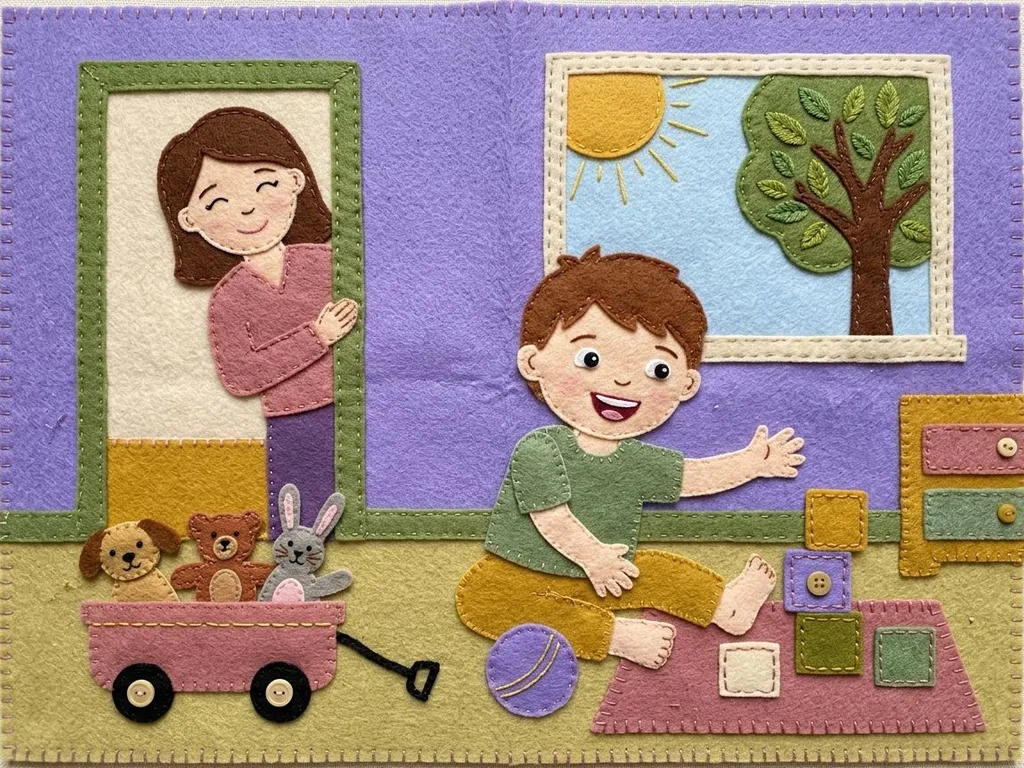
Exercise 1: Fill in the blanks
- I use a ______ to read stories at night.
- The ______ says 'woof' when it is happy.
- It is time to ______ lunch in the kitchen.
- Can you ______ the ball in the park?
After students complete the blanks, turn the same four sentences into a short oral practice round for elementary kids. Ask each child to read one sentence aloud, choose the missing word from the elementary vocabulary list, and then act it out with a gesture: opening a book, barking like a dog, eating lunch, or throwing a ball. This keeps the exercise concrete and helps learners connect the written word, the sound, and the meaning. A useful target is 8-10 practice words per session; more than that can make younger learners guess from memory instead of thinking about the sentence clue.
Across LearnLink lessons, our tutors help children build confident, everyday English step by step. This contrast technique is especially helpful because a common mistake in elementary vocabulary practice is choosing a word that belongs to the same topic but does not match the verb or action in the sentence. For example, a child may write “drink lunch” because both words connect to meals, so ask them to say the full sentence and check whether it sounds natural. To add writing practice, have students copy the corrected sentence and draw a small picture beside it. The picture should show the exact meaning of the missing word, not just the general topic.
Words for Feelings and Emotions
Emotional vocabulary allows children to communicate internal states. Terms like 'happy' or 'tired' reduce frustration. Identifying emotions occurs during storytelling or while watching language-learning cartoons. This supports social-emotional development.
For an elementary vocabulary list, feelings words should move beyond simple opposites and give children language for intensity. A practical target for ages 6-8 is 12-16 core emotion words, grouped into four small sets: happy, excited, proud, calm; sad, lonely, disappointed, bored; angry, annoyed, frustrated, worried; scared, nervous, surprised, embarrassed. Teachers can introduce each word with a face card, a short sentence frame, and a classroom situation: “I feel frustrated when the puzzle does not fit” or “She feels proud because she finished the page.” This helps children connect vocabulary with cause, not just facial expression. One useful technique is an emotion thermometer with three levels, such as a little worried, worried, and very worried. It teaches that feelings can change in strength and reduces the common mistake of using “angry” for every uncomfortable feeling.
Practice should include both recognition and production. During a read-aloud, pause three or four times and ask learners to choose an emotion word, point to the evidence in the picture or sentence, and complete a reason clause with because. For example, “The boy is nervous because he is speaking to the class.” In pair work, children can sort emotion cards into “comfortable” and “uncomfortable” feelings, then compare choices, since words like surprised or quiet may depend on context. Another activity is a daily check-in using one sentence only: “Today I feel ___ because ___.” For younger learners, ages 5-6, accept one-word answers first, then model the full sentence. For ages 8-10, add more precise words such as confused, relieved, jealous, grateful, and embarrassed, but avoid teaching too many near-synonyms in one lesson. A frequent classroom error is asking children to perform exaggerated faces without giving language for situations; this can make vocabulary theatrical rather than communicative. Stronger instruction links the word, the body clue, and the event: “My stomach feels tight; I am nervous before the test.”
Why Parents Choose LearnLink
LearnLink serves families around the world across many countries with experienced tutors. Certified specialists use interactive games to build strong language skills. Reviewing basic English words for kids provides additional structure. Parents can utilize YouTube channels to learn English for routine-themed songs.
- Introduce words during real-life activities.
- Use physical actions to anchor verbs.
- Integrate words into daily schedules.
- Utilize games and stories for engagement.
When a word has several meanings or pronunciations, Cambridge Dictionary is a useful check before turning it into child-friendly examples.
Frequently Asked Questions
How Many New Words Should a 5-year-old Learn Each Week?
A goal of 3-5 high-frequency words per week is realistic. Deep understanding through varied context is superior to rote memorization. A focused elementary vocabulary list for kids prioritizes utility over quantity.
What Is the Best Way to Practice Vocabulary at Home?
Integrate practice by narrating actions or playing 'I Spy'. Labeling household items reinforces nouns. Daily reading makes English a living environment component.
Should I Correct My Child's Pronunciation Mistakes?
Prioritize speaking confidence. Model correct pronunciation instead of direct correction. If a child mispronounces "water," respond using the correct sound to reinforce the term.
Data current as of June 2026.
At LearnLink, our certified tutors specialize in making learning fun and effective for young children. We use games, stories, and interactive activities to build a strong English vocabulary from the very first lesson. See how a personalized 1-on-1 lesson can spark your child's curiosity and confidence — try a trial lesson with LearnLink.
Stay updated on our latest tips and resources by following us on Instagram LearnLink.