Oral Presentations in English for Kids

A 30-second to 5-minute English oral presentation for kids gives a child one complete speaking cycle: choose an idea, organise words, speak to someone, answer a question. For ages 4-15, success does not mean perfect speech. It means confident speaking, steady voice, useful vocabulary, and courage. At home or in class, a focused English oral presentation for kids gives learners a real reason to use English beyond workbook drills.
Why Oral Presentations Help Children Learn English
Children remember language when language has work to do. A presentation makes English practical: name something, describe it, explain it, answer a question. Instead of repeating ten adult sentences, the child chooses words, orders them, and creates meaning for a listener.
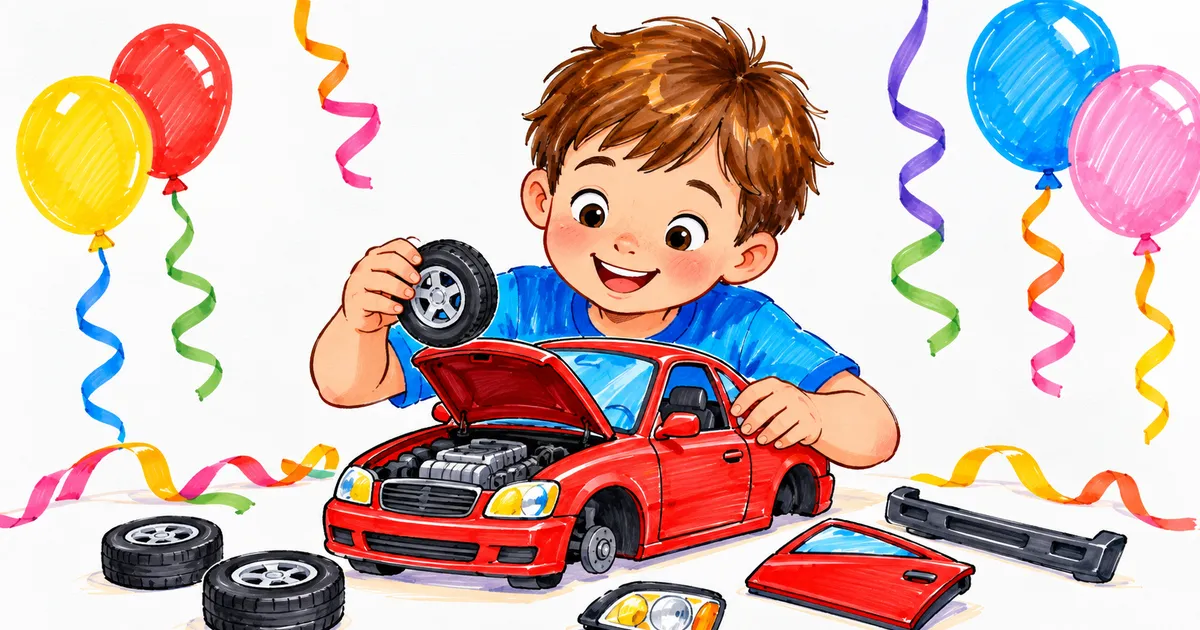
For younger children, the task may be holding a toy and saying, “This is my red car. It is fast. I like it.” Older learners can give a one-minute talk about a favourite animal, book, hobby, or family tradition. Keep the task small enough to feel possible, then add one next step.
An English oral presentation for kids builds more than English: planning, memory, eye contact, turn-taking, and calm answers under light pressure. These school skills and life skills reach far beyond one lesson.
What Makes a Good Presentation at Each Age
A strong presentation looks different for a preschool learner and a teenager. Young children need movement, objects, pictures, and short lines. Pre-teens can add reasons and clear structure. Teenagers can compare ideas, support opinions, and speak with control.
This guide gives parents a practical starting point, not a test. A shy school-age learner may need a younger format first; a confident younger speaker may handle more. Match the task to current confidence, attention span, and English level, then raise challenge one small step. A good English oral presentation for kids should stretch the child without turning speaking into pressure.
A Step-by-Step Method Parents Can Use at Home
Start with one focused topic. “Animals” feels too wide; “three facts about dolphins” feels easier. “My life” feels too wide; “three things I do after school” gives direction. A narrow topic helps children find words faster and keeps the talk from becoming a memory test.
Next, plan three parts: opening, details, ending. For a young learner, use three picture cards. For an older learner, use three paper bullet points: “What I will talk about,” “Two or three facts,” and “What I think.” Notes should guide speaking, not become a script. This keeps an English oral presentation for kids organised while leaving room for natural voice.
Then rehearse in short rounds. Practise the opening first, add the middle, and finish with the ending. Use the rule “twice with help, once without help.” Support stays high, but the final speaking turn belongs to the child. Practice stays warm while the child takes real ownership.
Simple Presentation Frames Children Can Copy
Children speak with more confidence when structure already exists. Sentence frames give support without taking away the child’s voice. They help first-time online learners and bilingual children who have strong ideas but need an English path.
For younger learners, try: “This is my ____. It is ____. It can ____. I like it because ____.” For school-age kids, try: “Today I will talk about ____. First, ____. Next, ____. My favourite part is ____ because ____.” For advanced learners, try: “I believe ____ because ____. One example is ____. Another point is ____. In conclusion, ____.”
These frames suit an English oral presentation for kids because they reduce panic. The learner knows where the sentence goes, so attention can shift to voice, meaning, and pronunciation. Over time, the child can change the frame, add details, and sound more natural while keeping clear structure.
Practice: The Three-Card Talk
Ask your child to choose three small cards or pictures. Card 1 answers “What is my topic?” Card 2 answers “What do I know?” Card 3 answers “What do I think or feel?” Give one minute to prepare, then let your child speak for 30-90 seconds. After the talk, ask one kind question, such as “What is your favourite part?” or “Can you tell me one more detail?”
Practical Topic Ideas for Different Learners
Strong topics come from a child’s real world. A learner who loves football, drawing, chess, cooking, coding, animals, or trains already has ideas. English becomes the sharing tool, not a separate school subject.
For younger children, use concrete topics: “My lunchbox,” “My family photo,” “My favourite toy,” “Three things in my room,” or “An animal I like.” For school-age kids, try “How to make a simple snack,” “A book I enjoyed,” “A country I want to visit,” or “My favourite game and its rules.” For older learners, try “Should children have more outdoor time?” “How to stay safe online,” or “A person who changed an idea in history.”
If your child speaks more than one language, allow planning in the strongest language first when needed. Then move main words into English together. This respects the child’s full language base and often creates a stronger English oral presentation for kids: rich ideas stay alive while English grows clearer.
How Parents and Teachers Can Give Better Support
Children need usable feedback. “Good job” sounds kind, but it does not show what to repeat. Give specific feedback: “Your opening was clear,” “You looked up at the end of each sentence,” or “Your example helped me understand.” One praise point and one next step are enough.
Avoid stopping the speaker for every grammar mistake during the talk. Write one or two patterns down and return after the presentation. If a child says, “He go to school,” wait until the speaking turn ends: “In English, we say ‘He goes to school.’ Let’s practise that line again.”
For an English oral presentation for kids, confidence and accuracy should grow together. Push accuracy too hard too early, and children may speak less. Praise confidence without teaching, and repeated mistakes may last for months. Keep the balance warm, precise, and steady: notice what worked, choose one language point, and let the child try again.
Common Mistakes to Avoid
The first mistake: choosing an oversized topic. A child asked to talk about “the environment” may freeze. A child asked to explain “three ways our family saves water” has a path. Smaller topics build stronger English and lower stress because the child can picture what comes next.
The second mistake: making the child memorise a long script. Memory can help, but full scripts often create flat voice and panic when one word disappears. Notes, pictures, and keywords teach the child to speak, not recite. For an English oral presentation for kids, this difference matters: speaking from ideas builds confidence; reciting from fear often does not.
The third mistake: comparing siblings, classmates, or accents. Children learn English from different voices, and a clear international accent is a normal goal. In an English oral presentation for kids, the main question stays direct: can the listener understand the message?
When a word has several meanings or pronunciations, Cambridge Dictionary is a useful check before turning it into child-friendly examples.
Frequently Asked Questions
How Long Should a Child’s English Presentation Be?
For beginners, 30-45 seconds is enough. School-age kids can often manage 45-90 seconds with pictures or objects. More confident older learners can build towards 2-5 minutes. Length should grow after calm speaking, not before. A short, clear English oral presentation for kids beats a long talk that feels frightening or forced.
Should Parents Correct Every Mistake During Practice?
No. Correcting every mistake can break the child’s flow and make speaking feel risky. Choose one focus for each practice round: past tense, sentence endings, louder voice, or eye contact. After the talk, repeat the correct sentence naturally and let your child try again.
What If My Child Is Shy or Refuses to Present?
Start with one trusted adult as private audience. Let the child present with a toy, drawing, or favourite photo, and keep the first attempt under one minute. Some children can record a practice video before speaking live. The aim is not forced bravery; it is a task safe enough to try.
Can Bilingual Children Prepare in Another Language First?
Yes, especially during planning. A bilingual child may have rich ideas in another language before they have English words. Let them plan main points, then build short English vocabulary together. This makes the English oral presentation for kids more meaningful and less mechanical.
How Often Should Children Practise Presentations?
Once a week gives families or classes a steady rhythm. Keep practice short: choose a topic, plan three points, speak, then give one praise point and one next step. Regular small talks work better than rare long rehearsals. They help speaking become a normal part of learning English.
Quick Recap and Next Steps
A strong children’s presentation has a focused topic, simple structure, and real listener. It should fit age, language level, and confidence. Pictures, objects, sentence frames, and short notes help children speak without feeling lost. LearnLink teaches English to children ages 4-15 and supports 4,000+ families with lessons built around practical speaking outcomes. A steady English oral presentation for kids routine turns speaking practice into a small, familiar family habit.
Data current as of July 2026.
1. Start this week with a three-card talk: topic, details, opinion. 2. Practise one short round, then add only one improvement point. 3. Try the same topic again after a few days, so your child can hear progress. Over time, an English oral presentation for kids becomes less performance and more habit: think clearly, speak clearly, listen well.
Start your child's English journey today — book a trial lesson with LearnLink.
Stay updated on our latest tips and resources by following us on Instagram LearnLink.