English Writing Topics for Kids
English writing topics for kids are short prompts that help children turn speech, ideas, and experience into written English. A topic gives enough shape to begin, without turning the task into blanks. A 5-year-old may draw a pet and label it. A 10-year-old may create a message, story scene, or opinion with reasons. A teenager may draft a review, debate paragraph, or reflection. The aim is steady growth: confidence first, accuracy next, style later.
📥 My First Writing Topics Pack
A printable practice sheet to help kids choose ideas, build sentences, and start writing with confidence.
Leave your email — we'll send the PDF to your inbox.No spam — the PDF plus one short reminder. Unsubscribe anytime.
What Families Need to Know Before Choosing Topics
Writing in English combines several skills. A child has to find an idea, choose words, spell them, build a sentence, and stay focused until the task is finished. If your child uses more than one language, the load can be heavier because the brain sorts more choices.
The best english writing topics for kids start from familiar ground: family, food, games, school, pets, travel, weather, stories, and small opinions. Children express ideas with more control when the subject feels close. “Describe your weekend breakfast” often works better than “Write about nutrition,” even when the language goal is the same.
Parents sometimes worry when a child produces short sentences. Short is fine at the start. “I have a red bike. It is fast. I ride it with my brother” shows sentence control, personal meaning, and word choice. Length can grow after the child knows what a finished piece feels like.
How to Match Topics to Your Child’s Level
Age matters, but English level matters more. A 7-year-old who hears English daily may handle story prompts easily. A 12-year-old new to English may need sentence frames and word banks. Choose topics that let your child succeed without doing the work for them.
Use this test: can your child say two or three ideas about the topic before writing? If yes, it probably fits. If not, build oral language first. Ask, “What can you see?” “What happened first?” “What do you think?” Then move to writing.
Strong english writing topics for kids also have a defined shape. “My favorite place” is easier than “Places.” “A day when I helped someone” is easier than “Kindness.” Children need a door into the task, not a wide field with no path.
Examples by Age
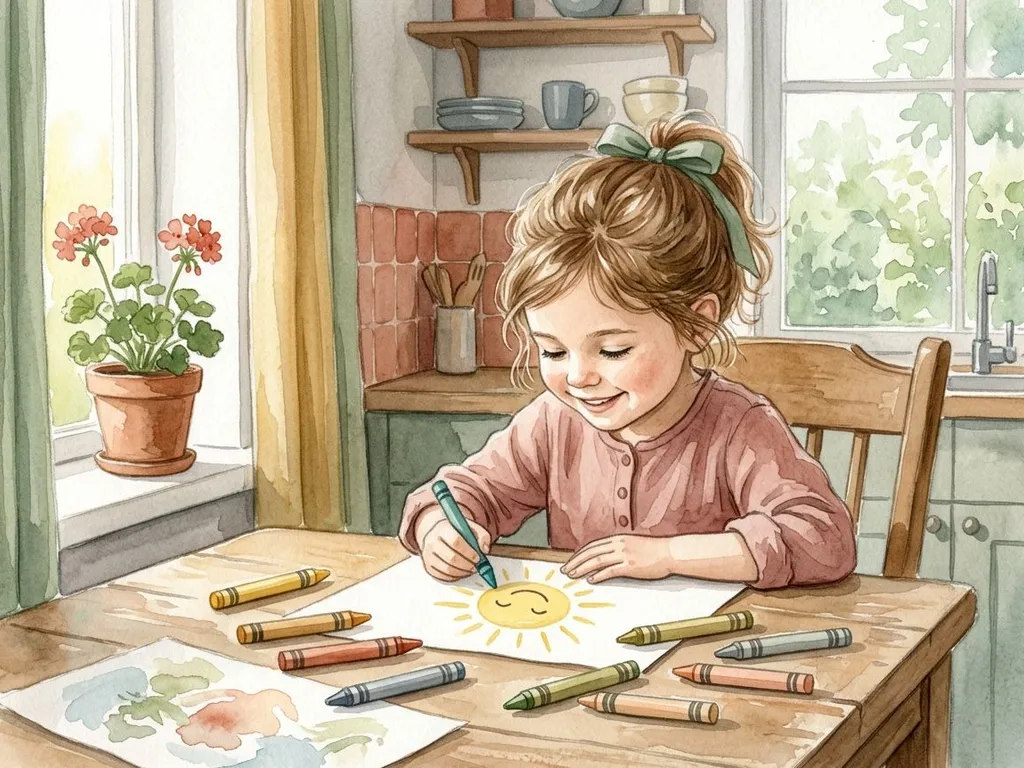
For school-age kids, early composition can start with marks, labels, copied words, and one spoken sentence an adult records. Topics include “My toy,” “My family,” “The weather today,” “Three things in my room,” and “A funny animal.” At this stage, drawing and writing belong together.
For school-age kids, children can make lists, messages, captions, and short paragraphs. Try “My perfect lunch,” “A game I like,” “What I saw on the way to school,” “A letter to a grandparent,” or “If my pet could talk.” These topics build real vocabulary and sentence patterns without feeling like a test.
For school-age kids, topics can ask for reasons, structure, and a defined reader. Try “Should children choose their own hobbies?” “A place I would like to visit,” “A book or video we recommend,” “How to make a simple snack,” or “One rule I would change at school.” Older learners need choice, planning, and revision.
How to Use Writing Topics at Home
Keep home writing short and regular. Ten calm minutes twice a week often helps more than one long session with tears at the end. Put the topic on paper, talk first, draft next, and finish with one small improvement. The goal is not a perfect page. The goal is a child willing to try again.
Offer choice within limits. Say, “Choose one: describe your room, your breakfast, or your favorite game.” Choice gives ownership. Limits reduce the blank-page feeling. English writing topics for kids work well when grouped by theme and level, not handed out at random.
When your child asks how to spell a word, decide the lesson focus. If the focus is ideas, give the spelling quickly and keep the flow. If the focus is spelling, correct two or three words. Too many corrections can make writing feel like a list of mistakes.
Practical Activities That Make Writing Easier
Start with “talk, draw, write.” Ask your child to say the idea, draw a quick picture, then add words or sentences from the picture. This works especially well for younger children and multilingual learners who may know the idea in one language before putting it into English.
Use sentence starters, then remove them over time. A young learner may begin with “I can see…” or “My favorite food is…” An older child may use “I agree because…” or “One reason is…” Frames help children enter the task. They should not become a cage.
Turn daily life into writing moments: a shopping list, birthday card, note for a sibling, recipe step, travel diary, or message to a tutor. The most useful english writing topics for kids often come from family life because the child already has something to say.
Try This at Home
Choose one small object near your child: a cup, shoe, toy, pencil case, or snack. Ask your child to create three sentences: what it looks like, what it is used for, and one opinion about it. Younger children can draw and label the object instead. Older children can add a fourth sentence with because.
Common Mistakes Parents Can Avoid
Do not turn every writing task into a grammar lesson. Grammar matters, but children need time to build ideas and voice. If every sentence is corrected at once, many children stop taking risks. Choose one focus: capital letters, past tense, spelling of common words, or adding detail.
Do not compare siblings or classmates. Writing grows unevenly. One child may spell well but produce little. Another may create long stories with many errors. Both need teaching, but not the same teaching. Look for the next step, not the nearest child.
Do not make topics too adult. “Climate policy” may be too wide, but “How can our family waste less food?” gives a child a way in. Good english writing topics for kids respect children’s thinking while staying close to their world.
- Choose three english writing topics for kids aged seven to ten.
- Read one picture book together, then create five new ending ideas.
- Use a timer for ten minutes of low-pressure sentence practice.
- Praise one clear detail before correcting spelling or grammar mistakes.
- Keep a weekly notebook with prompts, drawings, and favorite revised sentences.
When a word has several meanings or pronunciations, Cambridge Dictionary is a useful check before turning it into child-friendly examples.
Frequently Asked Questions
How Often Should My Child Practise Writing in English?
Two or three short sessions a week is enough for many families. Keep each session focused: one topic, one piece of writing, one helpful correction. A child new to online learning may need more talking and drawing before writing. Consistency matters more than long sessions.
Should I Correct Every Mistake?
No. Correcting every mistake can make writing feel unsafe. Choose one or two patterns that match your child’s level, such as capital letters, full stops, or common verbs. Praise the message first: what your child meant, chose, or explained. Then fix a small part together.
What If My Child Says They Have No Ideas?
Give choices and concrete objects. Instead of “Write a story,” offer “Tell a story about a lost key, a noisy lunch, or a strange door.” Ask your child to say the story aloud first. Many children do not lack ideas; they lack a starting point in English.
Are English Writing Topics for Kids Useful for Bilingual Children?
Yes, especially when the topic connects to real life. A bilingual child may think in one language and compose in another. That is normal. Let your child talk through the idea, use a small vocabulary, and then put it into English. Over time, the switch becomes smoother.
Can LearnLink Lessons Help with Writing?
Yes. Across LearnLink lessons for ages 4-15, tutors can build writing from speaking, reading, vocabulary, and sentence work. A child may create a caption, a short answer, a story plan, or an opinion paragraph depending on age and level. The pace should fit the child, not a fixed worksheet.
A short one-to-one lesson can show what level and pace fit your child — book a free English lesson.
Stay updated on our latest tips and resources by following us on Instagram LearnLink.