English Writing Prompts for Kids

Children need 5 to 15 focused prompt minutes to turn a blank page into usable English. English writing prompts for kids give short starting ideas, so a child stops guessing and starts writing. A prompt can be “Describe your breakfast” or “Send a message from a lost astronaut.” For ages 4 to 15, strong prompts give shape plus thinking space. They grow vocabulary, sentence control, spelling confidence, and ordered ideas. Used well, English writing prompts for kids feel less like extra homework and more like steady practice saying something precise.
Why Writing Prompts Help Children Learn English
New-language writing asks a child to choose words, build sentences, remember spelling, and keep meaning moving. A prompt lowers that load. It gives step one, so more brain energy goes into language.
Younger children may write one word, add a label, or say a sentence while an adult writes it. Older children turn that habit into paragraphs, opinions, stories, and explanations. Short tasks show how a child uses English, not only what a child can repeat.
English writing prompts for kids help parents spot growth. A child who wrote “I like dog” in September may later write “I like dogs because they are funny and kind.” That change shows grammar, vocabulary, and confidence working together.
How to Choose the Right Prompt for Your Child
A good prompt fits your child’s age, English level, and mood. A pre-school child may need a picture and three words. A school-age learner may enjoy two story openings. A teenager may need a real-opinion question. English writing prompts for kids work best when each task matches current language.
Start with what your child can already say. If colours, animals, and family members feel familiar, choose home, pets, food, or favourite toys prompts. If past tense works, try yesterday, holidays, or a funny mistake.
Do not turn every prompt into a test. Some sentences need neat checking. Others can stay quick and free. Children write more when every line avoids red correction.
A Step-by-Step Approach to Home Practice
Begin with talk. Ask the prompt aloud, then let your child answer in English. If needed, accept mixed English and home language, then shape one or two ideas into English sentences.
Next, set a small target. A young child might make three labelled drawings. An 8-year-old might write four sentences. A teenager might write one paragraph with a topic sentence, two details, and a closing line.
Finish with one kind correction. Choose one focus: capital letters, full stops, past tense, or stronger verbs. Correct everything at once, and your child may remember failure more than English. Correct one target, praise one clear idea, and leave the page feeling possible.
Practical Prompts for Ages 4 to 7
Young children need life-close prompts. They learn through things they can see, touch, draw, or act out. Keep tasks short, and let drawing support words.
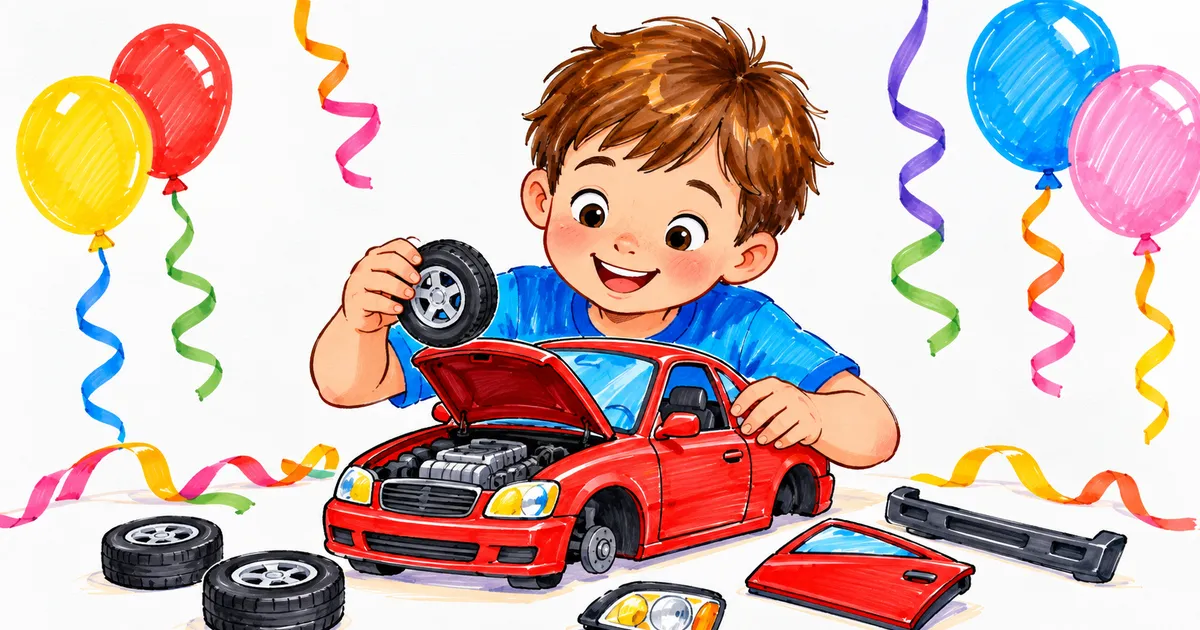
Try these prompts: “Draw your room and label five things,” “Add three words about your favourite animal,” “Finish the sentence: I can see…,” “Make a birthday card for a toy,” and “Create a shopping list for a picnic.” These tasks build English without demanding long paragraphs too early.
For this group, English writing prompts for kids work best when adults praise meaning before perfect spelling. If a child writes “yelow sun,” the idea works. Say, “Good. Sun is clear. Yellow has two l’s.”
Practical Prompts for Ages 8 to 11
School-age children can handle short stories, instructions, and personal pieces. They still need structure, yet can add reasons, time words, and details.
Across LearnLink lessons, our tutors help children build confident, everyday English step by step. English writing prompts for kids often bridge speaking practice and longer school writing.
Ask for clear shape: beginning, middle, end. A child can underline one strong verb, circle three adjectives, or add one because sentence. These checks teach revision without turning the page into a grammar drill.
Practical Prompts for Ages 12 to 15
Older children need prompts that respect their thinking. Childish topics may lose them, while real-choice questions or problems often work well.
Try prompts such as: “Should phones be allowed during school breaks?”, “Review a game, book, video, or song without using the word good,” “Describe a place where you feel calm,” “Give advice for a younger child learning English,” and “Create a short news report about an unusual event.”
Data current as of July 2026.
At this stage, English writing prompts for kids can prepare children for school tasks across subjects. A science explanation, history diary entry, or short opinion paragraph helps children use English to organise thought, not only practise grammar.
How to Make Prompts Easier or Harder

The same prompt can suit different ages when support changes. For “Describe an animal,” a beginner may use labels: big ears, grey, fast. A stronger learner may write about habitat, food, and behaviour.
To make a prompt easier, add vocabulary, sentence starters, pictures, or a model sentence. Shorten the task too: “Two sentences” feels safer than “A story.” Short work done often beats a long task that ends in tears. English writing prompts for kids become easier to sustain when step one feels reachable.
To make a prompt harder, ask for a reason, contrast, time order, or new grammar point. “Describe your favourite food” becomes “Describe your favourite food without naming it,” or “Explain how your taste has changed since you were younger.”
Three-day Writing Practice
Day 1: Choose one prompt and talk for two minutes before writing. Day 2: Read the same piece again and add two details. Day 3: correct one grammar point and make a final neat version. Keep both drafts so your child can see improvement.
Tips for Parents and Teachers
Set a time limit before starting. Ten focused minutes can suit a young learner. Older children may work for 15 to 25 minutes, but they still need a finish line.
Use prompts as a routine, not a punishment. A calm pattern might be: choose a prompt, talk, draft, read aloud, fix one thing. In online lessons, online English tutors for children often use this loop because it shows fluency and accuracy.
Keep a folder with completed pieces. Date each one. After a month, read an early piece and a recent one together. Children often need proof that English is growing. Parents can rotate English writing prompts for kids across stories, lists, reviews, and opinion questions so practice stays useful.
Common Mistakes to Avoid
One common mistake: prompts that feel too open. “Anything” sounds free, but children freeze. A stronger prompt gives a path: “Describe a place you like. Say where it is, what you do there, and why you like it.”
Another mistake: correcting too much at once. If the goal is past tense, focus on went, saw, played, and was. Save advanced style for another day. Children need to feel writing can improve, not that they either can or cannot write.
A third mistake: using only story prompts. Stories help, but children also need lists, notes, instructions, descriptions, reviews, emails, and opinions. English writing prompts for kids should reflect real English use.
When a word has several meanings or pronunciations, Cambridge Dictionary is a useful check before turning it into child-friendly examples.
Frequently Asked Questions
How Often Should My Child Use Writing Prompts?
Two or three short sessions a week suits many children. A young learner may work for five to ten minutes, while an older child may manage a longer paragraph. Regular practice matters more than long sessions. English writing prompts for kids work best as a calm habit, not a weekend catch-up task.
Should I Correct Every Spelling and Grammar Mistake?
No. Choose one or two focus points. If your child studies capital letters, correct those first. If the task practises past tense, check mainly past tense verbs. Too many corrections can make children write less. Keep a separate repeated-mistake list and return later.
What If My Child Says They Have No Ideas?
Give choices instead of pressure. Offer two prompts, three helpful words, or a picture. Let your child speak first while you note key words on paper. Children may have ideas but not yet hold both the idea and the English sentence together.
Can Bilingual or Multilingual Children Use Prompts Differently?
Yes. Multilingual children may plan in one language and compose in English, especially at the beginning. That is not failure. The aim is moving ideas into English step by step. Ask for English key words first, then build short sentences from those words.
Are Creative Prompts Better than School-style Prompts?
Children need both. Creative prompts build voice, imagination, and enjoyment. School-style prompts build order, explanation, and reasons. A balanced week might include one story prompt, one description, and one opinion or instruction task. This gives children a wider toolkit.
Quick Recap and Next Steps
Good prompts make English practice smaller, clearer, and less stressful. Choose topics close to your child’s life, give the right support, and correct one thing at a time.
Try a weekly plan. Start with one picture prompt. Add one opinion question. Practise one correction target, such as capital letters or past tense. Keep work short, date each piece, and look back often so progress stays visible.
The best English writing prompts for kids are clear, age-aware, and repeated often enough to build trust. LearnLink works with children aged 4 to 15 and has supported 4,000+ families, so lessons can connect prompt practice with speaking, reading, and real classroom confidence. When children know what comes next, they create more, and their English has room to grow.
Start your child's English journey today — Try a trial lesson with LearnLink.
Stay updated on our latest tips and resources by following us on Instagram LearnLink.