Giving Directions in English for Kids
Giving Directions in English: Words and Activities for Kids covers the direction words, sentence patterns, and games children need to ask for and explain the way. Start with: go straight, turn left, turn right, go past, cross, next to, between, and opposite. Children can combine these phrases with familiar places such as a park, school, shop, or library. The goal is accurate communication, not a detailed map. Short paths, gestures, toys, and repeated exchanges connect each phrase with a visible action.
Core Words and Phrases
A lesson on Giving Directions in English: Words and Activities for Kids should teach whole chunks instead of isolated words. “Turn left” works better than learning “turn” and “left” separately. Begin with commands, add place words, then introduce questions such as “How do I get to the park?”
Teach each phrase with a consistent gesture. Point ahead for “go straight,” move one hand left or right for a turn, and place two objects side by side for “next to.” Children may hear both “opposite” and “across from.” Both describe places facing each other, so a child can say one and recognise the other while listening.
Examples of Everyday Routes
Use destinations your child knows. Try: “Excuse me, where is the park?” “Go straight ahead. Turn left at the shop. The park is on your right.” “Excuse me” makes the question polite, while short commands make the directions easier to follow.
Landmarks sharpen directions. Replace “Walk for a while” with “Go past the library and turn right at the traffic lights.” Inside a building, try: “Go up the stairs. Walk past the office. The classroom is the second door on the left.”
Examples in Giving Directions in English: Words and Activities for Kids should cover both speaking roles. First, your child follows the instructions. Next, the child explains the same path to you. Swapping roles reveals whether the learner can apply the phrases instead of repeating them from memory.
Activities for Different Ages
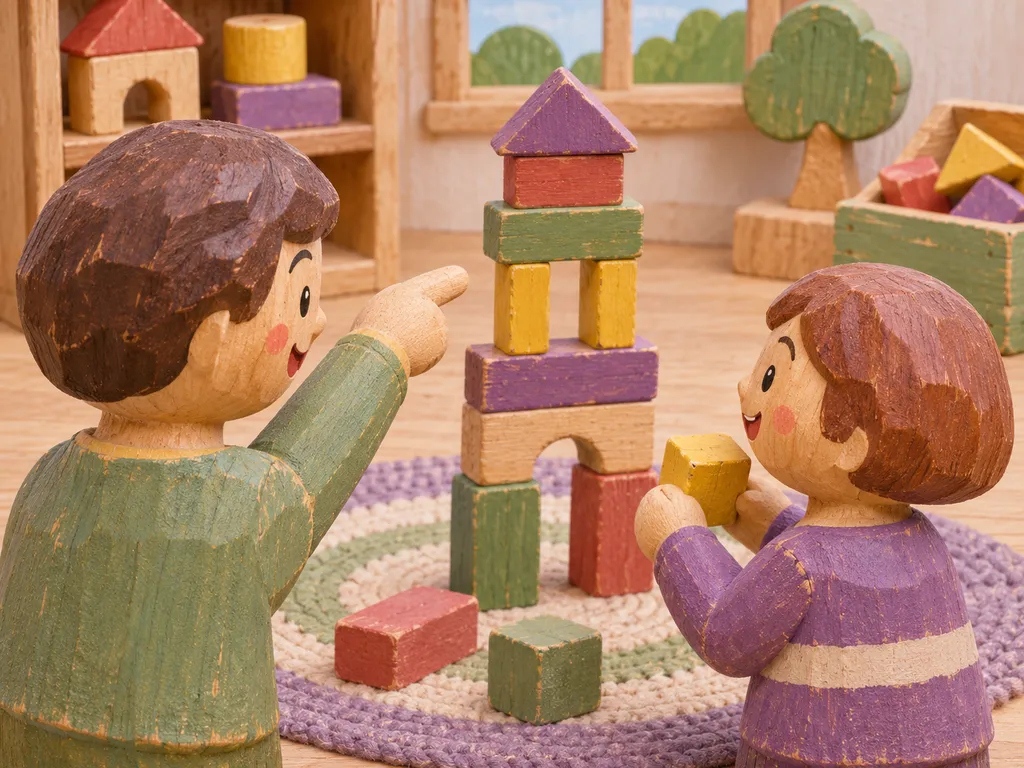
For school-age kids, build a floor route with cushions, tape, or toy buildings. Give one instruction at a time: “Go straight,” “Turn left,” or “Stop next to the chair.” A child who hesitates can move a toy first. Keep each round under a few minutes and reuse the same phrases.
For school-age kids, draw a grid with six familiar places. One person secretly chooses a destination and gives directions from a marked starting point. The listener traces the path with a finger. For a harder task, place two similar landmarks on the map, requiring precise instructions: “Turn right at the second shop.”
For school-age kids, use a local map or made-up town plan with longer journeys. Ask your child to compare two options: “Option A is shorter, but Option B has recognisable landmarks.” Older learners can explain how to reach a school room or a place in a shopping centre. Practise giving directions outdoors only with suitable adult supervision.
A Simple Practice Routine
The practice plan in Giving Directions in English: Words and Activities for Kids has three steps. First, review four or five phrases with gestures. Second, follow a short route. Third, swap roles and change one route detail. This pattern repeats the language while varying the task.
Find the Hidden Place
Draw a park, school, shop, library, and café on separate pieces of paper. Place them around the room. Secretly choose one destination, then give three directions: “Go straight, turn left at the school, and stop next to the café.” Your child follows the path and names the hidden destination. Swap roles for the next round.
When the route becomes familiar, change one feature. Add a landmark, use “first” and “second,” or begin from another point. During online lessons, our tutors use shared maps, visible gestures, and role play to assess listening and speaking across LearnLink lessons.
Common Mistakes and Helpful Corrections
Children may say “turn to left” instead of “turn left,” or “go straightly” instead of “go straight.” Model the correct phrase once, then request the whole instruction: “Turn left at the bank.” A short model teaches the pattern faster than a long grammar explanation.
“Past” and “across” describe different movements. “Go past the shop” means continue beyond it. “Cross the road” means move from one side to the other. Demonstrate the contrast with a toy on a drawn street. Prepositions can cause confusion: we usually say “at the traffic lights,” “on the corner,” and “between the bank and the café.”
Left and right may remain difficult after the English words are learned. Put a loose band or sticker on one wrist during practice. In multilingual families, compare the directions across languages when needed, then return to the full English phrase. The goal is an accurate instruction, not a word-for-word translation.
- Model one direction at a time using a simple toy map.
- Ask your child to repeat three direction words before moving.
- Practice left and right by guiding a toy through four landmarks.
- Correct mistakes gently by restating the direction and trying again.
- Finish with your child giving you two clear directions independently.
When a word has several meanings or pronunciations, Cambridge Dictionary is a useful check before turning it into child-friendly examples.
Frequently Asked Questions
How Many Direction Words Should My Child Learn at Once?
Start with four or five phrases, such as “go straight,” “turn left,” “turn right,” “go past,” and “next to.” Add new language after your child follows the first set without a prompt. Adapt Giving Directions in English: Words and Activities for Kids with a small map for beginners or longer paths, landmarks, and numbered turns for confident learners.
What If My Child Keeps Mixing up Left and Right?
Use a physical cue before correcting the English. Put a removable sticker on the left hand, raise that hand while saying “left,” and practise turns without a map. Once your child responds confidently, return to short paths. Keep the same cue between sessions so the visual link supports recall.
Should We Use Real Maps or Maps Made for Children?
Begin with a practice map containing few roads, symbols, and place names. Extra details can hide the language task. After your child follows two- or three-step journeys, introduce a familiar real map. Choose a small area and mark the start and destination. Real maps work best after the direction terms are learned.
How Can a Multilingual Child Practise Directions in English?
Your child can transfer existing map skills from any language. Confirm the route with objects or gestures, then model the full English phrase. If your child switches languages, acknowledge the meaning and restate the instruction in English. Regular short practice keeps the English chunks together without treating home languages as mistakes.
- Choose four direction phrases to review.
- Practise one three-step journey for five minutes.
- Swap roles and repeat the activity twice.
A short one-to-one lesson can show what level and pace fit your child — book a trial English lesson.
Stay updated on our latest tips and resources by following us on Instagram LearnLink.