Uppercase and Lowercase Letters for Kids
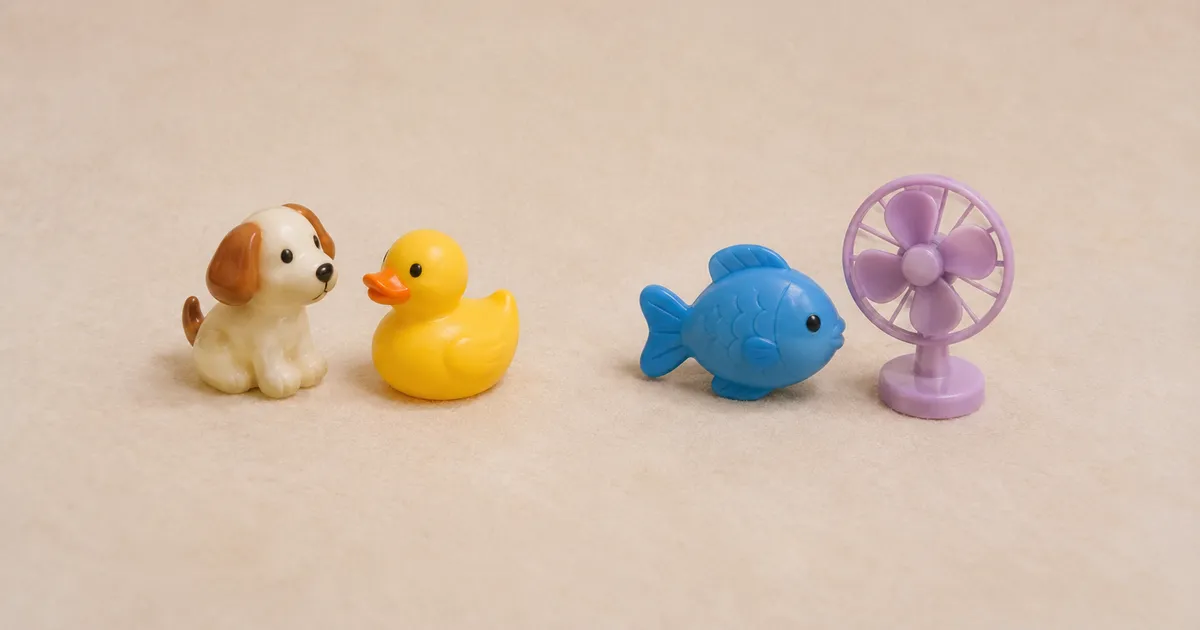
Uppercase letters are the large alphabet forms; lowercase letters are the smaller forms in most words. Uppercase and Lowercase Letters for Kids: Words and Activities helps children recognise pairs such as A and a, then choose the correct form for proper nouns and sentences. Children need repeated practice: see, say, sort, trace, and write each letter. Compare two forms, read a familiar word, then write or build it. Children who know another writing system may need extra time with English shapes and names.
Core Words and Phrases
Start with these terms: uppercase letter, lowercase letter, capital letter, letter pair, first letter, word, name, and sentence. “Capital letter” and “uppercase letter” have the same meaning. Children may say “big letter” and “small letter,” but the formal terms are more precise.
For Uppercase and Lowercase Letters for Kids: Words and Activities, connect each term to a visible example: “B is uppercase. b is lowercase. They are a letter pair.” Add a word: “B is the first letter in Ben. The other letters are lowercase.” Choose familiar examples from your family and community.
Letter Pairs in Real Words
A lesson on Uppercase and Lowercase Letters for Kids: Words and Activities becomes clearer when each pair appears in a word. Show A a with apple, B b with book, and C c with cat. Ask your child to identify the uppercase form, lowercase form, and word’s first letter.
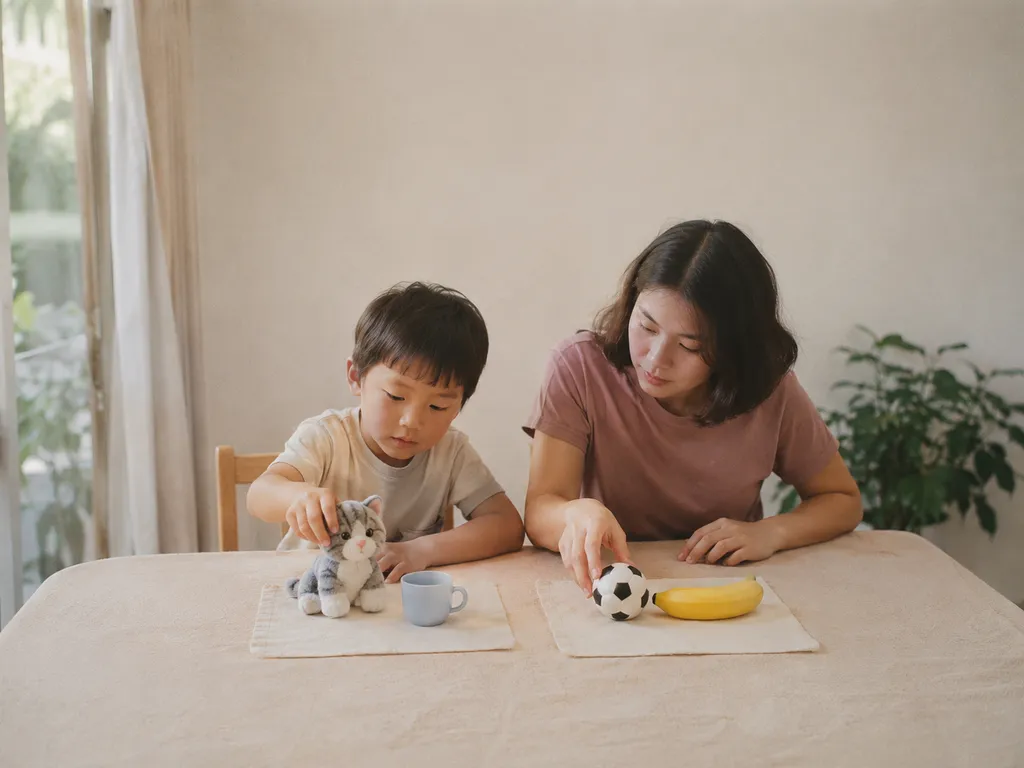
Then change the word’s position. Compare “A dog can run” with “We have a dog.” The word begins with uppercase only at the start of a sentence. Compare “My friend is Sam” with “My friend can swim.” Sam takes uppercase because it names a person; friend does not.
Pairs such as C and c, S and s, or V and v look alike. A and a, G and g, or R and r differ more. Teach clear matches first, then practise sorting less similar pairs.
Quick teaching tip
Place one uppercase card beside two lowercase choices. Add choices after your child matches without guessing.
Activities by Age and Stage
For school-age kids, focus on recognition and movement. Build letters with blocks, trace them in sand, or match cards. Begin with letters from a familiar personal word. Say each name as your child touches the form, and keep handwriting brief.
For school-age kids, combine matching with rules. Offer words such as school, Monday, river, and London. Ask which need an uppercase first letter and why. Your child can repair short sentences: “my cat is black” becomes “My cat is black.”
Older children can edit messages, captions, or short paragraphs. Check sentence openings, names, places, days, months, and the pronoun I. In multilingual families, compare rules without assuming every language uses capitals identically.
Five-minute practice checklist
- Choose three letter pairs.
- Say each letter name aloud.
- Match each uppercase form to its lowercase form.
- Read one word for every pair.
- Write one name and one short sentence.
Practice Games for Home or Class
Keep Uppercase and Lowercase Letters for Kids: Words and Activities playful and purposeful. During a letter hunt, your child circles uppercase letters in one colour and lowercase letters in another. Choose a book page, food label, timetable, or safe printed text. Ask why each capital appears.
For a memory game, pair M with m or T with t. Place cards face down and turn over two per move. Matching pairs stay face up. For word building, provide one uppercase card and lowercase cards to create a capitalised person or place name, or a sentence opening.
Fix the Capitals
Rewrite these correctly: “we live in rome.” “my birthday is in june.” “i have a red bag.” Ask your child to explain each change.
End each game with a transfer task. After matching D and d, ask for a word beginning with d. After correcting a sentence, request a new sentence using the same rule. The task tests application beyond the game.
Myths and facts
Myth: Children must learn all uppercase letters before seeing lowercase.
Fact: Children can learn letter pairs together, starting with familiar words.
Myth: Neat handwriting proves that a child understands capitals.
Fact: Recognition, rule choice, and handwriting are separate skills that may develop at different speeds.
Common Mistakes and Gentle Corrections
Children often write whole words in capitals because uppercase forms are easier to distinguish. Keep the attempt. Point to the first letter, retain uppercase where required, and change the rest: CAT becomes Cat or cat, depending on its sentence position.
Reversals and look-alike letters cause difficulty. Children may confuse b and d, p and q, or uppercase I with lowercase l. Present one contrast at a time. Add a clue such as bed for b and d, then let your child trace and identify the letter or say its sound.
A child may know the rule but forget it while spelling. Correct one target at a time: sentence capitals, proper nouns, then punctuation. LearnLink tutors can model the form, guide correction, and revisit the rule in later reading and writing tasks.
- Notice one letter reversal, then model correct uppercase and lowercase forms calmly.
- Compare three matching pairs using a familiar book title and your child’s name.
- Trace confusing letters with one finger while saying each letter’s name aloud.
- Invite your child to self-correct before offering one clear, gentle prompt.
- Celebrate one accurate match and restate mistakes as useful learning clues.
When a word has several meanings or pronunciations, Cambridge Dictionary is a useful check before turning it into child-friendly examples.
Frequently Asked Questions
Should My Child Learn Uppercase or Lowercase Letters First?
Teach both forms as pairs. Begin with letters in your child’s name and familiar words. Uppercase letters may be easier to recognise initially, but lowercase letters dominate ordinary reading. Use Uppercase and Lowercase Letters for Kids: Words and Activities in short matching, reading, and writing sessions; do not wait until your child finishes one alphabet set.
Why Does My Child Write Every Word in Uppercase?
Uppercase forms have clearer, straighter shapes, so children may choose them while handwriting remains demanding. Show the pattern without rejecting the word. Write CAT, then model Cat and cat. Explain that names and sentence openings need capitals; most remaining letters are lowercase. Correct one target per task.
Should We Teach Letter Names or Letter Sounds?
Teach both and distinguish their roles. A letter name identifies the symbol; its sound supports reading and spelling. Say, “This is lowercase m. Its name is M, and it often represents the sound at the start of moon.” English letters can represent multiple sounds, so avoid treating every match as fixed.
How Can a Multilingual Family Practise Without Causing Confusion?
Name the language and rule: “In this English sentence, the name begins with uppercase.” Another alphabet or capitalisation system is knowledge, not a problem. Keep English examples visible, compare rules when helpful, and invite your child to explain similarities and differences.
Try these three steps today:
- Choose three uppercase and lowercase pairs.
- Match each pair and read one example word.
- Write one proper noun and one sentence, then check the first letters together.
Repeat this five-minute routine on three days this week, changing the letter pairs each time.
Want to see how these ideas work in a real lesson — try a LearnLink trial lesson.
Stay updated on our latest tips and resources by following us on Instagram LearnLink.