Run-on Sentences for Kids
A run-on sentence joins independent clauses without the punctuation or linking word they need. Even six words can form one. Run-on Sentences for Kids: A Practical Guide teaches children to spot standalone clauses, choose a repair, and check their work. Children can mark each subject and verb, then compare punctuation choices. The goal is to connect ideas accurately, not make every sentence short.
What Children Need to Understand First
Before fixing run-ons, children must recognise a standalone sentence. It expresses a full thought and normally has a subject and verb. In “The dog barked,” the dog is the subject and barked is the verb. The thought stands alone.
A run-on pushes two standalone ideas together incorrectly. “The dog barked the baby woke up” contains two sentences: “The dog barked” and “The baby woke up.” A reader hears the boundary, but the writer has not marked it.
In Run-on Sentences for Kids: A Practical Guide, ask: “Can each part stand alone?” If yes, separate or connect the parts correctly. This test targets sentence structure.
How Run-on Sentences Work
Run-ons have two main forms. A fused sentence lacks punctuation between independent clauses: “We found the map we followed the path.” A comma splice uses only a comma: “We found the map, we followed the path.” A comma alone cannot join two independent clauses.
The core rule in Run-on Sentences for Kids: A Practical Guide is that independent clauses need a marked boundary. Use a full stop, semicolon, or comma followed by a coordinating conjunction. A word such as because, when, or although can make one thought dependent on the other.
A full stop gives ideas equal weight; a semicolon signals a close link. A conjunction defines the relationship: and adds information, but shows contrast, and so shows a result. Children should match the form to their meaning.
Rules and Examples Children Can Use
Apply Run-on Sentences for Kids: A Practical Guide by marking every subject-and-verb pair. In “My sister drew a rocket she coloured it green,” the pairs are sister drew and she coloured. Both parts stand alone, so they need a stronger boundary.
Possible repairs include: “My sister drew a rocket. She coloured it green.” “My sister drew a rocket, and she coloured it green.” “After my sister drew a rocket, she coloured it green.” Each version changes the rhythm or relationship.
Do not split every sentence containing two verbs. “My sister drew and coloured a rocket” has one subject, my sister, performing two actions. It is not a run-on. The standalone test confirms this: “Coloured a rocket” omits who performed the action.
Common Mistakes and How to Correct Them
Children often add a comma wherever a reader might pause. Speech pauses vary and cannot test grammar. In “The game ended, everyone went home,” both sides are complete thoughts. Replace the comma with a full stop or semicolon, or add a suitable conjunction.
Another mistake is forgetting the capital after dividing a sentence: “The game ended. everyone went home.” The run-on is gone, but a new error remains. After a full stop, check that the next sentence begins with a capital letter.
Children may create choppy sentences while avoiding run-ons: “We opened the box. We saw a note. We read the note.” The grammar is correct, but the ideas flow better as: “We opened the box and saw a note. Then we read it.” Strong writing combines correct boundaries with varied patterns.
Teaching the Skill at Different Ages
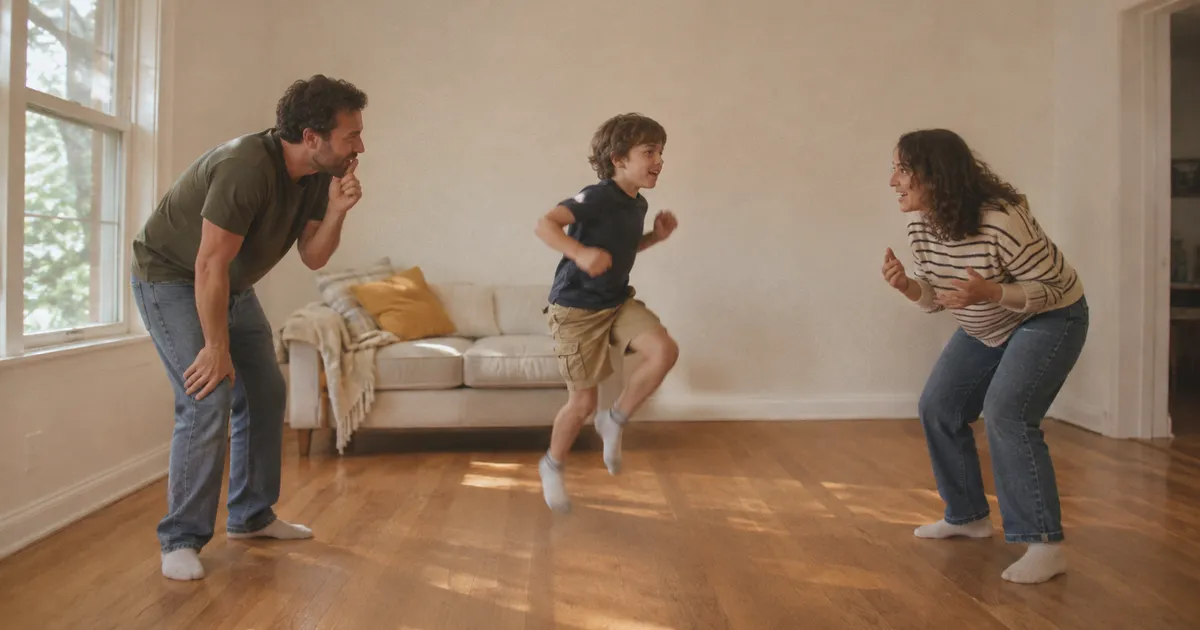
For children, begin with speech. Say two thoughts without pausing: “The cat jumped it caught the toy.” Ask the child to clap where the first thought ends, then repeat both ideas with a pause. Hearing the boundary matters more than naming an independent clause.
Children can cut sentences into idea cards. Give them “We planted seeds they began to grow” and ask whether each card stands alone. Reconnect the cards with a full stop, and, or so. When families use Run-on Sentences for Kids: A Practical Guide at home, five focused examples beat a rushed worksheet.
Older learners can compare meaning and style. Ask why “I wanted to join the match, but my ankle hurt” works better than and. Introduce semicolons as links between closely related complete thoughts. In LearnLink lessons, our tutors can adapt each explanation while retaining the complete-thought test.
Practice Activities
Begin with correction, not rule recitation. Ask the child to divide complete thoughts, choose a repair, and explain it aloud. More than one answer can work when punctuation supports the intended meaning.
Find and Repair the Run-ons
Rewrite each item correctly.
1. The bus arrived we put on our coats.
2. I like mangoes, my brother prefers pears.
3. The lights went out we used a torch.
Possible answers: 1. The bus arrived, so we put on our coats. 2. I like mangoes, but my brother prefers pears. 3. The lights went out. We used a torch.
Next, compare repairs. Choose a boundary by considering the relationship between ideas, the intended pace, and the existing words.
Choose the Clearest Connection
Complete each sentence with and, but, or so.
1. The puzzle was difficult, ___ we kept trying.
2. We packed water, ___ the day was hot.
3. Your child can draw the poster, ___ a partner can add the labels.
Answers: 1. but 2. because “so” would reverse the cause and result; rewrite as “The day was hot, so we packed water.” 3. and.
Finish with an editing check: underline each subject, circle each main verb, and mark each complete thought with a slash. Where two thoughts meet, look for a full stop, semicolon, or suitable linking structure. The routine makes sentence boundaries visible.
When a word has several meanings or pronunciations, Cambridge Dictionary is a useful check before turning it into child-friendly examples.
Frequently Asked Questions
Can a Long Sentence Be Correct?
Yes. A long sentence is correct when its clauses are joined and punctuated properly. It may contain lists, descriptions, or linked ideas. A short sentence can still be a run-on: “I called she answered.” Teach your child to find complete thoughts, not count words. Length affects readability but does not determine grammatical correctness.
Is Every Comma Between Two Ideas Wrong?
No. A comma can join complete thoughts when followed by a coordinating conjunction such as and, but, or, so, for, nor, or yet. In “We were tired, but we finished the game,” the comma and but work together. A comma alone creates a comma splice.
When Should a Child Learn About Semicolons?
Introduce semicolons after your child can identify two complete sentences reliably. Both sides must stand alone, and their meanings should be closely related. Younger children can first repair run-ons with full stops and conjunctions. Older learners can use semicolons as a deliberate writing choice.
How Much Practice Does a Child Need?
Short, regular practice is easier to manage than a long worksheet. Correct three to five sentences, discuss each repair, and revisit the skill in your child’s writing. Run-on Sentences for Kids: A Practical Guide provides a review check: find complete thoughts, mark their boundaries, and choose a connection matching the intended meaning.
What If My Child Speaks More than One Language?
Use the complete-thought test without treating another language as a problem. Punctuation and linking patterns differ across languages, so children may transfer a familiar pattern into English. Compare one English example at a time, say it aloud, and mark the boundary on paper. Multilingual knowledge gives children patterns to compare.
Want to see how these ideas work in a real lesson — try a LearnLink trial lesson.
Stay updated on our latest tips and resources by following us on Instagram LearnLink.