Sentence Structure for Kids
An English sentence needs a subject, a verb, and a complete idea: “The cat sleeps,” “Maya likes apples,” or “We are learning English.” Sentence Structure for Kids: A Practical Guide shows children that word order is not random; it tells a listener who does what, where, when, and why. For young learners, keep the work concrete. Build from short spoken sentences, then add detail, questions, negatives, and longer ideas. A child does not need grammar labels first. They need to hear, move, sort, say, and write sentences that make sense.
📥 Sentence Builder Practice Pack
Printable activities to help children build clear English sentences with correct word order.
Leave your email — we'll send the PDF to your inbox.No spam — the PDF plus one short reminder. Unsubscribe anytime.
What Children Need to Understand First
Children need to know that a sentence is a complete thought. “The dog” leaves us waiting for what happened. “The dog runs” feels complete. With younger children, teach this through questions: Who? What does it do? Where? A sentence becomes a small answer.
The basic English pattern is subject + verb + rest of the idea. In languages where word endings carry more meaning, word order may move more freely. In Sentence Structure for Kids: A Practical Guide, the first aim is not naming every part of speech. The aim is helping children feel the pattern: “I eat rice,” “She plays football,” “They live in Spain.”
For bilingual and multilingual children, explain that English has its own sentence habits. A child may have strong language skills in another language and still need English word-order practice. That is normal, not weak grammar thinking.
How English Word Order Works
The best starting rule is SVO: subject, verb, object. The subject is the person or thing the sentence is about. The verb shows action or being. The object or extra information completes the picture. “Ali reads a book” follows the pattern: Ali is the subject, reads is the verb, and a book is the object.
When children understand SVO, they can expand a sentence without losing control. “Ali reads a book” can become “Ali reads a book after dinner” or “Ali reads a funny book after dinner.” The frame stays steady. Details grow around the subject and verb.
Across LearnLink lessons, our tutors move from speech to writing in small steps: say it, build it with cards, check it aloud, then write it. Sentence Structure for Kids: A Practical Guide works best when children use grammar as a tool for meaning, not as labels to memorize.
Core Patterns with Examples
English sentences use several practical patterns. Children do not need every grammar term at once, but parents can use the patterns below to spot what a child is building. The examples stay short because short correct sentences expand better than long confused ones.
Start with statements, then add negatives and questions. This order helps children notice how English changes structure when meaning changes. A statement says something. A negative says something is not true. A question asks for information or a yes-or-no answer.
This table can guide correction. If a child says “Where you are going?” the meaning is understandable, but the question pattern needs repair. The corrected form is “Where are you going?” Show the pattern, then let the child try again.
Rules That Make Sentences Clearer

Rule one: every complete English sentence needs a verb. Children often write “My brother happy” because that structure works in another language or feels natural in speech. In English, we need “My brother is happy.” The verb “be” is small, but it carries the sentence.
Rule two: questions often change word order. “You are ready” becomes “Are you ready?” “She likes music” becomes “Does she like music?” Sentence Structure for Kids: A Practical Guide should include spoken question practice, not only worksheets. Children need to hear the switch repeatedly.
Rule three: longer sentences need joining words that match the meaning. “I was tired because I played tennis” gives a reason. “I wanted cake, but we had apples” shows contrast. “We finished homework, so we watched a film” shows result. These small words help older children move from basic sentences to paragraphs.
Common Mistakes and How to Fix Them
One frequent mistake is a missing subject. A child may write “Is raining” because context supplies the idea. In English, we still say “It is raining.” The word “it” may not point to a real object, but the sentence needs a subject.
Another frequent mistake is copied home-language word order. For example, an adjective may appear after the noun, or a question may keep statement order. Skip the lecture. Ask the child to rebuild the sentence with cards: subject card, verb card, object card, detail card. Physical order makes grammar visible.
A third mistake is writing long sentences too soon. Children may join five ideas with “and” because they are excited to write. Praise the ideas, then split them: “I went to the park. I played with Sam. We saw a small bird.” Later, combine two ideas with “because,” “but,” or “when.” Sentence Structure for Kids: A Practical Guide should protect meaning first, then polish style.
Practice Activities for Home or Class
Short, repeated practice beats one long grammar session. Five minutes of sentence building after a story can be enough. Ask your child to choose one character, one action, and one place: “The rabbit jumps in the garden.” Then change one part at a time.
For younger children, use oral practice and picture cards. For children aged 8-10, add written sentence strips and editing. For teens, work with real paragraphs because they need sentence control for school writing, messages, projects, and presentations. The same grammar frame grows with the learner.
Build the Sentence
Put the words in the correct order: 1. likes / My sister / pizza. 2. are / The children / in the garden. 3. a book / reads / Dad. 4. do / Where / you / live? 5. not / I / tired / am.
Make It Longer
Start with “The cat sleeps.” Add one detail each time: where, when, and why. For example: “The cat sleeps on the chair.” “The cat sleeps on the chair after lunch.” “The cat sleeps on the chair after lunch because it is warm.”
Fix the Sentence
Find and correct the mistake: 1. She happy. 2. Where you are going? 3. My friend play football. 4. I no like soup. 5. Because I was late. Say the corrected sentence aloud before writing it.
How to Support Different Ages
A 5-year-old does not need a 12-year-old’s explanation. Young children learn sentence structure through rhythm, repetition, pictures, and talk. They can answer “Who is it?” and “What is it doing?” before they can define a subject and verb.
Children aged 8-10 can start using labels. They can underline the subject once and the verb twice, or sort sentences into statements, questions, and negatives. At this age, Sentence Structure for Kids: A Practical Guide should still include movement and games because grammar gets easier when children can touch and move sentence parts.
Older children and teens need more control. They should learn to vary sentence length, avoid fragments, and connect ideas. A 13-year-old writing “I like science because we do experiments” is using structure to explain thought. That is the long-term aim: English that carries real meaning.
How to Know Your Child Is Making Progress
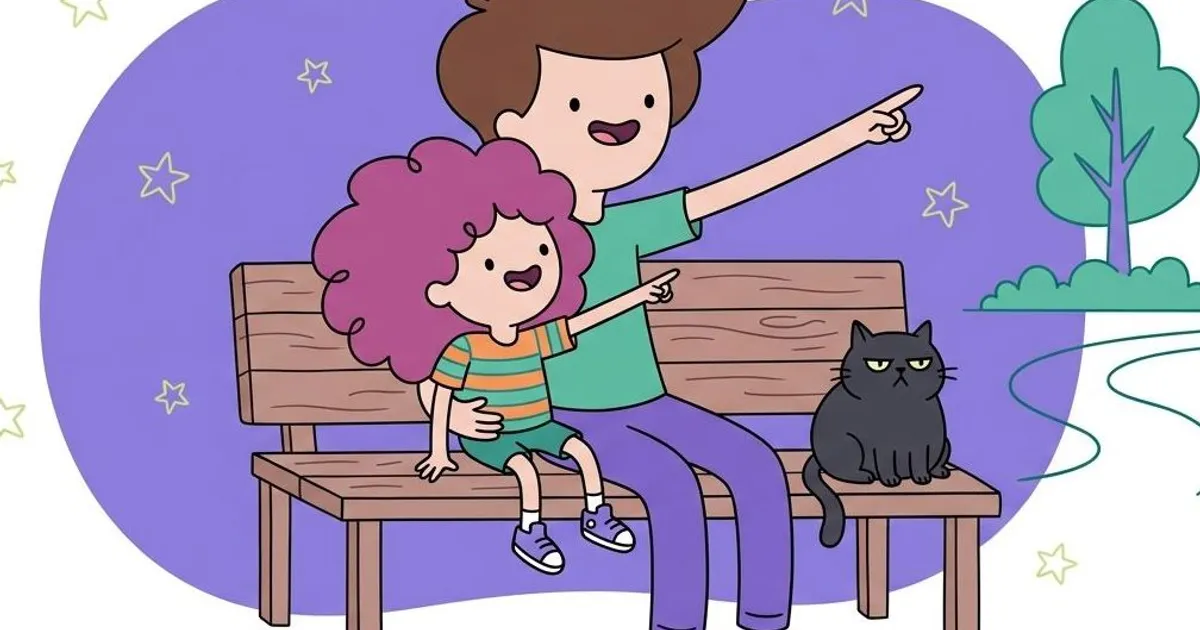
Progress in sentence structure often appears first in speech. Your child may correct word order without being asked, or pause and try again after hearing a model. That pause matters. It means the child is comparing speech with English patterns.
In writing, look for three things: a subject, a verb, and a complete idea. Then check whether questions and negatives are formed correctly. Do not mark every small spelling error while working on sentence structure. If the lesson is about sentence frames, keep feedback on sentence frames.
Sentence Structure for Kids: A Practical Guide works best as a steady routine. Read one sentence from a book. Ask what the subject is doing. Change it into a question. Make it negative. Add a place or reason. Grammar becomes a living skill, not a rule page.
- Try a five-minute picture-book retell with your 6-year-old after dinner.
- Practice expanding one short sentence into three longer versions each morning.
- Use a favorite comic strip to spot subjects, verbs, and details.
- Record your child reading five sentences, then compare clarity weekly.
- Celebrate one stronger sentence with specific praise before correcting mistakes.
When a word has several meanings or pronunciations, Cambridge Dictionary is a useful check before turning it into child-friendly examples.
Frequently Asked Questions
What Is the Easiest Way to Explain Sentence Structure to a Child?
Start with “who or what” and “what happens.” For example, in “The bird sings,” the bird is who the sentence is about, and sings is what happens. Once your child can find those two parts, add details such as where, when, or why. Keep the first examples short and spoken before written work.
At What Age Should Children Learn Subject, Verb, and Object?
Children can understand “who does what” from about age 5 or 6, especially with pictures and actions. Formal terms such as subject, verb, and object are easier from around age 7 or 8. The exact age depends on reading level, attention, and how much English the child hears.
How Can Multilingual Children Avoid Mixing Sentence Patterns?
Mixing patterns is normal when a child uses more than one language. Give direct English models and compare gently when helpful: “In English, we say ‘She is happy,’ with is.” Avoid saying the home language is wrong. The child is learning that each language has its own word order and sentence habits.
Should Parents Correct Every Sentence Mistake?
No. Correct the pattern you are teaching that day. If the focus is sentence structure, respond to the whole sentence: “Good idea. In English we say, ‘He is hungry.’ Can you say it again?” Too much correction can stop a child from speaking. A calm model and one repeat are often enough.
How Does Sentence Structure for Kids: A Practical Guide Help with Writing?
Sentence Structure for Kids: A Practical Guide gives children a frame before they write longer answers. When they know how to build a complete sentence, they can describe pictures, answer reading questions, and write short paragraphs with less guessing. Strong sentence structure helps children spot fragments and unclear ideas in their own work.
Start your child's English journey today — book a trial lesson with LearnLink.
Stay updated on our latest tips and resources by following us on Instagram LearnLink.