How to Write a Letter in English for Kids
An English letter has six parts: the writer’s address, date, greeting, opening, main message, and closing. Each part guides the recipient and supports a reply. How to Write a Letter in English: A Practical Guide for Kids gives children an order, grammar rules, models, and practice. Younger children can write two or three sentences with adult support. Older children can explain reasons and choose a formal or friendly tone. The goal is an understandable message, not perfect handwriting or complex words.
What a Letter Needs to Do
A letter carries a message between people. Before writing, your child should answer three questions: Who will read it? Why am I writing? What does the person receiving it need to know? A cousin may receive family news; a school may receive a request for information. Purpose controls wording, detail, and tone.
When families use How to Write a Letter in English: A Practical Guide for Kids, begin with speaking. Ask your child to say the message in two or three sentences. Multilingual children may plan ideas in another language, but the English letter should follow natural English sentence order instead of word-for-word translation.
The Six Parts of a Clear Letter
In How to Write a Letter in English: A Practical Guide for Kids, one basic plan works for a short note or a full page. Informal letters may omit the writer’s address, but children should learn where each part belongs.
- Writer’s address: Put it at the top if the recipient needs to know where to reply. Follow the address order used in your country.
- Date: Write the date clearly, such as “14 March 2026.” Spelling out the month avoids confusion between different date systems.
- Greeting: Begin with “Dear Grandma,” “Dear Alex,” or “Dear Sir or Madam,” depending on the addressee.
- Opening: State the reason for writing. For example: “Thank you for your letter” or “I am writing to ask about the school trip.”
- Main message: Give the news, question, request, or explanation. Start a new paragraph when the idea changes.
- Closing and name: End with “Best wishes,” “Kind regards,” or another suitable closing, then write the sender’s name.
A child-friendly plan is “hello, reason, details, goodbye.” A seven-year-old might write, “Dear Aunt, Thank you for my book. I have started the first chapter. Best wishes, Sam.” An older child can mention when the book arrived, what they liked, and ask them a question.
Grammar and Punctuation That Make Letters Easy to Read
Friendly letters usually use I for the writer and you for the recipient. Use the present tense for current facts: “I am in a new class.” Use the past tense for finished events: “We visited the museum on Tuesday.” Use will or going to for plans: “I will send the photos tomorrow.”
Apply How to Write a Letter in English: A Practical Guide for Kids by checking one grammar feature at a time. First, confirm that each complete sentence has a subject and verb. Next, check capitals, full stops, and question marks. Finally, check each pronoun so the reader knows who he, she, they, or we means.
Put a comma after a friendly greeting and closing: “Dear Leo,” and “Best wishes,”. Formal conventions vary by country and organisation, so consistency matters more than one national style. Avoid text-message forms such as “u,” “pls,” and “thx” except in a playful note to someone who understands them.
Friendly and Formal Letters Compared
Children need words suited to their audience and purpose, not stiff language. How to Write a Letter in English: A Practical Guide for Kids covers friendly and formal messages, but their greeting, wording, and closing should differ.
Formal does not mean long. “Could you please tell me when the class begins?” works better than difficult wording. Friendly letters may include jokes, personal news, and contractions such as “I’m” or “we’ll.” Formal letters keep personal details relevant to the recipient.
Common Letter-writing Mistakes
Writing without a defined purpose can produce jumps from school news to a request and back. Ask your child to note two or three points first, with one paragraph per point. Keep How to Write a Letter in English: A Practical Guide for Kids nearby and check the final order.
Children may mix levels of formality. “Hey there!” does not fit a careful school request, while “I hereby wish to inform you” sounds unnatural in a note to a friend. Match the tone to one relationship. “Please,” “thank you,” and “could you” sound polite across cultures without excessive formality.
Frequent errors include missing dates, no name at the end, run-on sentences, and questions without question marks. Some children repeat “and then” in every sentence. Divide events into shorter sentences or use time words such as “first,” “later,” and “after lunch.” Reading aloud reveals awkward stops and repeated words.
Practice Writing a Letter
Turn How to Write a Letter in English: A Practical Guide for Kids into a routine: plan, draft, check, and copy. Younger children can dictate the first draft or use a sentence frame. Older children should select details the reader needs and remove irrelevant information.
Complete a Friendly Letter
Fill the gaps with suitable words: “Dear ___, Thank you for ___. I liked it because ___. I hope ___. Best wishes, ___.” Then add one question for the reader. Check that the question begins with a capital letter and ends with a question mark.
After completing the frame, change the reader. A grandparent’s message may remain warm and personal. The same message to a school office needs a formal greeting, fewer personal details, and a direct request.
Repair the Formal Letter
Rewrite this message in clear, polite English: “Hi! I need the club times. Send them now. Bye.” One possible answer is: “Dear Sir or Madam, I am writing to ask about the club timetable. Could you please send me the meeting times? Kind regards, Alex.”
For further practice, give your child a real purpose: thank a relative, invite a friend, ask a library about an event, or describe a recent day. A real reader makes tone and detail meaningful. Before sending the letter, an adult should check private information such as a home address, phone number, or school details.
- Try writing a five-sentence thank-you letter with your child aged six to nine.
- Use a favorite storybook character as the recipient for today’s practice letter.
- Practice one greeting, three details, and one closing before adding decorations.
- Read the finished letter aloud together, checking capitals, punctuation, and clear meaning.
- Send it to a grandparent, teacher, or friend and invite a reply.
For reading and phonics support beyond the article examples, Scholastic Parents is a helpful independent resource for parents.
Frequently Asked Questions
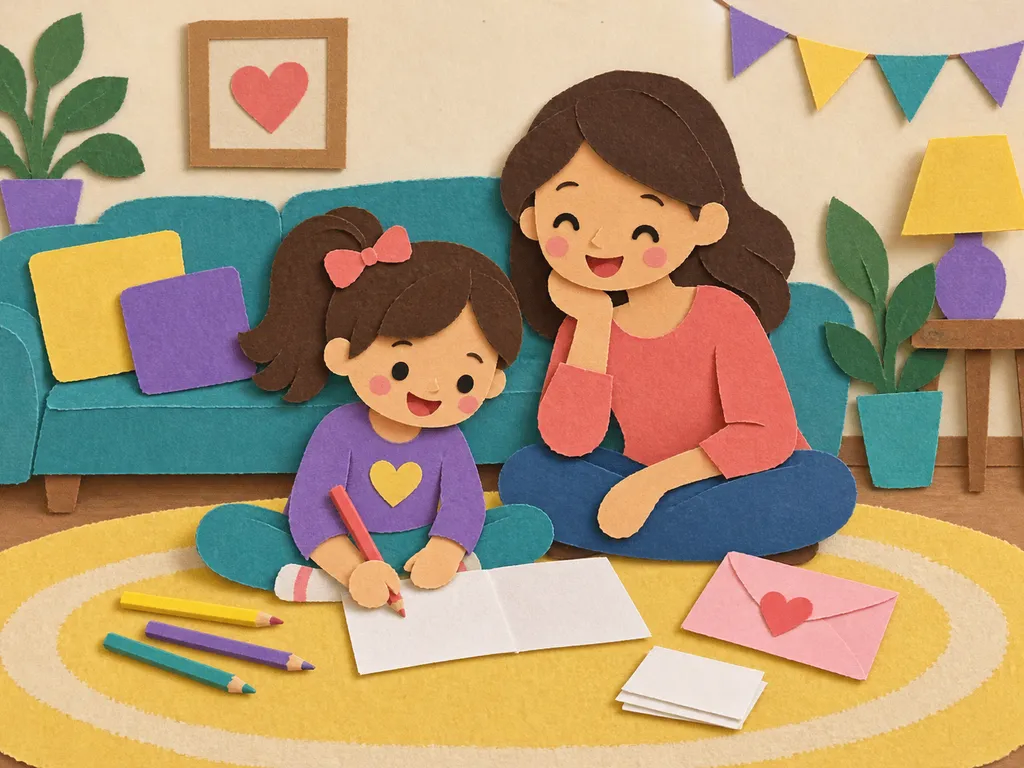
These answers cover common family decisions during letter practice.
Use them as a final check, not a script every child must copy.
How Long Should a Child’s English Letter Be?
Length depends on age, purpose, and confidence. A child aged five to seven may write two or three sentences. A child aged eight to ten may manage short paragraphs. Older learners can give fuller explanations. Stop when the message is complete; an organised half-page beats a full page of repeated ideas.
Should Children Write an Address on Every Letter?
No. A home address helps when a reply must arrive by post, but a letter handed to a relative or teacher rarely needs one. Protect personal information and share an address only with an appropriate recipient. During practice, children can write “[address]” instead of real private details.
Can a Child Use Contractions in a Letter?
Yes. Contractions such as “I’m,” “we’re,” and “can’t” sound natural in friendly letters and may appear in polite messages. Full forms can give formal requests a measured tone, but clarity remains the rule. Children should distinguish standard contractions from text-message spellings such as “ur” or “c u.”
What Is the Best Closing for a Child’s Letter?
“Best wishes” suits friends, relatives, and familiar adults. “Kind regards” fits a polite letter to a school or organisation. Reserve “Love” for close family members or friends when it matches family custom. How to Write a Letter in English: A Practical Guide for Kids encourages children to choose a closing for the relationship instead of copying a fixed list.
How Can a Multilingual Child Plan a Letter in English?
Your child can discuss ideas or make brief notes in any helpful language. Then build the English letter around its purpose and six-part structure. Avoid sentence-by-sentence translation because greetings, word order, and formality differ across languages. Rehearsing aloud in English can make the final wording sound natural.
A short one-to-one lesson can show what level and pace fit your child — book a trial English lesson.
Stay updated on our latest tips and resources by following us on Instagram LearnLink.