Private English Teacher Online Kids
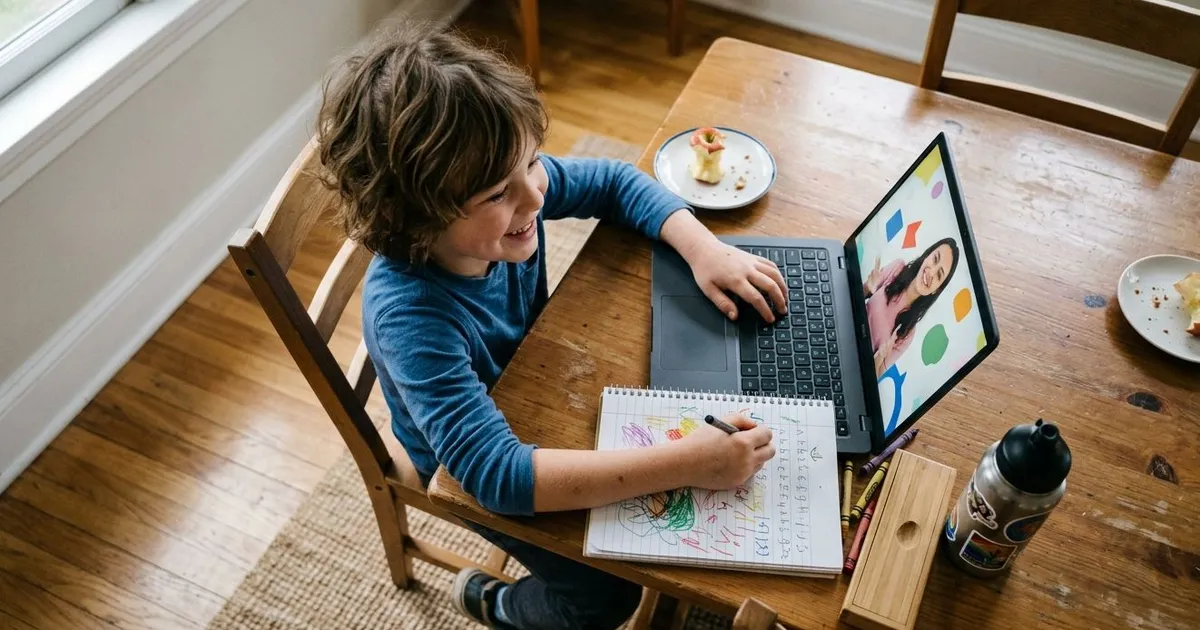
In a one-to-one online English lesson, a child may speak for 40-60% of lesson time instead of waiting for a group turn. A private English teacher online kids arrangement pairs one teacher with one child through live video, shaping pace, talk time, correction, and practice around that learner. Younger learners use songs, picture cards, movement, and short answers. Older learners tackle longer talks, reading, writing, and grammar in context. The value: focused turns, quick feedback, and small errors caught before they become habits. This guide explains when private lessons help, what strong lessons include, and how families can support steady home progress.
Why One-to-one Online English Can Help Children
Children learn language through use, not long explanations. In a private lesson, your child gets more speaking turns, thinking time, and faster correction. This helps shy children, lively children, and children who already speak two or three home languages.
A private English teacher online kids setup lets the teacher match each lesson to age, mood, and attention span. A young learner may need movement, short games, and quick wins. An older child may need clear aims, reading work, and talk about school, hobbies, or travel. The goal stays steady: English becomes a usable tool, not just a school subject.
Online lessons can reduce pressure for first-time learners. Your child learns from a familiar room, with a parent nearby if needed. That comfort helps during month one, while the teacher builds trust, checks listening, and finds the right level.
What to Look for in a Private Online Teacher

A strong teacher does more than speak English well. They understand how children learn, how long focus lasts, and when attention needs a fresh activity. Lessons need clear routines: warm-up, review, new language, guided practice, freer speaking, and a short close.
For younger children, teachers should use pictures, toys, actions, and simple choices. “Is it red or blue?” works better than a long grammar rule. For older children, teachers can ask for reasons: “Why do you think the boy is worried?” This builds longer answers without turning class into a test.
Across LearnLink lessons, online English teachers for children work with children aged 4-15, so teaching must fit early readers and teenagers. Families should expect a calm educator who explains progress plainly: what your child can do now, what needs practice, and what comes next.
Private Teacher, Group Class, or App: What Fits Your Child?
No single format fits every child. Many families combine formats. Match format to need. Live teaching works strongest when children need speech, feedback, and confidence. Apps can support review, but they cannot fully hear intent, stress, hesitation, pronunciation, or a half-formed sentence.
If your child is new to online learning, start with maximum support. A private English teacher online kids lesson can adjust minute by minute. If work feels too hard, the teacher can step back. If it feels too easy, the teacher can add challenge through a follow-up question, longer answer, or new role-play.
A Step-by-step Approach for the First Month
Week one should build comfort and check level. The teacher listens for what your child understands: colours, numbers, family words, classroom phrases, simple questions, or longer answers. A younger child may show understanding by pointing, choosing, matching, or repeating. An older school-age child should start explaining ideas through short spoken answers.
Week two can add routine: five minutes greeting and review, ten minutes new words, ten minutes guided speaking, five minutes story or picture task, and a final minute telling the parent what was practised. Children like knowing what comes next, and repeated lesson shape saves time.
By weeks three and four, lessons should stretch your child a little. A young learner might say, “I have a brown dog” instead of only “dog.” A preteen might compare two pictures. A teenager might give an opinion and support it with one reason. A private English teacher online kids plan helps because each next step can stay small, exact, and matched to that day’s confidence.
Practical Lesson Ideas by Age
Children need short, meaningful tasks: naming objects, matching pictures, singing action songs, sorting colours, finding room items, and answering either-or questions. Across LearnLink lessons, our tutors help children build confident, everyday English step by step.
Children can handle stories, role play, and sentence frames. They can practise food words with a pretend menu, animal words by describing habitats, or family words by drawing a family tree. Small grammar patterns work inside speech: “I like,” “I don’t like,” “There is,” “Can I have,” and “Yesterday I went.”
Children need age respect, even when their English level is low. Topics can include games, music, science, sport, books, films, or school life. A strong private teacher gives them language for real thought: “I agree because,” “The main problem is,” “I would choose,” and “In my country, we usually.”
Home Practice: The Three-sentence Bridge
After a lesson, ask your child for three sentences only: one word they learned, one sentence they can say, and one question they can ask next time. Keep it under five minutes. For a young child, the answer may be “apple,” “I like apples,” and “Do you like apples?” For an older child, it may be a longer sentence from the lesson topic.
How Parents Can Support Progress Without Taking Over
Parents do not need to become English teachers. Their role: protect routine, notice effort, and help children return to practice. A short review twice weekly beats one long, stressful session.
Before class, check device, sound, and space. For younger children, keep pencils, paper, and a few small objects nearby. For older children, agree that class belongs to them and the teacher, not parent performance. Stay close enough for tech help, yet far enough to let your child answer.
After class, ask concrete questions: “What did you say today?” “What was easy?” “What should we practise for two minutes?” Avoid “Did you understand everything?” Children may say yes just to finish. A private English teacher online kids routine works best when home support stays calm, brief, and steady.
Signs That the Lessons Are Working
Children’s progress rarely moves straight. Some weeks bring new words. Other weeks bring sharper listening, more courage, or shorter pauses. Watch small signs: your child answers faster, uses a lesson phrase outside class, reads a short line with less help, or asks for a needed word.
Progress also includes repair skills. A child who can say “Can you repeat?” or “I don’t know the word” is learning to stay in English instead of giving up. That skill matters in school, travel, and future online learning.
If progress stalls, do not start with blame. Check fit: lesson level, pace, teacher-child rapport, sleep, screen fatigue, and home routine. Sometimes your child needs a shorter task, sharper goal, or topic they care about. A private English teacher online kids plan should stay flexible enough to adjust without making the child feel they failed.
- Track five new words your child uses naturally after each online lesson.
- Ask one simple follow-up question after a storybook reading today.
- Record a 30-second speaking sample every Friday to compare progress.
- Practice one lesson phrase during dinner, playtime, or the school run.
- Share one specific observation with the teacher before the next class.
When a word has several meanings or pronunciations, Cambridge Dictionary is a useful check before turning it into child-friendly examples.
Frequently Asked Questions
How Often Should My Child Have Online English Lessons?
For many children, one or two lessons weekly works well, with short home review between lessons. Young children often need brief, regular contact rather than long sessions. Older children can handle longer lessons when work includes speaking, reading, and clear goals. The best schedule is one your family can keep without stress.
Can a Shy Child Learn Well with a Private Online Teacher?
Yes, if the teacher builds trust slowly and gives safe answer choices. A shy child may begin by pointing, choosing, repeating, or giving one-word answers. Over time, the teacher can build short phrases, then full sentences. One-to-one lessons often help shy learners because no group watches them speak.
Should Parents Sit in the Lesson?
For young learners, a parent may need to stay nearby, especially during first lessons. For older children, too much parent presence can make speaking harder. A useful middle ground: help at the start, then step back. At the end, the teacher can share one clear home practice point.
What Makes a Private English Teacher Online Kids Lesson Better than Video Practice Alone?
Video practice can help listening, but it cannot guide a child’s answer in real time. A live teacher can hear pronunciation, notice missing words, adjust tasks, and ask follow-up questions. That exchange gives a private English teacher online kids lesson its main strength: the child must understand, answer, and try again with support.
- Start with one clear goal: more speaking turns, better listening, or confidence with school topics.
- Try two short home reviews each week and keep each one under five minutes.
- Practice one useful phrase after every lesson, then ask your child to use it in a new sentence.
LearnLink works with 4,000+ families, but the practical measure is simpler: children should speak more often, recover from mistakes faster, and use English with less prompting after several months of steady lessons. A private English teacher online kids lesson should leave parents with clearer evidence: more words used at home, better answers in class, and a child less afraid to try.
Data current as of July 2026.
Start your child's English journey today — book a trial lesson with LearnLink.
Stay updated on our latest tips and resources by following us on Instagram LearnLink.