Present Tenses for Kids
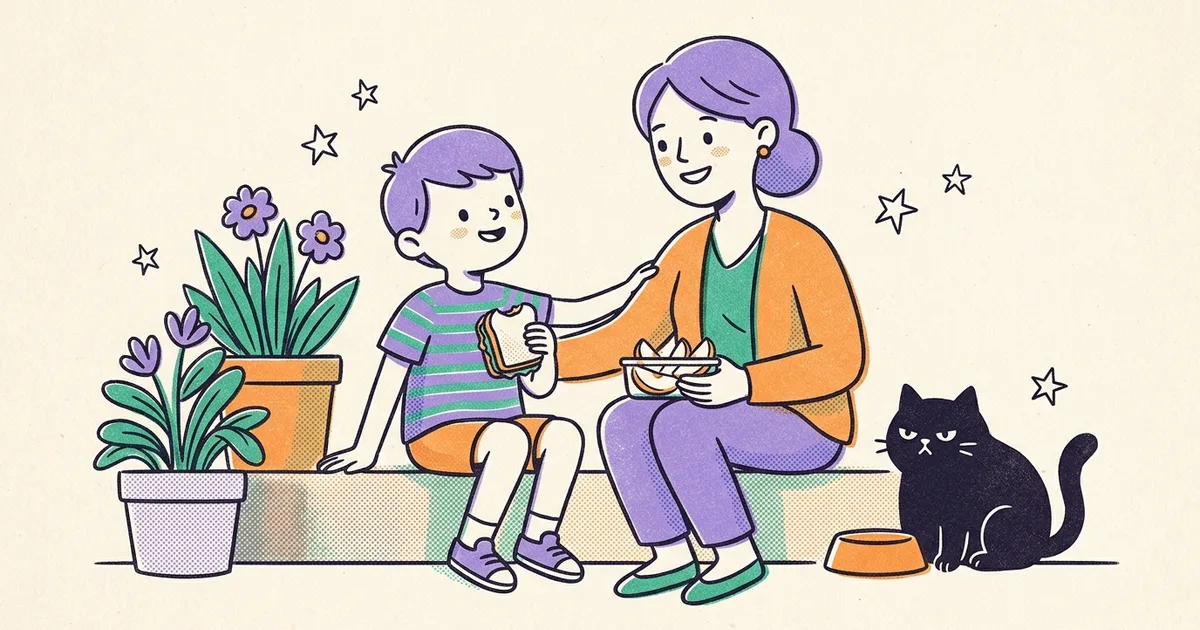
English has four present forms: present simple, present continuous, present perfect, and present perfect continuous. Teach present tenses for kids by linking each form to routines, actions happening now, past events affecting the present, or continuing actions. Children need not learn the four forms together. A 5-year-old can start with “I play” and “I am playing,” while an older learner can add “I have played” and “I have been playing.” This guide covers rules, examples, frequent mistakes, and short practice tasks.
📥 Present Tenses Practice Pack
Choose the right form, explain its meaning, and use it in everyday situations.
Leave your email — we'll send the PDF to your inbox.No spam — the PDF plus one short reminder. Unsubscribe anytime.
What Families Need to Know
When adults explain present tenses for kids, meaning should precede grammar labels. Ask what the speaker means: a habit, an action happening now, a past action affecting now, or an activity continuing over time? The answer identifies the form.
Children who speak two or three languages may understand these ideas even when their languages express time differently. Avoid word-for-word translation. Instead, pair a scene and time phrase with an example: “We walk to school every day” versus “We are walking to school now.”
The Four Forms at a Glance
This table connects present tenses for kids with practical meanings. Time words offer clues, but the situation determines the form.
Start with the present simple and present continuous. Add the present perfect forms after learners understand past participles and how past events connect to now. This sequence helps learners compare present tenses for kids without memorising disconnected endings.
How to Practise at Home
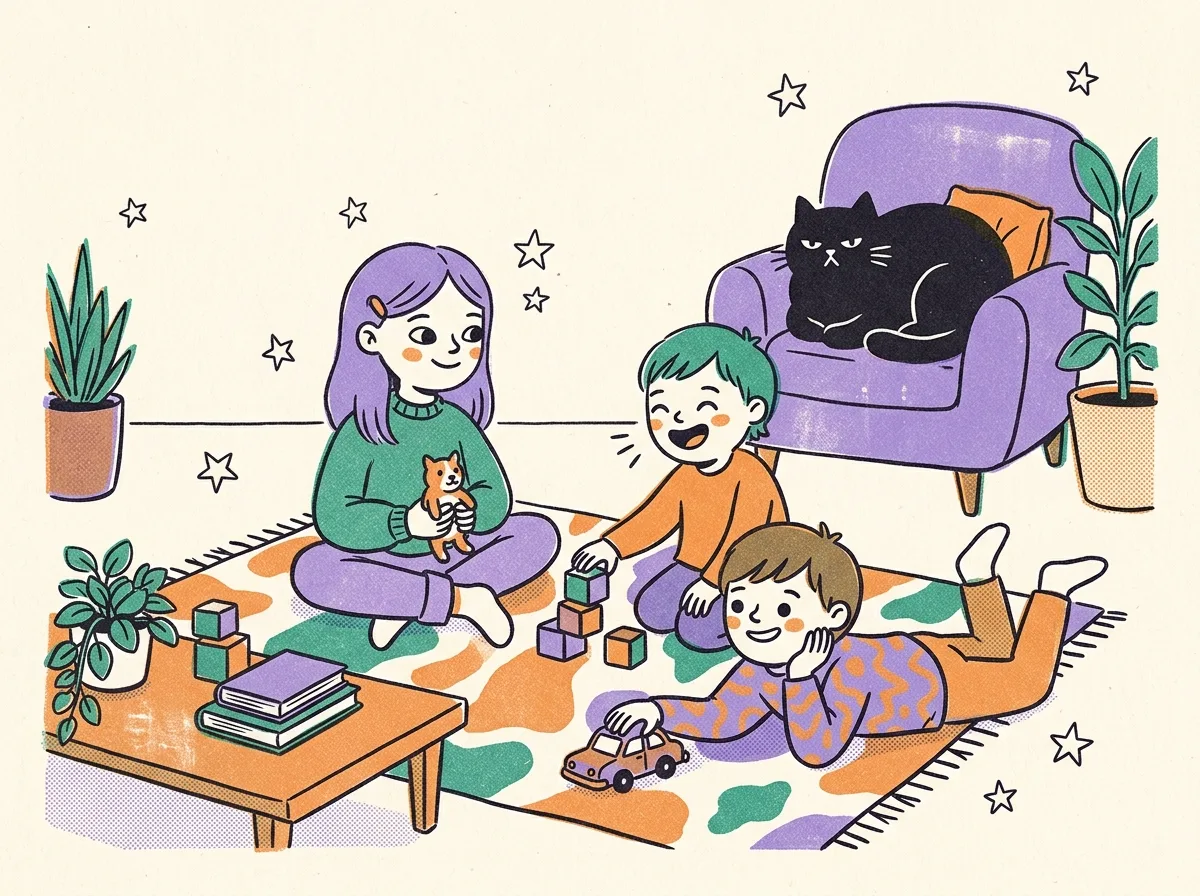
Practise present tenses for kids by building several sentences from one situation. During breakfast, compare “We eat breakfast at seven” with “We are eating breakfast now.” Afterward, add “We have finished breakfast.” If breakfast continues, say, “We have been eating for ten minutes.”
Ask short questions: “Every day or now?” “Finished or still going?” “Do we know when it happened?” The child can answer with one phrase before producing a complete sentence.
Correct one target at a time. When practising the third-person ending, focus on “She plays” and ignore unrelated pronunciation or spelling slips. Ask the child to repeat the sentence once. Calm repetition strengthens the pattern.
Examples by Age
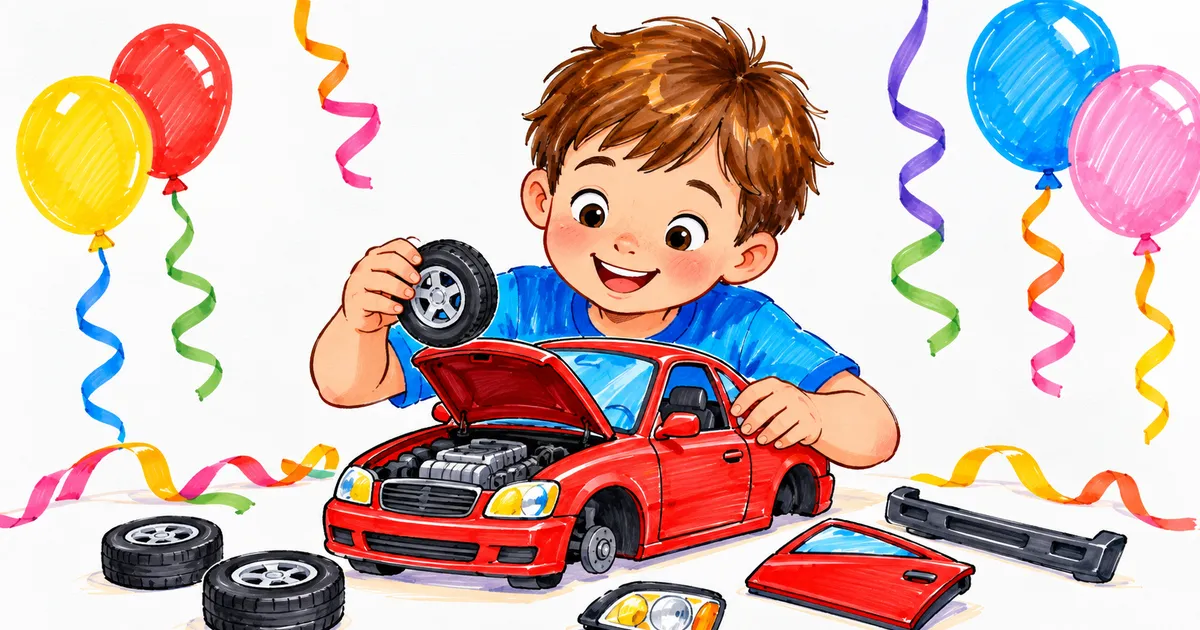
Examples of present tenses for kids should match the learner’s stage. For school-age kids, choose visible actions: “I jump,” “She jumps,” “We are jumping,” and “He is sitting.” Toys, drawings, and movement demonstrate the contrast without formal definitions.
For school-age kids, add routines and changing scenes. Compare a weekly pattern—“We play chess on Fridays”—with a picture description—“The children are playing chess.” Add negatives and questions: “He does not play today” and “Is he playing now?”
For school-age kids, use schoolwork, hobbies, travel, and family routines. Compare “I study French,” “I am studying for a test,” “I have completed three exercises,” and “I have been studying since six.” Older learners should explain each choice, not merely complete the verb.
Common Mistakes and Clear Corrections
A frequent error is omitting the auxiliary: “She playing” instead of “She is playing.” Another is missing the third-person ending: “He walk to school” instead of “He walks to school.” Place both corrections side by side and ask the child to identify the helper verb or ending.
Errors with present tenses for kids often arise when learners treat time words as automatic rules. “Today” works with different forms: “I feel tired today” and “I am working at home today.” The intended meaning determines the tense.
Stative verbs require care. Say “I know the answer,” not “I am knowing the answer,” because know describes a state. Other examples include like, want, need, understand, and believe. Teach them through sentences instead of memorised lists.
Short Practice Activities
Practice with present tenses for kids should progress from identifying a form to producing it. Let the child answer aloud, then write. The three activities cover recognition, sentence building, and personal use.
Choose the Correct Form
Complete each sentence: 1. Mina usually ___ (walk) to school. 2. Look! The dog ___ (run). 3. We ___ already ___ (finish) the puzzle. 4. I ___ (wait) for twenty minutes.
Answers: 1. walks; 2. is running; 3. have already finished; 4. have been waiting.
Change the Time
Start with “They play outside.” Change it to show: 1. an action happening now; 2. a completed action with a result now; 3. an activity continuing for an hour.
Answers: 1. They are playing outside. 2. They have played outside. 3. They have been playing outside for an hour.
Ask and Answer
Take turns asking: “What do you do after school?” “What are you doing now?” “What have you finished today?” and “What have you been doing since breakfast?” Answers will vary, but each should use the form signalled by the question.
For the rule wording, Wikipedia — English Grammar is a useful reference while the practice examples here stay adapted for children.
Frequently Asked Questions
Which Present Tense Should a Young Child Learn First?
Begin with the present simple for routines and facts, then contrast it with the present continuous for current actions. Pictures and movement show the difference between “I draw every day” and “I am drawing now.” Introduce formal terms after the child understands the meaning.
Does a Child Need to Learn All Four Forms Together?
No. School-age kids can focus on simple and continuous forms in short spoken sentences. Older primary learners can add questions, negatives, and broader uses. Introduce the present perfect and present perfect continuous when learners can discuss past actions connected to now.
How Can We Explain the Difference Between Present Simple and Present Continuous?
Show one familiar action in two time frames. “Sam rides a bike on Saturdays” describes a routine; “Sam is riding a bike now” describes the current scene. Ask the child to identify “usually” or “now,” then change the sentence with the time frame.
How Long Does It Take to Learn These Forms?
Learning present tenses for kids has no fixed timetable. A learner may understand a rule before applying it accurately in conversation. Short practice repeated across several weeks works better than one long grammar session. Review familiar forms while introducing new ones.
Should Every Grammar Mistake Be Corrected Immediately?
No. Correct the error linked to the current goal and leave unrelated slips for another activity. If the child says, “She play now,” while practising current actions, model “She is playing now.” Request one calm repetition, then continue the conversation.
Want to see how these ideas work in a real lesson — try a free LearnLink lesson.
Stay updated on our latest tips and resources by following us on Instagram LearnLink.