How Kids Can Improve Their English Writing Skills
Children improve composition by building three habits: saying one clear idea, putting it in a simple sentence, and checking one point before they finish. How Kids Can Improve Their English Writing Skills starts with labels, lists, birthday cards, chat-style messages, stories, and short opinions. For ages 4-15, practice should be short, steady, and tied to meaning. A child who writes “red car,” then “I like the red car,” and later “The red car stopped because the road was wet” gains control step by step.
📥 Better Sentences Writing Pack
Short, age-friendly writing practice for children learning English
Leave your email — we'll send the PDF to your inbox.No spam — the PDF plus one short reminder. Unsubscribe anytime.
What Families Need to Know First
Writing in English means more than spelling. A child must choose words, order them, remember punctuation, and consider the reader. For a bilingual or multilingual child, ideas may be strong in one language while English writing catches up.
That gap is normal. A 7-year-old may tell a rich story aloud and then produce two short English sentences. In LearnLink lessons, tutors start with what the child can already say, then help turn speech into written English without making the page feel like a test.
For families wondering How Kids Can Improve Their English Writing Skills, the first answer is: lower pressure and raise clarity. One clear sentence created with thought beats a copied page.
Start with Speaking Before Writing
Most children express ideas better on paper after they say the sentence aloud. This helps first-time online learners because the tutor can hear the idea, shape it with them, and ask the child to put it on the page. Speaking gives written work a path.
At home, ask one warm-up question before the pencil or keyboard appears: “What do you want to say?” If your child says, “Dog park fun,” stretch it into “The dog ran in the park.” Older children can add why, when, or how: “The dog ran in the park because it wanted to catch a ball.”
English-to-page habit fits many ages. Young children may dictate while an adult writes one word to copy. Older children can record a voice note, listen back, and turn the strongest idea into a paragraph.
Choose the Right Writing Task for Your Child's Age
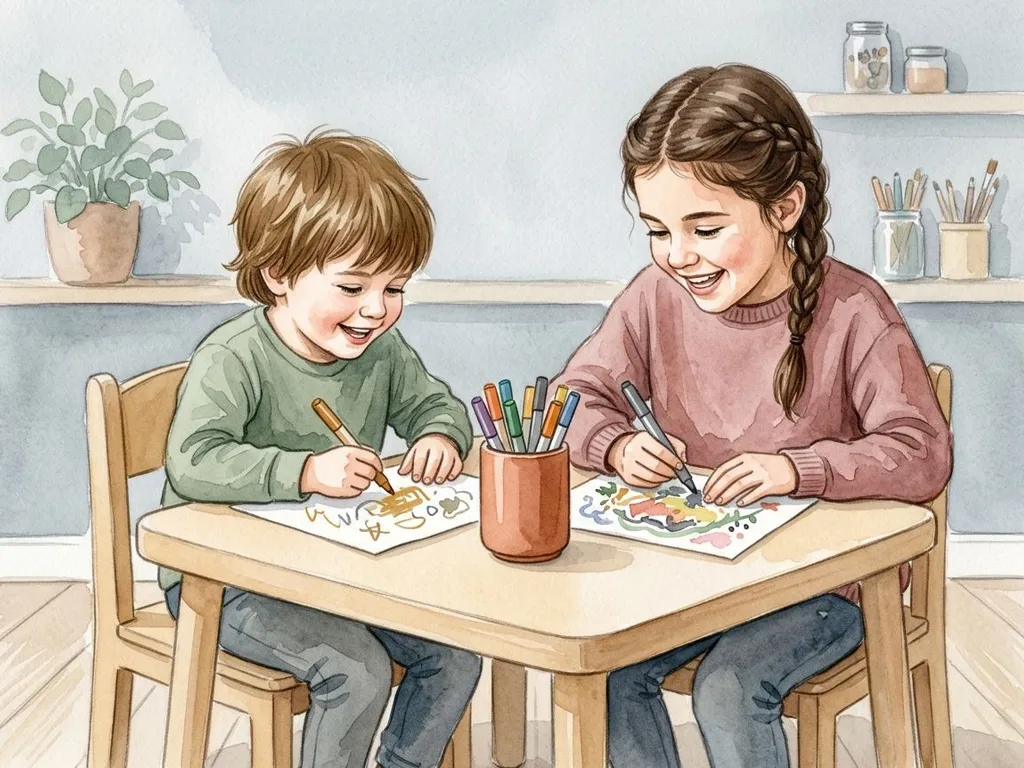
A task should fit the child’s age, reading level, and attention span. If the task is too easy, the child copies without thinking. If it is too hard, the child may freeze before the first word. The aim is effort, not struggle.
The table below matches English practice to age. Use it as a guide, not a strict rule. Some 6-year-olds compose with confidence; some 10-year-olds need sentence work before longer paragraphs.
This age match is one reason How Kids Can Improve Their English Writing Skills looks different from child to child. The goal is not identical texts. The goal is helping each child create the next stronger version of their own idea.
Use Short Models, Not Long Explanations
Children learn sentence patterns when they see a model. A model is a short example to borrow from, not a full text to copy unchanged. For a younger child, the model may be “I see a ___.” For an older child, it may be “In my view, ___ because ___.”
Keep models visible while your child works. This lowers memory load and keeps attention on the idea. A 9-year-old drafting a text about food may use: “My favourite meal is pasta. I like it because it is warm and soft. I eat it with my family.” The child can change pasta, reasons, and details.
Use the rule “copy the frame, change the meaning.” The sentence shape stays, but the child chooses their own words. This builds independence without leaving them alone with a blank page.
Try a Three-sentence Frame
Ask your child to complete: “I like ___. It is ___. I use it when ___.” Younger children can draw the object first. Older children can add one more sentence with “because.”
Build a Gentle Checking Routine
Editing should feel like part of creating a text, not punishment after finishing it. Children need a checklist they can use. Too many correction marks can make a child think written English means being wrong.
For school-age kids, check three things first: capital letter, full stop, and one clear idea. For ages 10-12, add word order and connectors such as “because,” “but,” and “so.” For teenagers, add paragraph order, tone, and whether the text answers the task.
When families ask How Kids Can Improve Their English Writing Skills without daily worksheets, this checking routine is often the missing piece. A child can draft two sentences after dinner and still learn by checking one target carefully.
Practical Activities for Home and Online Lessons
English practice works when it has a real reason. A shopping list, a message to a cousin, a photo caption, or a weekend plan can become English writing. The page should not always look like schoolwork.
For younger children, use drawing first. Ask them to draw a monster, room, animal, or meal, then label five things. Next, make one sentence: “The monster has green eyes.” For school-age kids, use “sentence stairs”: start with “The cat sleeps,” then add place, time, and reason until it becomes “The cat sleeps on the sofa after lunch because the house is quiet.”
Older children can compose for a real reader. They might draft a polite email to a tutor, a short game review, or a paragraph comparing two hobbies. In LearnLink one-to-one lessons, tutors adjust the prompt, give live feedback, and help the child revise without taking over the child’s voice.
Five-minute Photo Caption
Choose one family-safe photo. Ask your child to create one sentence about what they see, one sentence about what happened before, and one sentence about what may happen next.
How to Keep Progress Steady
Short practice done often beats rare long sessions. Ten minutes with sentences twice a week can build confidence because the habit stays familiar. Keep the work easy to start: one notebook, one shared document, or one folder of saved texts.
Keep early samples. After six to eight weeks, show your child an old sentence beside a newer one. Point to something concrete: “You used because here,” or “This paragraph has a clear beginning.” Children need progress they can understand.
How Kids Can Improve Their English Writing Skills also depends on reading. Reading gives children sentence patterns, spelling memory, and ideas. A child who reads simple stories, recipes, messages, and factual texts in English usually has more material for written work.
- Set a 10-minute English routine after school three days weekly.
- Choose one age-appropriate chapter book and discuss two new words.
- Practice one paragraph using a topic sentence, details, and closing.
- Use a simple checklist for spelling, punctuation, and complete sentences.
- Celebrate one specific improvement before correcting the next writing goal.
When a word has several meanings or pronunciations, Cambridge Dictionary is a useful check before turning it into child-friendly examples.
Frequently Asked Questions
What Is the Best Age to Start English Writing Practice?
Children can start before they form full sentences. school-age kids can trace letters, copy their name, label pictures, and match words to objects. From about 7 onward, many children are ready for short sentences. The key is task size, not exact age. A child should feel, “I can try this,” not “I must write a perfect page.”
How Kids Can Improve Their English Writing Skills If They Do Not Like Writing?
Start with topics your child cares about and keep the task small. A reluctant writer may handle one game review sentence, one comic speech bubble, or three words under a drawing. Praise the clear idea before correcting errors. Then choose one fix only, such as a capital letter or a missing full stop.
Should Parents Correct Every Spelling Mistake?
No. Correcting every mistake can slow the child down and make written work feel unsafe. Choose spelling words that matter for the task or that the child has studied. For a story, correct key repeated words. For free composition, focus first on meaning and sentence sense, then clean up a few spellings together.
Is Handwriting or Typing Better for English Writing?
Both can help. Handwriting supports letter formation and spelling memory, especially for younger children. Typing helps older children plan, move sentences, and edit. If handwriting is hard, typing can let the child show stronger ideas. Choose the format that helps your child express ideas more clearly and with less stress.
A short one-to-one lesson can show what level and pace fit your child — book a free English lesson.
Stay updated on our latest tips and resources by following us on Instagram LearnLink.