How Often Questions for Kids

A how often question asks the frequency of an action, event, or routine. Children use it to discuss habits such as reading, playing sport, visiting relatives, or practising English. How Often Questions for Kids: A Practical the child explains sentence patterns, answers, and errors. Younger learners can practise “How often do you swim?” and “Once a week.” Older children can add past, future, and modal verbs. Connect the grammar with familiar routines.
📥 How Often Questions for Kids
Build clear questions, choose natural frequency answers, and track your own routines.
Leave your email — we'll send the PDF to your inbox.No spam — the PDF plus one short reminder. Unsubscribe anytime.
What Children Need to Understand
A child first needs to grasp frequency: how many times something happens within a period. A calendar, weekly timetable, or row of seven boxes makes the idea visible. If football practice appears on Tuesday and Thursday, it happens twice a week.
How Often Questions for Kids: A Practical the child separates frequency from time. “When do you practise?” asks for a time, such as “after school.” “How often do you practise?” asks for a rate, such as “three times a week.” One routine can have both answers.
Start with familiar actions: brushing teeth, reading, calling grandparents, using another home language, or attending a club. Family routines differ across cultures, so personal frequency has no correct answer. “Every day,” “on Saturdays,” and “hardly ever” can all be grammatically correct.
How the Question Pattern Works
The present-simple pattern in How Often Questions for Kids: A Practical the child is How often + do or does + subject + base verb? Use do with I, you, we, and they. Use does with he, she, it, or one person’s name.
After does, the verb keeps its base form: “How often does your sister read?” The -s belongs to does, so “does your sister reads” is incorrect. The verb be needs no form of do: “How often is the library open?”
Useful Ways to Answer
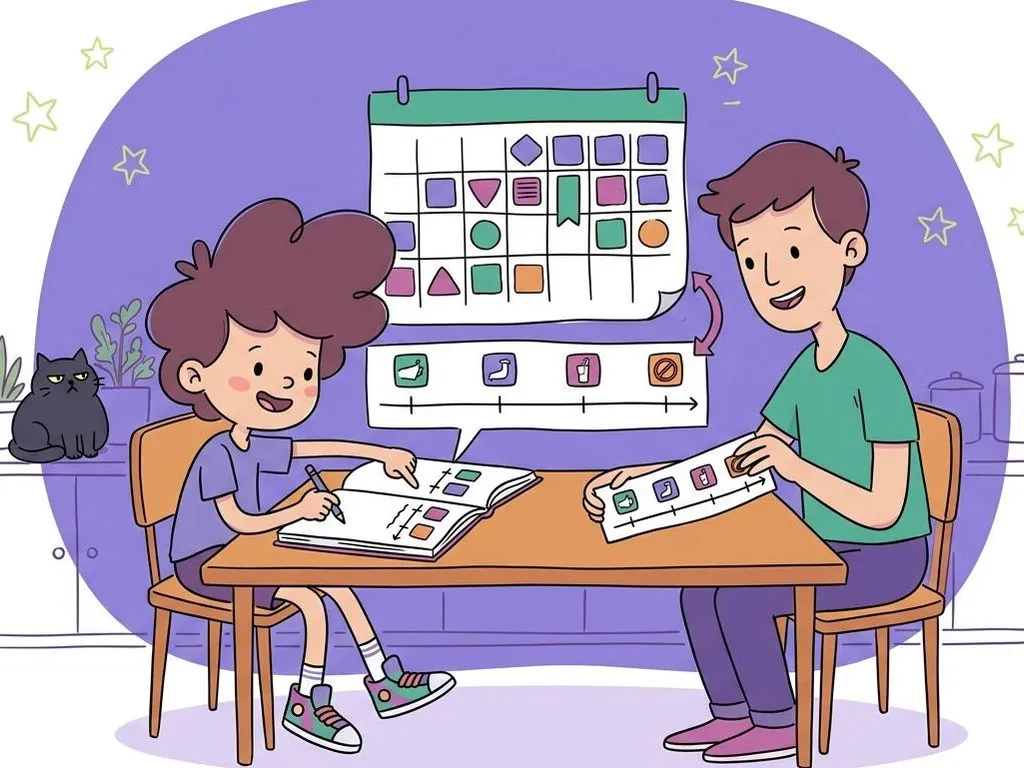
Children can answer with once, twice, or a number plus times: “once a day,” “twice a month,” or “four times a year.” English uses a, not in a: “three times a week” is standard.
A child can name a recurring point: “on Mondays,” “every Friday,” or “at weekends.” Calendar words suit beginners because children can check them. Next, introduce frequency adverbs such as always, often, sometimes, rarely, and never.
Frequency adverbs come before lexical verbs: “I often read before bed.” They follow be: “Our lessons are often in the afternoon.” Exact phrases tend to come last: “She practises the piano twice a week.” These positions produce natural answers.
Examples for Different Ages
For school-age kids, keep exchanges short and oral. How Often Questions for Kids: A Practical the child can begin with picture cards showing daily and weekly routines. Ask, “How often do you brush your teeth?” or “How often do you draw?” Accept a short answer, then model the full sentence.
Children can sort answers into groups: every day, once a week, a few times a month, and never. They can ask classmates or relatives safe questions such as “How often do you read comics?” and record answers with ticks. This combines grammar, speaking, and data work.
School-age learners can compare time frames. “How often do you cycle?” describes a current habit. “How often did you cycle during the holiday?” asks about a finished period. “How often will you train next month?” looks ahead. In one-to-one lessons with LearnLink tutors, questions can match the learner’s age, interests, and grammar level.
Common Mistakes and Clear Corrections
A missing auxiliary is a typical word-order error. “How often you play tennis?” should be “How often do you play tennis?” Double marking creates “How often does he plays?” Correct it to “How often does he play?” Repeating the correction aloud reinforces the pattern.
Answers create errors too. Use “twice a week,” not “two times in a week,” for a regular rate. Write every day as two words when it means each day. The adjective everyday means ordinary, as in “everyday clothes.” Avoid double negatives: say “I never watch it,” not “I never don’t watch it.”
Children may confuse how often with how many times. Both ask about frequency, but how many times often refers to a set period: “How many times did you call yesterday?” How often suits routines. The examples keep the distinction concrete.
Practice Activities That Build Accuracy
Begin with speaking before written drills. Place activity cards beside frequency cards and combine them: read with every evening, or swim with once a week. The child asks a full question, gives a true answer, then changes one element.
Fill in the Missing Word
Complete each question with do, does, is, did, or can.
1. How often ___ you read in English?
2. How often ___ your brother cook?
3. How often ___ the sports centre open?
4. How often ___ they visit last year?
5. How often ___ we use this game?
Answers: 1. do; 2. does; 3. is; 4. did; 5. can.
Build and Answer the Questions
Put the words in order, then give a true answer.
1. often / how / you / do / draw
2. she / how / does / often / practise
3. often / are / how / lessons / the
4. did / often / how / travel / they
Questions: How often do you draw? How often does she practise? How often are the lessons? How often did they travel?
Finish with a weekly family survey. Everyone answers one question, such as “How often do you read for fun?” Your child reports: “I read every day. My brother reads twice a week.” Revisit How Often Questions for Kids: A Practical the child in short sessions, changing verbs and time periods as accuracy grows.
When a word has several meanings or pronunciations, Cambridge Dictionary is a useful check before turning it into child-friendly examples.
Frequently Asked Questions
At What Age Can a Child Learn How Often Questions?
Children can meet the idea from about age five through familiar routines without explaining the rule. Begin with “How often do you…?” and use pictures or a calendar. Older children can study do, does, verb forms, and word order. English experience matters more than age alone.
What Is the Difference Between “How Often” and “When”?
How often asks about frequency: “How often do you call your cousin?” The answer might be “once a week.” When asks about a time: “When do you call your cousin?” The answer might be “on Sunday evening.” Pair “how many times?” with how often and “what time or day?” with when.
Can a Child Answer with “Sometimes” Instead of a Number?
Yes. Sometimes works when the speaker lacks or does not need an exact number. Start with a full sentence: “I sometimes play chess.” Exact phrases such as “twice a month” add detail, but both forms are correct. Ask for precision only when needed: “About once a week or once a month?”
Why Does My Child Forget “Do” or “Does”?
Some languages form questions without a helping verb, so omitting do or does reflects language transfer. Practise the opening as one spoken frame: “How often do you…?” Then contrast it with “How often does she…?” Short, repeated exchanges reinforce the form better than reciting the rule before each answer.
How Much Practice Does This Grammar Need?
Five to ten minutes is enough for one focused activity. How Often Questions for Kids: A Practical the child works best across days: begin with present habits, add new subjects and verbs, then introduce past or future time. Stop while the child still answers carefully. Brief review beats a long worksheet completed through guesswork.
Start your child's English journey today — book a trial lesson with LearnLink.
Stay updated on our latest tips and resources by following us on Instagram LearnLink.