How to Teach Present Simple to Kids
The present simple is the first tense children need in English, and knowing how to teach present simple to kids makes a measurable difference in how quickly confidence builds. It covers daily habits, permanent facts, and general truths — the sentences a young child produces every hour in their first language. Children ages 4-15 absorb grammar fastest when it connects to their real life: what they eat, what time school starts, what their pet does at home. This guide walks through the core concepts, sentence structures, and activities that work both in classrooms and at the kitchen table.
Why the Present Simple Comes First
Before any other tense, children need a reliable way to describe their everyday world. The present simple covers three key functions: permanent facts ("Whales breathe air"), daily habits ("She cycles to school"), and general truths ("Dogs bark at strangers"). These are exactly the sentences a 6-year-old produces in their first language all day long — which is why this tense is the standard starting point for young English learners.
The structure is also the lightest in the language. One base form covers most subjects (I / you / we / they + verb), with a single adjustment for the third person (he / she / it + verb + -s). Compare that to the past simple or present perfect and the cognitive load drops substantially — leaving more room for children to focus on meaning rather than form.
Research in second-language acquisition consistently shows that new grammar takes hold faster when it maps onto familiar, high-frequency situations. Routines and facts about the world are the most familiar context children have, in any culture. For parents, how to teach present simple to kids works best when practice is short, visual, and repeated every week.
The Three Building Blocks
Present simple has three core sentence types: affirmative, negative, and question. Showing all three together — even briefly — prevents confusion later. The table below makes the key patterns visible at once.
Our tutors introduce these forms one at a time across separate lessons — never all three in a single session. Affirmative comes first. Negative follows. Questions come last. Rushing the sequence overloads working memory and creates exactly the kind of mixed errors that take weeks to sort out. For parents, how to teach present simple to kids works best when practice is short, visual, and repeated every week.
The third-person -s is the consistent sticking point. Children hear "she go to school" from peers and siblings, so the -s ending needs repeated, low-pressure exposure rather than a single correction and a rule. Hearing it correctly across many different contexts is what makes it automatic. For parents, how to teach present simple to kids works best when practice is short, visual, and repeated every week.
A Step-by-Step Approach
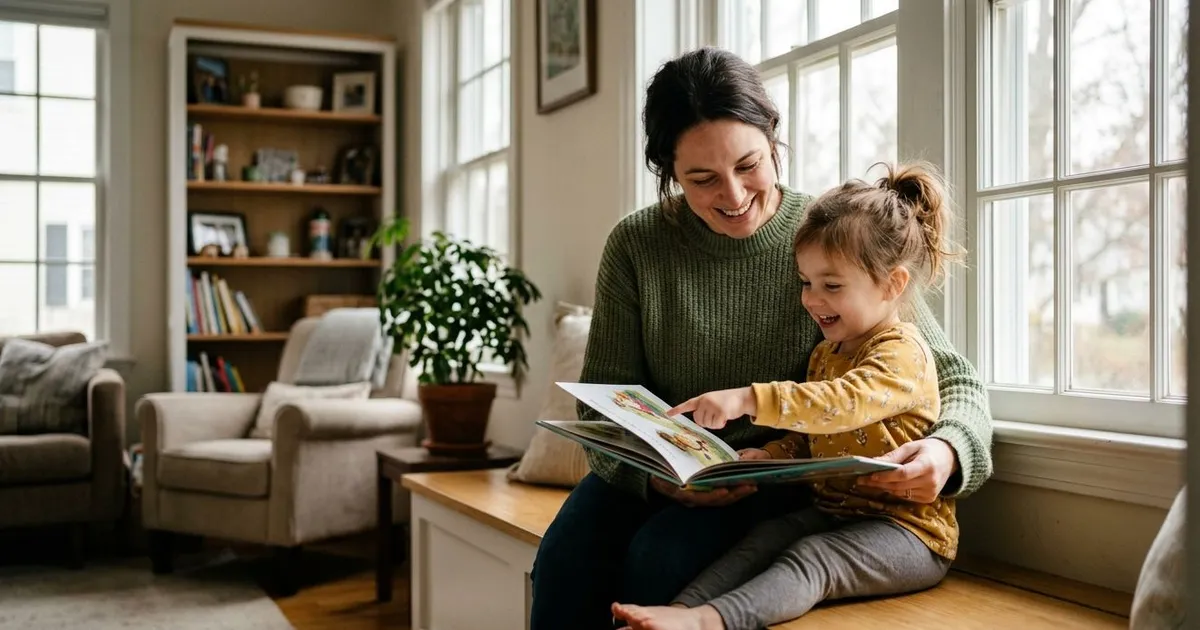
The most practical framework for how to teach present simple to kids runs through six clear stages, each building on the last.
Step 1: Connect to a daily routine. Ask the child what they do every morning and write the answers down together: "I wake up. I eat breakfast. I go to school." These sentences are already in the correct form — the child just doesn't know it yet. For parents, how to teach present simple to kids works best when practice is short, visual, and repeated every week.
Step 2: Make the verb visible. Circle or underline the verb in each sentence. Say it aloud. Children need to notice that the verb is where the grammar decision happens.
Step 3: Introduce third person through someone familiar. A sibling, a pet, a favourite cartoon character. "My dog wakes up at seven. He eats. He sleeps in a basket." The parallel structure makes the -s ending visible and predictable.
Step 4: Add negatives using personal topics. Food preferences work well. "I don't like broccoli. My brother doesn't like carrots." Keep sentences short and anchored in real opinions.
Step 5: Move to questions gradually. Start with yes/no: "Do you have a pet?" Then add Wh- questions: "What time do you go to bed?" Every question should connect to an answer the child genuinely wants to give.
Step 6: Practise through different activity types. Short drills build the form. Conversations and games build fluency. Both are necessary, and variety matters more than volume.
Practical Examples for Different Ages
For children, picture cards are the right starting point. Show a card of a child eating and say, "She eats breakfast." The child repeats and points. No reading, no writing — just sound and image paired together.
For school-age kids, sentence-completion tasks work reliably. Give the first part and let the child supply the verb: "My teacher ______ (live) near the school." The gap focuses attention on exactly where the grammar decision occurs. This is one of the most effective ways to approach how to teach present simple to kids at the primary school level, because it keeps the overall sentence load light while still requiring an active grammar choice.
For school-age kids, surveys and role play give the tense a real communicative function. One child interviews another: "Do you play any sports? Does your sister speak French?" Older learners disengage when an activity feels contrived. Real information gaps — where one person genuinely does not know the other's answer — keep the grammar purposeful.
Exercise 1: Fill in the Blank (Affirmative)
Write the correct form of the verb in brackets.
- My sister ______ (play) tennis every Saturday.
- We ______ (eat) lunch at noon.
- The cat ______ (sleep) on the sofa.
- My dad ______ (work) in a hospital.
- I ______ (like) strawberry ice cream.
Answers: 1. plays | 2. eat | 3. sleeps | 4. works | 5. like
Exercise 2: Make It Negative
Rewrite each sentence in the negative form.
- She drinks coffee every morning.
- They go to bed at eight o'clock.
- He speaks German at school.
Answers: 1. She doesn't drink coffee every morning. | 2. They don't go to bed at eight o'clock. | 3. He doesn't speak German at school.
Common Mistakes and How to Fix Them
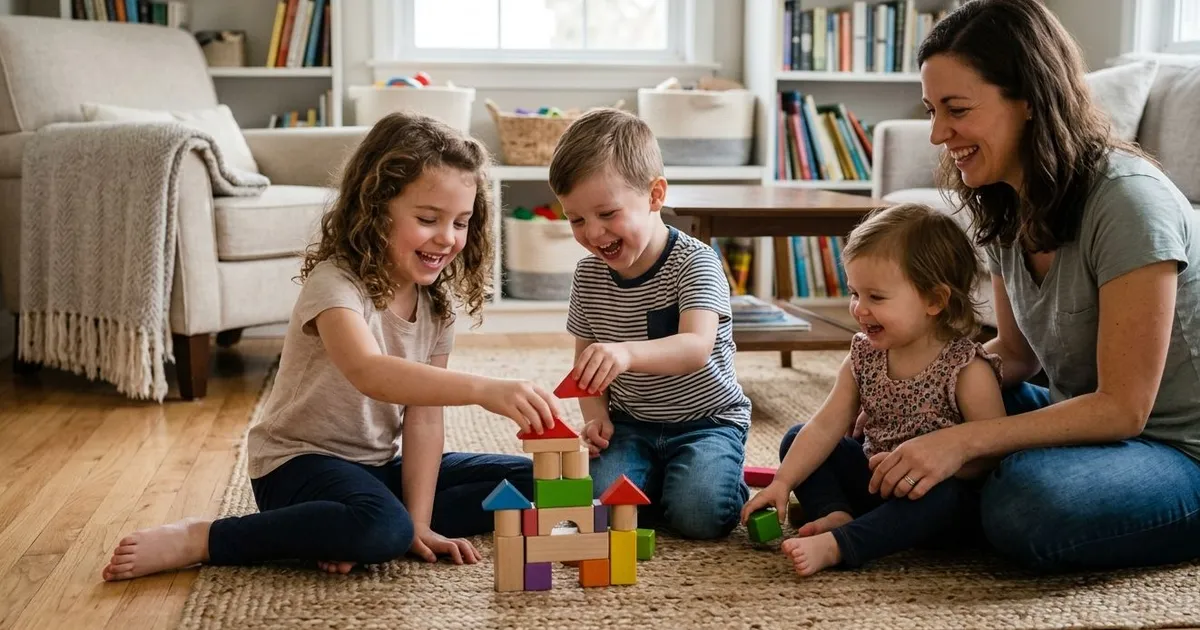
The most frequent error is dropping the -s in third-person sentences: "He go to school" instead of "He goes to school." Children encounter this form from peers, so it sounds natural to them. The most effective response is not a sharp correction but a gentle reformulation: "Oh, he goes to school at eight? What time does he get home?" The child hears the correct form twice in one exchange without feeling singled out.
A second error is substituting the present continuous for states: "She is liking chocolate" instead of "She likes chocolate." This usually means the present continuous was introduced before the present simple was fully established — a sequence problem more than a language problem. The fix is sustained exposure to stative verbs (like, love, know, want, have) in clearly present-simple contexts.
Third: omitting "do/does" in questions — "You like football?" This mirrors word order in Spanish, French, Italian, Hebrew, and many other languages, so it feels natural to multilingual children. Address it explicitly and early. Make the auxiliary verb a visible part of every question-form lesson, not something children are expected to absorb on their own.
Tips for Parents Supporting Learning at Home
The single most useful thing any parent can do is notice and name. During ordinary family life, narrate what happens in short, clear present-simple sentences: "You eat so fast! Your brother always eats slowly." This informal exposure builds pattern recognition without any study pressure. No worksheet required.
Knowing how to teach present simple to kids does not require a teaching qualification. It requires a few minutes of attention each day. Label objects around the house with a simple sentence. Keep a short "What I do every day" chart on the fridge. Ask one present-simple question at dinner: "Do you prefer pasta or rice?" The topic does not matter; the grammar pattern does.
LearnLink lessons reinforce what happens at home, and home reinforces the lessons. Children who hear the same structures in different settings — dinner table, online session, classroom — absorb them faster than those who encounter grammar in only one context. Consistency across environments is one of the clearest patterns in language acquisition research.
When a word has several meanings or pronunciations, Cambridge Dictionary is a useful check before turning it into child-friendly examples.
Frequently Asked Questions
At What Age Should Children Start Learning the Present Simple?
Most children are ready to begin between ages 4 and 5, when they can follow simple instructions in their first language. At this stage, the focus is listening and repeating short sentences tied to pictures or movements — not reading or writing. Explicit grammar explanation is more productive from around age 7 or 8, when children can reason about language as an object. Starting with informal exposure and delaying formal rules is the approach used consistently across LearnLink lessons with younger learners.
How Long Does It Take for a Child to Feel Comfortable with Present Simple?
With regular practice — two or three short sessions per week — most children produce affirmative sentences reliably within four to six weeks. The third-person -s and question forms take longer, typically another four to eight weeks of exposure before they appear consistently without prompting. Children who already speak two or three languages at home often show different timelines depending on how closely those languages resemble English structure.
My Child Keeps Leaving Out the -s in "He/she/it" Sentences. What Should I Do?
This is the most common persistent error in present simple, and it usually takes longer to resolve than parents expect. The most effective approach is not repeated correction but repeated correct input. Read books that use present-simple sentences. Watch short videos together and pause to notice "he runs", "she eats", "it barks". Correcting your child more than once per conversation tends to make them hesitant rather than fluent. More input, fewer corrections — that ratio works.
Should I Compare the Present Simple to a Tense in Our Home Language?
Brief comparisons can help older children — particularly ages 10 and above — who already think explicitly about grammar. Pointing out that English uses "does" where Spanish uses a verb ending, or that French requires "est-ce que" where English uses word order, makes the structural difference visible. For younger children, comparisons often cause more confusion than clarity. Stick to English-only examples and let the pattern build through repetition and context.
How Do I Know When My Child Is Ready to Move on to the Present Continuous?
The clearest signal is consistent, unprompted use of present-simple forms in free conversation — not just in structured exercises. When a child says "My mum works at a school. She doesn't work on weekends. Do you know where she works?" without hesitating, they have a reliable base. Introducing the present continuous before that point is one of the most common reasons children end up confusing the two tenses, which takes far longer to untangle than the patience required to wait. Knowing how to teach present simple to kids well means knowing when to hold the line before introducing the next tense.
Start your child's English journey today — book a trial lesson with LearnLink.
Stay updated on our latest tips and resources by following us on Instagram LearnLink.