Knights and Castles for Kids
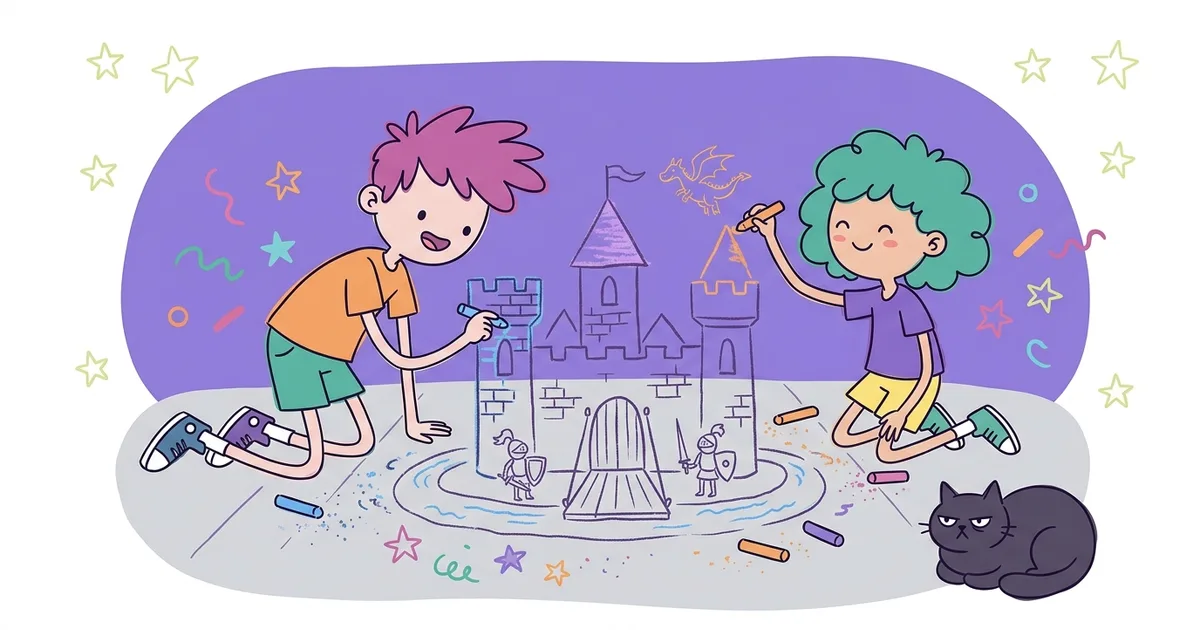
Knights and Castles: English Vocabulary and Activities for Kids is a themed word set covering people, places, objects, actions, and descriptions from castle stories. Children learn nouns such as knight, tower, and shield, then use them in phrases, questions, and imaginative play. Each word gains a memorable setting. Younger learners can point, match, and act; older children can describe scenes or create stories. The goal is English practice, not a history test or vocabulary list to memorise.
📥 Knight and Castle Word Quest
Read, match, complete, and speak with useful castle vocabulary
Leave your email — we'll send the PDF to your inbox.No spam — the PDF plus one short reminder. Unsubscribe anytime.
Core Castle Words and Phrases
Begin with words your child can see in a picture or perform as actions. Grouping words by meaning supports recall and shows their connections. Teach one group at a time.
knight, queen, king, guard, archer, servant
tower, wall, gate, courtyard, dungeon, drawbridge, moat
shield, sword, helmet, armour, crown, flag, torch, key
ride, guard, enter, climb, open, close, hide, rescue
tall, stone, heavy, brave, dark, narrow, ancient
inside, outside, above, below, behind, beside, across
Treat Knights and Castles: English Vocabulary and Activities for Kids as a language map, not a spelling test. Start with patterns: “This is a tower,” “The gate is open,” and “The knight is behind the wall.” Ask questions such as “Where is the key?”, “Who is in the courtyard?”, and “Can the guard cross the bridge?” These frames combine vocabulary and grammar from the first lesson.
Using the Words in Context
For context practice, Knights and Castles: English Vocabulary and Activities for Kids works best when each sentence changes one detail. Say, “The flag is above the gate,” then move it and ask, “Where is it now?” Depending on confidence, your child can answer with one word, a phrase, or a full sentence.
Move from naming to describing, then reasoning. A beginner might say, “A red shield.” A developing learner can say, “The guard carries a red shield.” A confident child might add, “The guard carries a red shield because the gate is open.” Accept a short correct answer before requesting more detail.
Keep the setting culturally open. Castles, forts, citadels, and walled towns exist worldwide, with different designs. Compare the picture with a building from your family’s country or another familiar place. The English task stays the same: notice, compare, and explain.
Activities for Different Ages
School-age kids: use a picture containing four or five target words. Ask your child to point to the tower, touch the gate, or place a paper knight beside the wall. Add full-body actions: lift a heavy shield, cross a drawbridge, or climb a tall tower. Repeat each instruction before introducing another.
School-age kids: draw a castle map. Your child can label its parts and follow directions such as, “Go through the gate, cross the courtyard, and stop below the tower.” Then swap roles so your child gives directions. Speaking shows which words are secure and which require practice.
School-age kids: develop richer language through comparisons, rules, and opinions. Learners can compare a castle with a palace, write rules for visitors, or discuss a character’s choice. At home, Knights and Castles: English Vocabulary and Activities for Kids can become a research task: choose one real castle, identify its main parts, and present five facts in the child’s own words.
Short Practice Routines That Work at Home
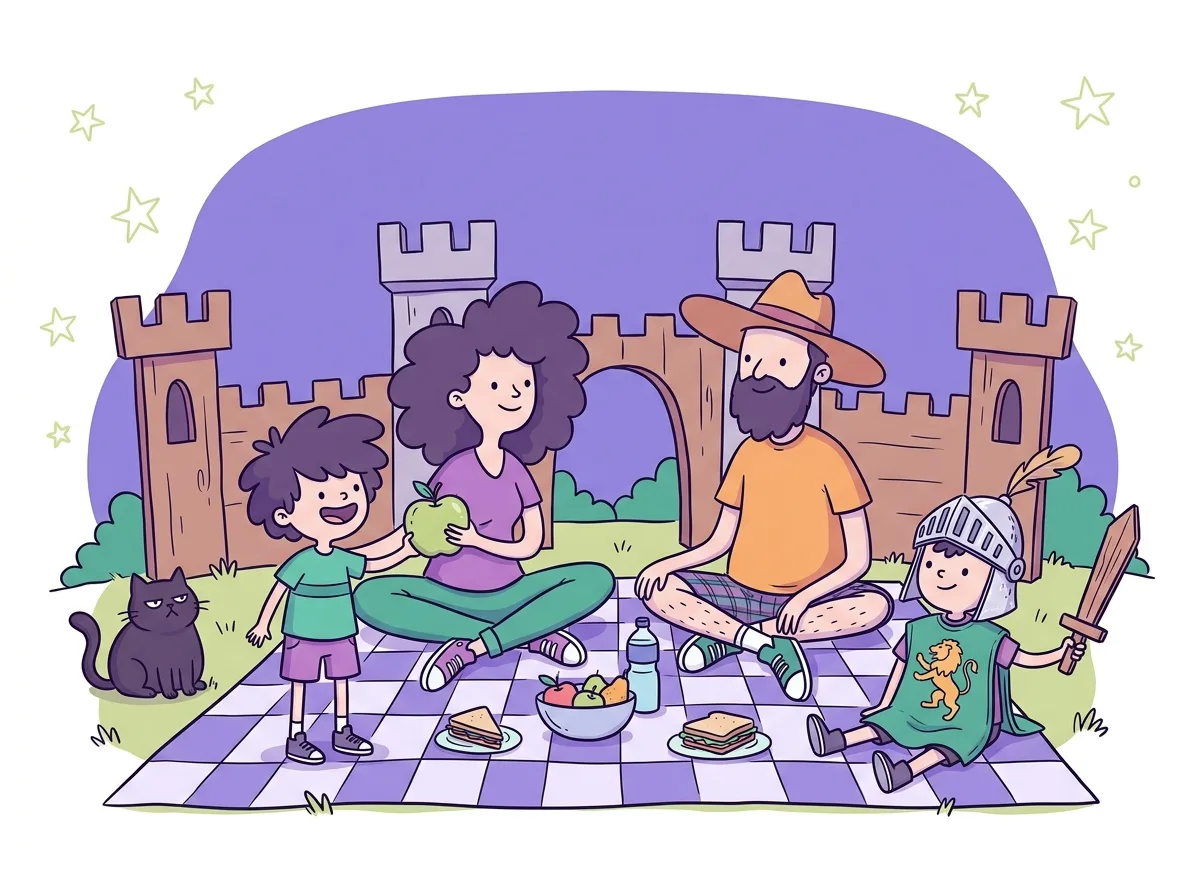
Use Knights and Castles: English Vocabulary and Activities for Kids in brief sessions throughout the week. First, introduce words with pictures. Next, sort or act them out. Later, ask your child to recall them without labels. Regular retrieval strengthens memory more effectively than repeated rereading.
Build a Mystery Castle
Draw a gate, wall, tower, moat, flag, and courtyard on separate pieces of paper. Hide the pieces and give one clue at a time: “It is tall,” “It is above the gate,” or “You cross it to enter.” Your child selects the matching piece and adds it to the picture. After completing the castle, swap roles.
Try a memory tray, word-and-picture matching, or “odd one out.” Place a shield, crown, and spoon together; your child explains which item does not belong. During LearnLink lessons, our English tutors can adapt each speaking task to the learner’s age, vocabulary, and confidence.
Common Mix-Ups and How to Correct Them Gently
Some castle words overlap in everyday speech but are not interchangeable. Contrast both meanings with pictures, then ask your child to explain the difference in English.
Practise pronunciation alongside meaning. In knight, the first letter is silent, so the word sounds like night. In castle, the letter t is silent in common English pronunciation. Let your child hear the word, repeat it, and use it in a sentence. During stories, note one or two errors for practice afterwards instead of interrupting.
Children may also learn nouns without the small words sentences require. Practise a tower, the gate, in the castle, and across the moat, not isolated labels. Multilingual children may transfer another language’s word order. Calmly model the English pattern without treating transfer as carelessness.
- Practice with ages five to seven using four labeled castle picture cards.
- Compare knight, night, and king aloud, then praise each careful correction.
- Use one illustrated castle book to spot five commonly confused words together.
- Try a three-minute role-play, gently recasting mistakes without interrupting your child.
- Review two words tomorrow with drawings, gestures, and one simple sentence.
When a word has several meanings or pronunciations, Cambridge Dictionary is a useful check before turning it into child-friendly examples.
Frequently Asked Questions
How Many Castle Words Should My Child Learn at One Time?
For a young beginner, start with four to six visible words, such as castle, knight, tower, gate, and shield. Add words when your child can recognise and use most without immediate prompting. Older or experienced learners may handle a larger set, but sentence recall matters more than list size.
Can a Multilingual Child Learn These Words Without Translation?
Yes, when a picture, gesture, object, or action shows the meaning. Translation can support abstract words or fine distinctions. Your child’s other languages are a resource. Compare words, sounds, and castle traditions while keeping the final speaking task in English.
Does the Topic Need to Include Battles and Weapons?
No. Children can practise castle vocabulary through buildings, clothing, maps, roles, puzzles, and daily life. Present swords, shields, or armour as historical or story vocabulary without graphic detail. Cooperative missions—finding a key, repairing a bridge, or planning a feast—produce varied language without focusing on combat.
How Can This Theme Support General English?
Knights and Castles: English Vocabulary and Activities for Kids practises more than themed nouns. Children use position words, action verbs, descriptions, questions, directions, past-tense stories, and reasons with because. Choose one language goal per activity so the English transfers to other topics and everyday communication.
Start your child's English journey today — book a trial lesson with LearnLink.
Stay updated on our latest tips and resources by following us on Instagram LearnLink.