Phrasal Verbs with Take in English for Kids
Teach 6 to 8 take expressions first by linking each phrase to an action, routine, or short sentence. Phrasal verbs with take are short combinations such as “take off,” “take care of,” and “take turns,” where take joins another word and creates new meaning. Phrasal verbs with take in English for kids stick when children act them out with toys, shoes, pets, board games, and family chores.
📥 Phrasal Verbs with Take in English for Kids
A home practice printable for learning useful take phrases in context
Leave your email — we'll send the PDF to your inbox.No spam — the PDF plus one short reminder. Unsubscribe anytime.
What Families Need to Know
A phrasal verb joins a verb with a small word, often called a particle. That small word changes meaning. “Take” can mean hold or carry. “Take off” can mean remove clothing or a plane leaving the ground. Children need context before choosing the right meaning.
For a 5-year-old, Phrasal verbs with take in English for kids should start with visible actions: “Take off your coat,” “Take out your pencils,” “Take turns.” For older children, add school and social meanings: “take notes,” “take over,” “take part in,” and “take back what you said.”
Listening usually comes before speech. A child may follow “take off your shoes” for weeks before saying it easily. That listening stage counts as practice.
A First Set to Teach at Home
Start with six to eight expressions. Too many phrases at once turn practice into a memory test. A small set lets your child hear, act out, and reuse each phrase next day.
The table below gives a practical starting set. Use one item daily with younger children, or two to three items per lesson with children aged 9 and above.
This set covers a first take-verbs cycle. After your child understands them in speech, add new meanings slowly.
How to Introduce the Phrases
Use a three-step routine: show, say, use. Put on a jacket, then say, “I take off my jacket.” Ask your child to copy. Then place the phrase in a real sentence: “Take off your jacket and hang it here.”
Keep grammar light. A 6-year-old does not need “particles.” Say, “These words go together.” Older children can learn that a small word changes meaning, as in “look for,” “look after,” and “look up.”
Build from action to speech to short writing. If a child can move, point, sort, or choose, the expression gains a memory anchor.
Examples by Age
For pre-school learners, keep phrasal verbs physical and routine-based: “take off your shoes,” “take out the blocks,” and “take turns.” Use toys, clothes, food, and family games. Skip abstract meanings such as “take over a project.”
For school-age kids, add school language and short explanations. Children can use “take notes,” “take part in a club,” “take care of a pet,” and “take back a book.” They can notice two meanings of “take off”: a child removes a coat, and a plane leaves the ground.
For older learners, connect these verbs to opinions, group work, and reading. “Take over the presentation,” “take back a comment,” and “take on a challenge” fit this stage. Phrasal verbs with take in English for kids should appear in short dialogues, not only single sentences.
Practice Activities
Short practice beats long drills. Five focused minutes after school or before a lesson can work. Choose one expression and use it three ways: act it, say it, then make a sentence.
Try a home routine hunt. Ask your child to find three daily moments where “take” verbs fit. Morning may bring “take off pajamas” and “take out a lunch box.” A board game may bring “take turns.” A pet routine may bring “take care of the dog.”
Family Practice: Choose the Right Phrase
Read each sentence aloud and let your child choose: take off, take out, take care of, or take turns. “It is your brother’s move now. We need to ___.” “Please ___ your notebook.” “It is hot. You can ___ your sweater.” “Every evening, we ___ the fish.” After each answer, ask your child to show the action or make one new sentence.
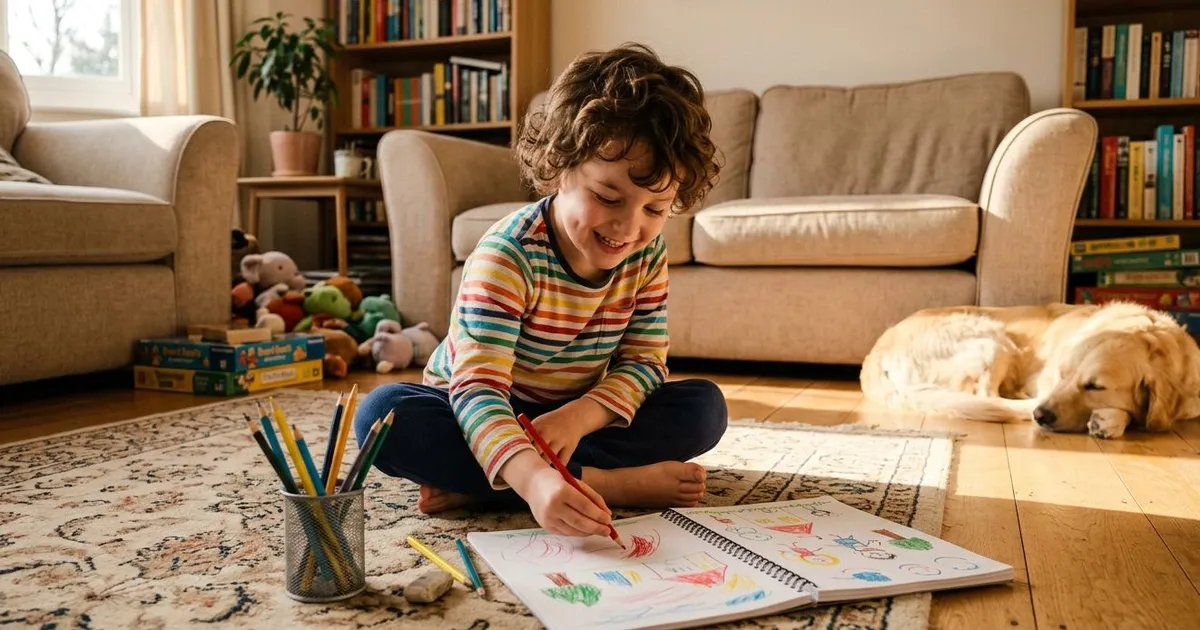
Use quick drawing. Fold a page into four boxes and write one expression in each box. Your child draws the meaning. This helps visual learners and children not ready for full sentences.
Common Mistakes and How to Fix Them
The first mistake is word-by-word translation from another language. Multilingual children may match each part to a known word. Treat the full expression as one meaning unit. “Take care of” means “look after,” not three separate ideas.
The second mistake is teaching several meanings of one expression in one day. “Take off” can mean remove clothing, become successful, or leave the ground. Start with the visible meaning. Add the plane meaning later with a picture, toy plane, or travel story.
The third mistake is testing before enough examples. If your child freezes, return to choices. Ask, “Do we take off shoes or take off soup?” A silly contrast helps children hear what sounds right.
- Practice five take phrasal verbs with an 8-year-old using picture cards.
- Use one bedtime story to spot take off, take out, and take back.
- Try three funny sentences, then ask your child to fix each mistake.
- Review four verbs daily with gestures before homework or screen time.
- Make a mini quiz with six examples from your child's favorite book.
For rule wording, Wikipedia — English Grammar is a useful reference while practice examples here stay adapted for children.
Frequently Asked Questions
How Many Phrasal Verbs with Take Should My Child Learn First?
Begin with six to eight expressions. A strong first set is take off, take out, take away, take care of, take turns, take part in, take back, and take over. Younger children may need one item at a time. Older children can compare two or three in a short dialogue. Phrasal verbs with take in English for kids work best when each phrase feels useful right away.
Are Phrasal Verbs Too Hard for a 5-year-old?
No, if wording stays tied to action. A 5-year-old can understand “take off your shoes” or “take out the blocks” because the meaning is visible. Avoid long grammar terms and abstract uses. Say the expression, show the action, and repeat it in normal family routines.
Should We Correct Every Mistake?
Correct gently, not every time. If your child says “take out my shoes” when they mean “take off my shoes,” repeat the correct version in a natural answer: “Yes, take off your shoes and put them by the door.” This keeps speech moving and gives a clear model.
How Can Online Lessons Help with These Phrases?
In a 1-on-1 lesson, a tutor can place Phrasal verbs with take in English for kids inside games, stories, classroom tasks, and short speaking turns. The child hears each expression from another adult, uses it in context, and gets support at the right level. That helps first-time online learners who need warm structure.
- Start with 6 to 8 visible actions, not a long grammar list.
- Practice one expression in three ways: act it, say it, and use it in a sentence.
- Try short routine hunts so your child hears the same language in real life.
Want to see how these ideas work in a real lesson — Try a trial lesson with LearnLink.
Stay updated on our latest tips and resources by following us on Instagram LearnLink.