Past Simple Tense for Kids: A Teacher's Step-by-Step Guide (Ages 5-12)
Quick answer: The past simple tense describes finished actions — "I played football yesterday," "She ate an apple." The LearnLink method introduces it to young learners in four steps: (1) the finished-time concept, (2) regular verbs that add -ed (played, walked, watched), (3) the 10 most common irregulars (went, had, said, saw, came, got, did, made, took, ate), and (4) question form with did. Most children pick up the basics within a couple of weeks of short daily practice. (And the past tense of the verb teach itself? It is taught — one of those irregulars worth learning early.) Below you will find a clear explanation of the tense, the difference between regular and irregular verbs, a step-by-step teaching method, fun activities, the mistakes to watch for, and the verbs to start with first.
Why the Past Simple Matters for Kids
The past simple is one of the most important building blocks of English grammar. It lets children describe actions that happened and finished in the past — whether a moment ago or years back.
When kids use the past simple correctly, they gain better storytelling skills, stronger reading comprehension, clearer communication, and more confidence in spoken and written English. The tense shows up everywhere in daily life: describing the weekend, explaining what happened at school, or retelling a favourite story.
What Is the Past Simple Tense?
The past simple is used to talk about actions that are already finished. It often answers the question "What did you do yesterday?" or "What happened at the weekend?"
For example:
- I played football.
- She ate an apple.
- They went to the park.
A simple way to explain it to a child: "We use the past simple when something happened before now — and it is not happening anymore." According to the Cambridge Dictionary grammar guide, the past simple is the tense most often used to talk about completed past events, which is exactly why it is one of the first tenses learners meet after the present.
Step-by-Step Method to Introduce Past Simple Verbs
New grammar should follow a gentle, logical path. Here is how to teach the past simple step by step:
- Step 1: Start with the Present
Before jumping into the past, make sure your child is comfortable with the present tense. For a deeper dive, see our present simple tense for kids guide. Use real-life examples like "I eat breakfast" and "She plays with her toys," then introduce the idea of time passing.
- Step 2: Explain the Concept of Time
Use timelines or calendars to show the difference between now (present), before (past), and later (future). Ask questions — and help your child answer them with confidence using simple strategies from this guide to asking questions in English:
- "What did you do today?"
- "What happened yesterday?"
- Step 3: Introduce One Verb at a Time
Do not overwhelm a child with long lists. Start with one action and its past form, repeat it often, and use pictures or gestures to reinforce meaning:
- eat → ate
- play → played
- go → went
- Step 4: Use Stories and Real-Life Examples
Tell short stories using past tense verbs and ask your child to repeat sentences after you. You can make this even more effective with simple visual techniques, like those in this guide to learning past tense through visual storytelling. For example: "Yesterday, I walked to the park. I saw a dog. It ran fast!" This builds familiarity and makes grammar feel natural.
Read each present-tense sentence aloud and ask your child to change it into the finished form. Answers are below.
1. I play in the garden. → ______
2. She walks to school. → ______
3. We eat pizza on Friday. → ______
4. He goes to bed early. → ______
Answers: 1. played 2. walked 3. ate 4. went
Fun Activities to Practise the Past Simple
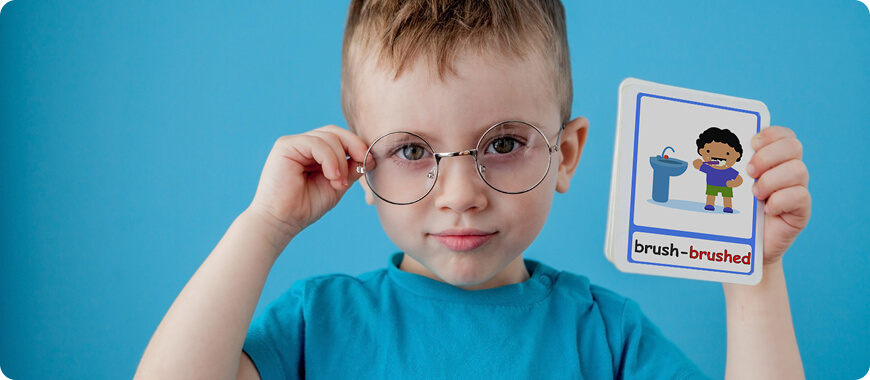
Children learn best when they are engaged. Here are five playful ways to practise the past simple:
1. Timeline Game – What Happened First, Next, and Last?
Use picture cards of daily actions (wake up, brush teeth, eat breakfast). Ask your child to arrange them in order and describe each event in the past simple.
2. Yesterday's Routine – Talk About the Day Before
Encourage full sentences about yesterday: "I got up at seven." "I brushed my teeth after breakfast." This reinforces structure naturally.
3. Picture Prompts – Describe the Scene
Show a drawing and ask: "What happened here?" "Who was there?" "Did he run or walk?" Let your child write or say short past-tense sentences.
4. Charades – Act Out an Action from Yesterday
One player acts out an action (swim, dance, jump) and the others guess using the past form: "You swam!"
5. Memory Box – Collect Objects and Tell Stories
Pair storytelling with common English phrases for everyday life — kids remember the past tense better when it is anchored to familiar situations. Fill a box with small objects from last week and let your child pull one out and tell its story in the past simple.
Teaching Regular and Irregular Verbs Made Easy
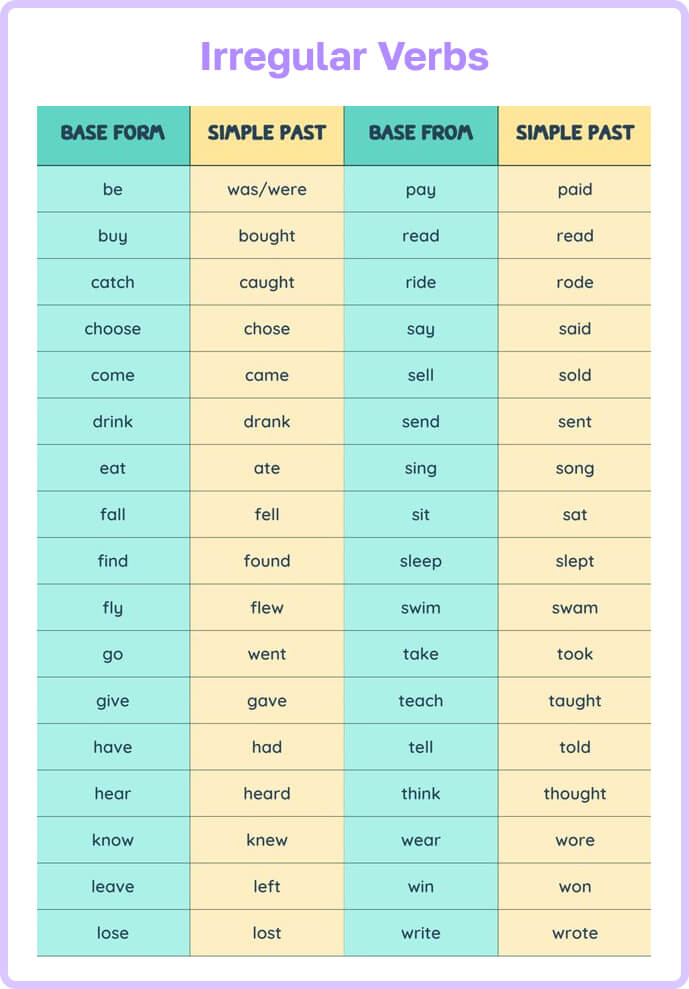
One of the trickiest parts of the past simple is the difference between regular and irregular verbs.
Regular Verbs
Most verbs follow one pattern: add -ed to the base form.
- play → played
- watch → watched
- walk → walked
Flashcards and matching games help children remember these endings.
Irregular Verbs
For more grammar context, learn about action verbs vs linking verbs before diving into irregulars. Some verbs break the rules — and they are often the most common ones:
- go → went
- have → had
- see → saw
- eat → ate
- take → took
- make → made
- come → came
- do → did
- say → said
- get → got
These have to be learned by heart, but songs and memory aids make it fun: "Yesterday, I ate a cake!" "Yesterday, she ran so fast!" Repetition helps children recall the forms without pressure. For a focused drill on the trickiest ones, see our guide on how to teach irregular verbs.
Time Markers That Signal the Past Simple
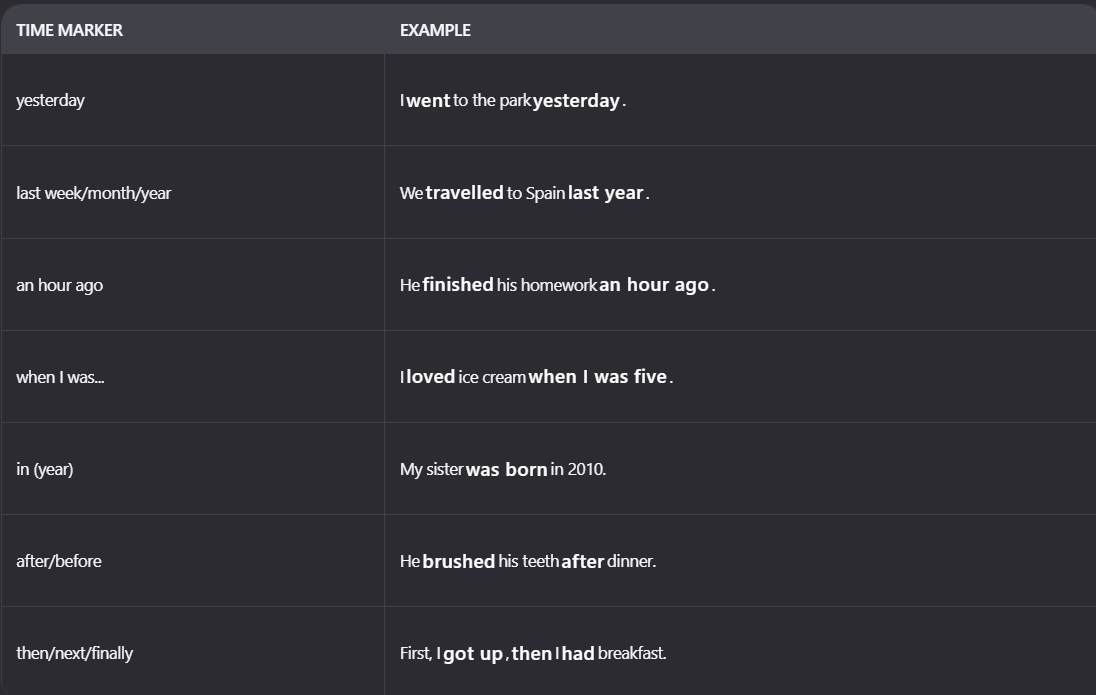
Time markers are words and phrases that often appear with this tense, and they make it easier to spot and use correctly — yesterday, last week, two days ago, in 2019, when I was little. Teaching these alongside the verbs helps children choose the right form and build correct sentences naturally.
How to Practise the Past Simple Every Day
Consistency is what turns a grammar point into a habit. Turn mealtimes into language moments — everyday routines are powerful learning opportunities, as explained in this guide to learning English through daily routines. Ask "What did you do today?", "Did you play with your friends?", and "What did you eat for lunch?", and encourage full-sentence answers. Read simple books together and point out past-tense verbs, then build a word wall: stick new verbs around the house ("ate" near the kitchen, "walked" near the shoes) so your child sees them often.
Common Mistakes Kids Make — And How to Fix Them
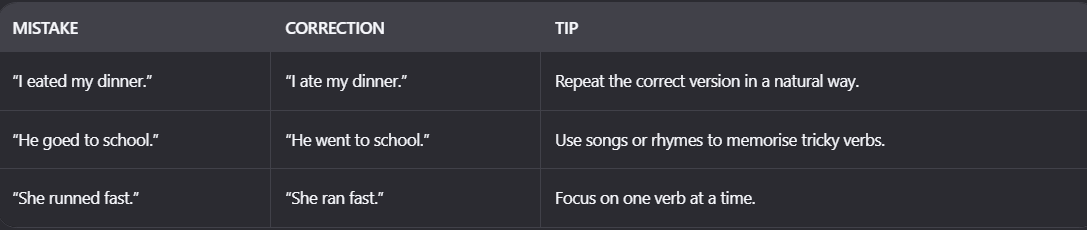
It is completely normal for children to over-apply the -ed rule and say "goed" or "eated." Rather than correcting harshly, model the right form back: if your child says "I eated a banana," reply warmly, "Yes! You ate a banana!" Over time they begin to self-correct. The same gentle approach works for missing the helper word did in questions ("What you saw?" becomes "What did you see?").
Digital Tools and Apps That Support Past Simple Learning
Technology can be a useful ally for grammar practice. A few resources designed for children learning English:
- LearnLink: live online classes with tutors who turn grammar into interactive lessons
- Duolingo Kids: short mini-games focused on vocabulary and verb tenses
- Starfall: phonics and grammar exercises for early learners
- ABCmouse: a full early-years curriculum with past-tense games
- Oxford Owl: free reading materials and grammar worksheets
These let children explore at their own pace and make the past simple feel less intimidating.
How LearnLink Teaches the Past Simple
At LearnLink every child learns differently, so lessons are tailored to each learner. Classes are led by experienced tutors who use storytelling, games, and interactive exercises so grammar comes alive. Children play vocabulary and grammar games, build confidence through positive feedback, and practise the past simple in real conversations — whether they are just starting out or building on what they already know.
Frequently Asked Questions
What Is the Past Tense of "Teach"?
The past tense of teach is taught — as in "She taught the whole class the alphabet yesterday." Teach is an irregular verb, so it does not add -ed; the spelling changes to taught for both the past simple and the past participle ("has taught"). It is a great example to show kids that some verbs break the -ed rule.
What Is the Past Simple Tense in Simple Words?
The past simple describes an action that started and finished in the past — usually yesterday, last week, or long ago. You use it with a finished time: "She played piano yesterday," "We went to the park last Saturday." Regular verbs add -ed; irregular verbs change completely.
What's the Difference Between Regular and Irregular Past Tense Verbs?
Regular verbs follow the pattern: add -ed to the base form (play → played, walk → walked, watch → watched). Irregular verbs change unpredictably and must be memorised — go → went, eat → ate, see → saw, have → had. English has roughly 200 irregular verbs, but children only need around 30 to 50 common ones for everyday use. Once the past simple is solid, you can move on to the next step with our guide to present perfect vs past simple.
At What Age Should Kids Learn the Past Simple Tense?
Children learning English as a second language usually meet the past simple once they are comfortable with the present tense, often early in their studies. Native speakers tend to use it naturally from a young age, though over-applied forms like "goed" and "eated" are a normal stage before the irregular forms settle in.
How Do You Teach Past Simple Without Making It Boring?
Skip the worksheets first. Start with storytelling: tell a short story about yesterday using past verbs, then ask your child to add sentences. Use picture cards, charades ("act out the verb"), or a memory box with objects from last week. Games beat drills — children acquire grammar faster through meaningful use than through rule memorisation.
What Are the Most Important Past Simple Verbs for Kids to Learn First?
Focus on these 10 high-frequency irregular verbs first: went, had, said, saw, came, got, did, made, took, ate. They cover about 40% of past-tense use in everyday speech. For regular verbs, start with: played, walked, watched, wanted, looked, talked, helped, called, worked, asked.
Final Tips for Parents and Teachers
Teaching the past simple comes down to patience, repetition, and making grammar relevant to your child's world. Keep these three habits in mind:
- Be patient — grammar takes time to settle, so let your child explore and experiment with words.
- Praise effort, not just accuracy — celebrate every attempt with "That's a great try!" to keep motivation high.
- Make it relevant — talk about your day, ask about theirs, and help them describe real past experiences.
Start small, practise daily, and keep it playful — and the past simple will become second nature.
Start your child's English journey today — book a free trial lesson with LearnLink.