Action Verbs for Kids: 12 Movement Games
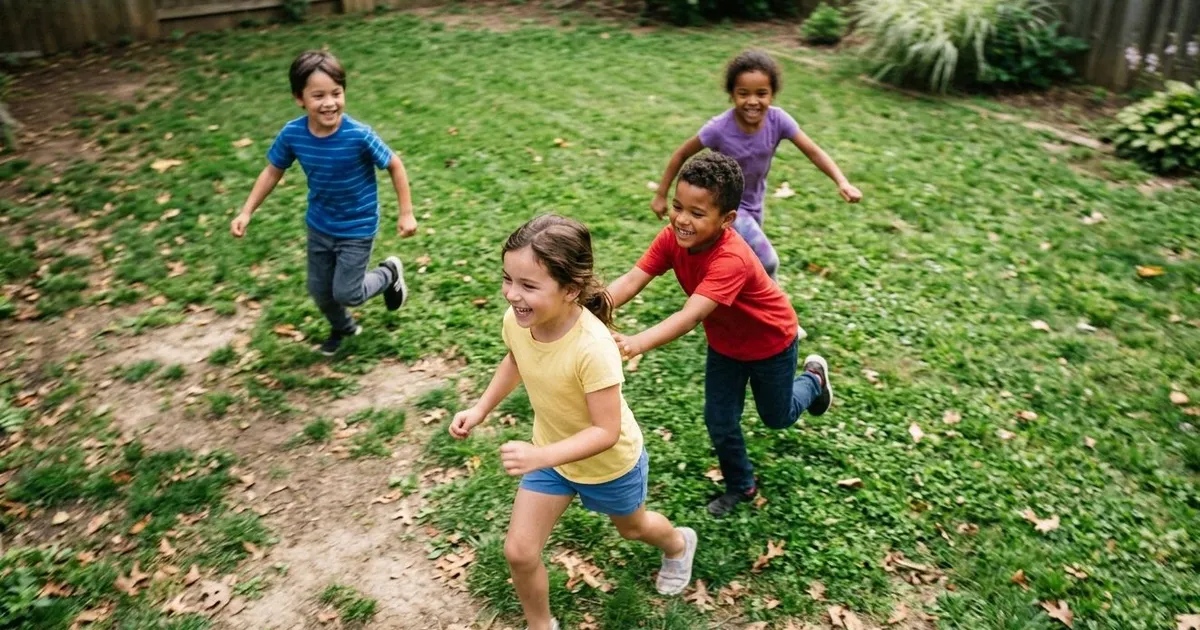
Action verbs denote physical or mental activities performed by a subject. Pedagogical research indicates that children aged 4-15 acquire these "doing words" effectively through Total Physical Response (Tpr) methods. Linking auditory input with body movement creates neural pathways that solidify vocabulary retention and grammatical accuracy.
📥 Action Verb Movement Cards
A printable practice set for learning action verbs through quick movement, speaking, and writing tasks.
Leave your email — we'll send the PDF to your inbox.No spam — the PDF plus one short reminder. Unsubscribe anytime.
The Role of Action Verbs in Literacy
Start with these core words and short examples before adding more specific vocabulary. For parents, unlock action verbs engaging movement games for kids works best when practice is short, visual, and repeated every week.
I run in the playground.
Can you jump high?
We read a short story.
Write your name here.
They play after school.
Draw a small house.
I eat breakfast at seven.
Drink water after sport.
Action verbs serve as the primary engine of English sentences. Proficiency in these terms enables children to construct vivid narratives. Replacing generic movement words with specific verbs like ran or jumped increases communication clarity. This foundation supports future comprehension of complex tenses and sentence mechanics. Using action verbs for kids: 12 movement games helps students internalize these functions through play.
Defining Action Verbs for Young Learners
An action verb describes a specific, observable act performed by a person, animal, or object. Examples include "eat," "sing," and "play." Educators recommend immediate live demonstration when introducing new terms. This direct connection between English and the demonstrated act clarifies meaning without requiring complex definitions. Integrating action verbs for kids: 12 movement games ensures that definitions remain concrete and accessible.
Data current as of July 2026.
For school-age kids, a useful routine is “say it, show it, name it again”: the teacher says one verb, models the movement for 3-5 seconds, then asks children to repeat both the word and the action. Keep the first set small, usually 6-8 verbs per lesson, so learners can compare meanings instead of memorizing a long list. Pair high-contrast verbs first, such as “jump” and “sit,” before introducing closer pairs like “walk,” “march,” and “tiptoe.” This sequencing helps children notice that an action verb answers the question “What is happening?” rather than “What is it?”
A common mistake is presenting action verbs only through pictures, where children may label the object instead of the movement. For example, a child looking at a picture of a dog running may say “dog” rather than “run.” To prevent this, cover or minimize background details and ask, “What is the dog doing?” Teachers can also use a two-column chart with “thing” and “action” to separate nouns from verbs. In movement games, give one command at a time, wait for the action, and then restate the sentence: “Mia hops.” This sentence frame supports grammar while keeping the definition embodied and clear.
💡 Key Idea
Action verbs are 'doing words' that show what is happening, making sentences clear and exciting.
For school-age kids, children understand action verbs best when they can hear the word, see the motion, and perform it right away. Choose 6 clear verbs for one short round, such as jump, crawl, spin, stretch, tiptoe, and clap. Say each verb in a full sentence before children move: “I jump over the line” or “We tiptoe to the door.” This helps them connect the verb to both movement and sentence meaning, rather than treating it like a random command.
A simple teaching technique is “say it, show it, change it.” First, name the action verb. Next, model the movement for 3-5 seconds. Then change one part of the sentence: “The frog jumps,” “The dancer jumps,” “The ball jumps.” Children begin to notice that the action word can stay the same while the person or object changes. A common mistake is asking children only to act out verbs without using them in speech. Movement games are more effective when each action ends with a quick language check, such as “What did you do?” or “Which word told your body to move?” This keeps the focus on vocabulary, not just activity.
Common Syntax Errors and Corrections
Learners frequently substitute adjectives for verbs or omit the verb entirely. Identifying these patterns allows for targeted intervention. The following table illustrates typical errors observed in primary education settings:
A Five-Step Progression to Mastery
Mastery follows a logical sequence from passive recognition to independent creative application. Educators should monitor progress through these stages:
- Sensory Input: Use "Simon Says" or flashcards to link sounds with body gestures.
- Controlled Practice: Utilize matching exercises and multiple-choice tasks to reinforce word meanings.
- Guided Description: Prompt students to describe specific images using provided sentence starters.
- Independent Production: Encourage students to narrate personal experiences using diverse verb choices.
- Constructive Feedback: Correct errors by modeling proper usage and celebrating vocabulary variety.
🔤 Task: Look at the image above and complete the tasks using only what you can clearly see.
1. Fill in the gaps with the correct words.
a. The child is ______ on the swing.
b. A child is ______ with a kite.
c. The adult is ______ a book.
2. Choose the correct option (A/B).
a. The swing is (A) still / (B) moving.
b. The child with the kite is (A) sitting / (B) running.
3. Match objects with actions.
a. Swing – (i) Reading
b. Kite – (ii) Flying
c. Book – (iii) Swinging
4. Correct the mistakes in the sentences.
a. The adult sits book.
b. Child kite fly.
5. Describe what each person or object is doing.
a. The child on the swing:
b. The child with the kite:
c. The adult on the bench:
6. Complete unfinished sentences based on the scene.
a. The children are enjoying the day by…
b. An adult is relaxing and…
For the rule wording, British Council LearnEnglish Kids is a useful reference while the practice examples here stay adapted for children.
Frequently Asked Questions
What Are the Most Common Action Verbs for Beginners?
Beginners typically start with high-frequency active, hands-on actions such as run, jump, eat, sleep, and play. These action verbs for kids: 12 movement games provide a foundation for daily communication.
How Does TPR Help in Learning Verbs?
Total Physical Response creates a kinesthetic memory of the word. When a child performs an action while saying the verb, retention rates increase significantly. Using action verbs for kids: 12 movement games reinforces this neurological connection.
Why Parents Choose LearnLink

LearnLink provides specialized English instruction to families around the world across many countries. The platform employs experienced tutors who utilize interactive movement games to teach grammar. To implement these strategies effectively:
- Identify target verbs for the week.
- Perform the action while speaking the word.
- Review progress through visual storytelling.
- Practice daily in natural conversation.
"Learning verbs should be an active experience, not just memorization. Encourage children to act out the words as they say them, linking sound, meaning, and movement," says a LearnLink tutor.
👉 You can gently support your child’s progress by starting with a on LearnLink — book a trial lesson with LearnLink.
Stay updated on our latest tips and resources by following us on Instagram LearnLink.