Unlock Adjective Power Comparisons Superlatives

Unlock adjective power comparisons superlatives empowers young learners to describe their world with precision and confidence. Basic words like "big" or "happy" only tell part of the story. Comparing things lets kids express preferences, describe sports results, or discuss favorite animals — making this grammar concept a practical tool for expressing complex thoughts, not dry rules.
Why Unlock Adjective Power Comparisons Superlatives Matters
Comparing expands children's critical thinking in English. Cambridge English Grammar states comparisons are vital for daily communication, enabling speakers to rank, evaluate, and contrast information. For young learners, stating one toy is faster or a book is the most exciting transforms their interactions.
Data from 4,000+ families shows children who master these descriptive structures early gain greater speaking confidence. This grammar milestone moves them beyond labeling to active storytelling. Once they unlock adjective power comparisons superlatives, they build richer descriptions — useful for short essays or complex school scenes — establishing a strong foundation for overall literacy.
What You'll Find in This Guide
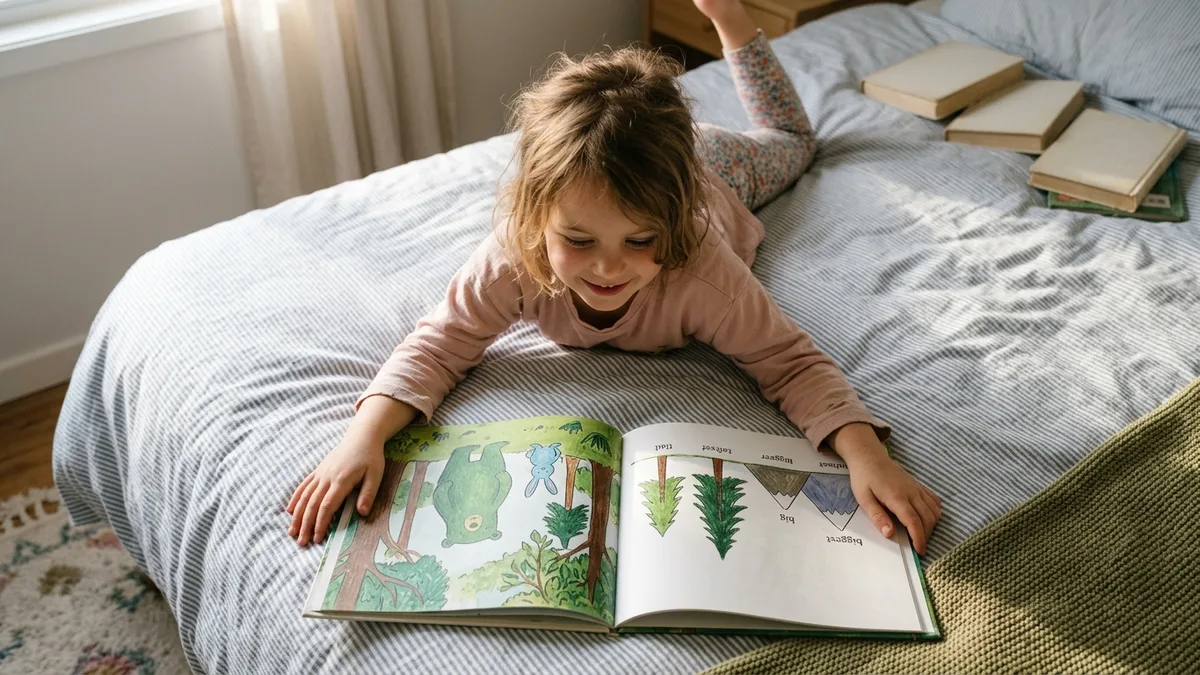
This guide helps your child master comparative and superlative adjectives, breaking grammar rules into manageable steps — no linguistics background required. You'll find practical spelling patterns, tables of frequent mistakes, and real-world examples for young minds. For parents, unlock adjective power comparisons superlatives works best when practice is short, visual, and repeated every week.
We include targeted activities for dinner, park walks, or quiet study, plus a dedicated practice section. For broader skills, explore how to build richer worlds through descriptive language or how to unlock vocabulary. Here are the core rules to unlock adjective power comparisons superlatives.
Step-by-step Approach to Rules and Forms
Divide adjectives into three categories based on length — this helps children predict the correct form of almost any adjective.
The first category: short, one-syllable adjectives like "tall" or "fast." To compare two things, add "-er" and "than." To describe the extreme among three or more, add "the" and "-est" — so "tall" becomes "taller than" and "the tallest."
The second category: adjectives ending in "y," such as "happy" or "heavy." Change "y" to "i" before adding the endings — "heavy" becomes "heavier than" and "the heaviest." Visual practice makes this spelling rule stick.
The third category: long adjectives with two or more syllables, like "beautiful" or "exciting." Use "more" for comparisons and "the most" for superlatives: "more exciting than" and "the most exciting." As your child advances in writing, explore Unlock Script Power: Colons, Semicolons, and Dashes Explained alongside the common irregular exceptions — "good" becomes "better/best" and "bad" becomes "worse/worst."
Practical Examples for Kids
Five examples using everyday vocabulary:
- The brown dog is faster than the white cat.
- This blue apple is the sweetest fruit in the basket.
- My green toy car is smaller than your red truck.
- This puzzle is more difficult than the card game.
- Our house is the tallest building on this quiet street.
For more practice, check our guide on comparatives superlatives kids grammar examples. Seeing patterns in context helps children internalize rules naturally.
Children aged 6–8 benefit most from building these sentences aloud before writing them. A simple technique is the "swap game": give learners two objects, ask them to describe one, then challenge them to flip the comparison — turning "the apple is sweeter than the lemon" into "the lemon is more sour than the apple." Running five rounds per session trains flexible thinking rather than rote recall of fixed phrases.
The most common mistake at this stage is over-applying the -er suffix to longer adjectives, producing forms like "difficulter" or "importanter." Introducing the syllable rule early — one-syllable adjectives take -er, while most two-syllable and longer adjectives use more — gives children a reliable self-check they can apply independently before they write.
Common Mistakes to Avoid
Young learners often mix rules for short and long adjectives. The most frequent error is doubling comparison markers — "more taller" or "most biggest." Another common slip: forgetting "the" before a superlative adjective.
Gentle correction during conversation builds accurate habits without dampening speaking enthusiasm.
Tips for Parents and Teachers

Make practice active and physical. Use household objects like fruit, books, or shoes for instant comparison games. Ask your child to arrange three objects by size or weight, describing them as they go.
Word games and lighthearted stories keep learning fun. Share a joke in english for kids to lighten study breaks. For storytelling fans, integrate comparative adjectives into creative writing, or explore how to unlock pronoun power with talking animal tales to broaden narrative skills.
Exercise 1: Fill in the Blanks
Complete the sentences below using the correct comparative or superlative form of the adjective in brackets:
- An elephant is _________________ than a mouse. (heavy)
- This is the _________________ book in the entire school library. (interesting)
- My sister is _________________ than my brother. (tall)
- Ice cream is _________________ than warm soup in the summer. (good)
- That was the _________________ movie I have ever watched! (funny)
Exercise 2: Make Your Own Comparisons
Look around your room and find three different objects. Write three sentences comparing them using the words below:
- Use a comparative adjective (e.g., smaller than, cleaner than) to compare two objects.
- Use a superlative adjective (e.g., the brightest, the heaviest) to describe the top object.
Quick Recap and Next Steps
To truly unlock adjective power comparisons superlatives, a structured, playful approach guides children toward natural, correct usage:
- Compare daily objects — Use real items like toys, fruit, or books to make comparisons tangible.
- Spot the exceptions — Keep a small list of irregular words like "good" and "bad" visible during study time.
- Practice regularly — Spend five to ten minutes each day on quick verbal comparison games.
Consistent encouragement and regular practice build confident everyday English.
For elementary kids, the most common stumbling block is double comparison — saying "more bigger" or "more faster" instead of simply "bigger" or "faster." When a child produces a double comparative, repeat the sentence back using only the correct form without flagging the error explicitly; the right pattern replaces the wrong one through natural repetition.
Once single-syllable comparatives feel automatic, introduce two-syllable adjectives such as "friendly → friendlier" and "clever → cleverer" as a bridging step before tackling longer adjectives that need "more." Limiting new vocabulary to five adjectives per week gives children time to consolidate each set before moving forward, preventing the word-overload that often stalls progress at this stage.
FAQ
How Do I Explain the Difference Between a Comparative and a Superlative to a Young Child?
Use visual examples. the child forms compare two things, like two pencils. the child forms identify the absolute extreme within a group of three or more. This distinction helps kids understand when to unlock adjective power comparisons superlatives during conversation.
What Are Some Common Irregular Adjectives My Child Should Memorize?
Irregular adjectives include "good" (better, best) and "bad" (worse, worst). Since these don't follow standard rules, fun stories and everyday dialogue are the most effective way for young learners to remember them.
At What Age Should Children Start Learning Comparative and Superlative Adjectives?
Children grasp basic comparisons around age five or six, often starting with opposites like big and small. As vocabulary grows, they naturally use comparative endings. Introducing structured rules works well once they can comfortably read and write sentences.
How Can Online Lessons Help My Child Master English Grammar?
Interactive online lessons provide personalized guidance that adapts to your child's learning pace. LearnLink tutors use visual tools, games, and real-time feedback to keep children motivated, building speaking confidence in a supportive environment.
Data current as of July 2026.
Looking for a fun and supportive way to help your child build confident everyday English? — — book a trial lesson with LearnLink.
Stay updated on our latest tips and resources by following us on Instagram LearnLink.