Virtual Tours in English for Kids
Virtual Tours in English for Kids are guided online visits to museums, landmarks, zoos, science centers, cities, or story worlds where a child uses English to look, listen, name, ask, compare, and explain. For families, the value is practical: a tour gives English a purpose. A child follows a map, spots a detail, chooses a room, or describes an animal. Used well, a virtual tour builds listening, speaking, reading, and cultural knowledge in one short session at home.
📥 Virtual Tour Word Cards
Useful words and phrases for exploring museums, zoos, space, and world landmarks in English
Leave your email — we'll send the PDF to your inbox.No spam — the PDF plus one short reminder. Unsubscribe anytime.
What Families Need to Know First
A strong virtual tour is not a long video watched in silence. It is a shared English task. Your child needs a reason to speak: “Find something old,” “Choose one room,” “Tell me what the guide is showing,” or “Which place would you visit first?” That task turns screen time into language time.
Virtual Tours in English for Kids work when the English level matches the job. A beginner can name colors, animals, shapes, and places. A stronger learner can compare rooms, explain a route, or give an opinion with reasons. The same tour can serve a 5-year-old and a 12-year-old if the questions change.
Keep the session short. For children, 10 to 20 minutes is enough at home. The aim is not to finish a whole museum or city route. The aim is five words, two spoken sentences, and one detail the child remembers tomorrow.
How to Choose a Useful Virtual Tour
Choose a tour with clear visuals, slow navigation, and a topic your child can understand without a lecture. Museums with objects, zoos with animals, aquariums, castles, space centers, and city maps are easier than abstract exhibitions. A child should be able to point and say, “I can see…” within the first minute.
Check the sound before you begin. Some tours have spoken guides; others are visual. Both can work. If the English audio is fast, pause often and use the visuals as support. If there is no audio, give short English prompts yourself.
For younger children, choose strong images and limited text. For older children, text labels, maps, captions, and short information panels help. Virtual Tours in English for Kids should feel like a visit with a language game inside it, not a test.
How to Use a Tour at Home
Start with three words before the tour. For a zoo visit, use “wings,” “tail,” and “climb.” For a museum visit, try “painting,” “statue,” and “old.” Say each word, show it on the screen if possible, and ask for a full phrase: “a long tail,” “an old statue.”
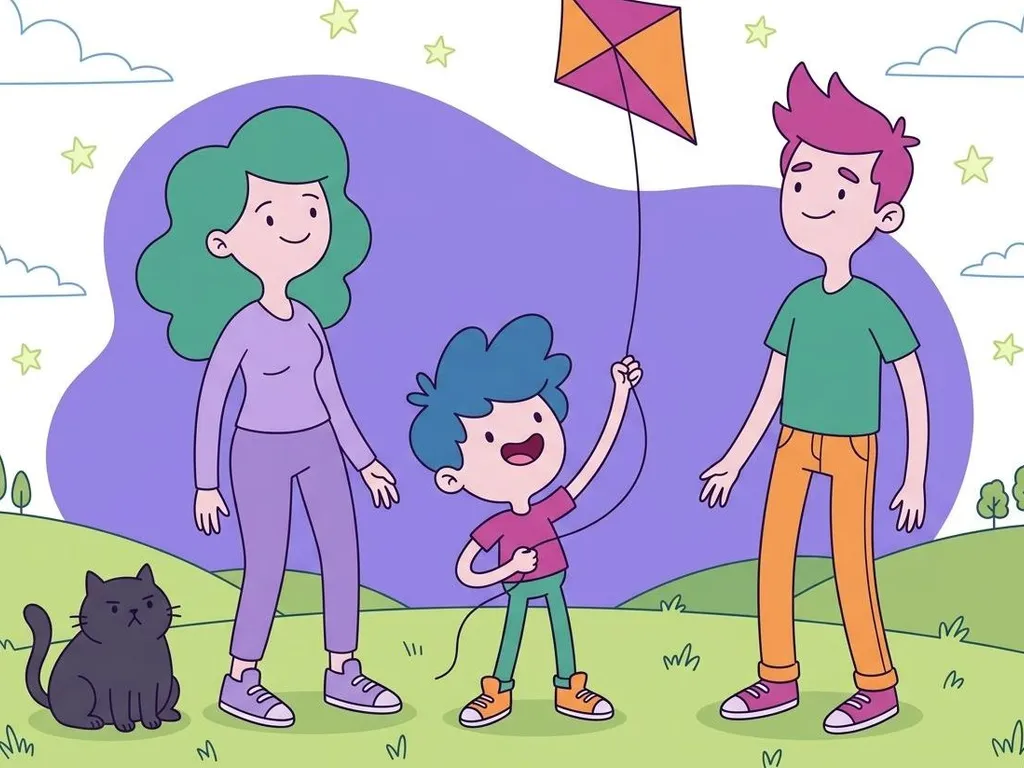
During the tour, speak in turns. Parent asks, child answers, then child asks the parent. This keeps the talk natural and stops the adult from doing the English. Frames include “I can see…,” “It looks…,” “I think… because…,” and “Can we go to…?”
After the tour, ask for a tiny report. A 6-year-old might draw one thing and label it. A 10-year-old can record a 30-second voice note. A teenager can write five lines comparing the virtual place with a real place they know. This closing task helps the language settle.
Practice: I Can See
Open one room, street, or animal camera. Ask your child to complete five sentences: “I can see a ___.” “It is ___.” “It has ___.” “It is next to ___.” “I want to look at ___.” Keep the screen paused until all five are spoken.
Examples by Age
For school-age kids, use picture-rich tours and simple movement. Ask your child to find a red object, a big animal, a door, a tree, or something round. Keep the English physical: point, count, wave, choose, and name. One sentence is enough: “The tiger is sleeping.”
For school-age kids, add categories and short reasons. In a museum, your child can sort objects into “old,” “new,” “big,” “small,” “beautiful,” or “strange.” In a city tour, they can choose a place for lunch, a place to play, and a place to take a photo. Virtual Tours in English for Kids build confidence through choice.
For school-age kids, move toward explanation. Ask your child to compare two places, prepare three guide sentences, or make a short “top three things to see” list. Older learners can notice accent, speed, and formal language in tour audio. They do not need every word to use the tour well.
Language Skills a Virtual Tour Can Build
Vocabulary grows because words sit beside objects. “Column,” “bridge,” “map,” “fossil,” “habitat,” and “gallery” are easier to remember when the child sees the thing itself. For multilingual children, the visual scene gives meaning without long translation.
Listening improves when the task is narrow. Instead of “Listen to the whole guide,” say, “Listen for the animal’s name,” or “Tell me which floor we are on.” A child can succeed even if the audio includes unfamiliar words. That success matters.
Speaking becomes less forced because there is something real to discuss. Across LearnLink lessons, tutors often use visual prompts, maps, and shared screens for the same reason: children speak more freely when they can point to evidence. Virtual Tours in English for Kids give families that method between lessons.
Practice: Tour Guide in Three Lines
Ask your child to become the guide. They choose one place on the screen and say three lines: “Welcome to ___.” “Here you can see ___.” “My favorite part is ___ because ___.” Younger children can skip “because” and use “I like it.”
Common Mistakes to Avoid
Do not choose a tour because it looks impressive to an adult. Famous collections can be hard for children when rooms are text-heavy or navigation is confusing. A simple animal camera or landmark view may produce more English than a complex museum platform.
Do not correct every mistake during the tour. If your child says, “It have big ears,” answer naturally: “Yes, it has big ears.” Then move on. The goal is active language, not perfect grammar at every turn.
Do not let the tour run too long. End while your child still has energy. A short, repeated routine is stronger than one long session. Return to the same place next week and ask harder questions.
Practical Activities for After the Tour
A “postcard home” works for many ages. Your child writes or says: “Hello from… I saw… I liked… I want to visit…” Younger children can draw the postcard and copy two words. Older children can add a reason or comparison.
Another useful activity is a family vote. Each person chooses one part of the tour and gives one reason. Use sentence frames: “I choose the aquarium because the fish are bright,” or “I choose the castle because it looks old and quiet.” This gives children a model without turning the task into a worksheet.
You can also build a small vocabulary bank. Keep six to ten words from each tour in a notebook. Add a quick sketch, a translation if helpful, and one English sentence. After four tours, your child has a personal travel-and-culture vocabulary list.
Practice: Before and After
Before the tour, ask: “What do you think we will see?” After the tour, ask: “What did we see?” Help your child use past tense in short answers: “I thought we would see ___.” “We saw ___.” “I was surprised by ___.”
- Practice five new tour words with your child for three minutes today.
- Ask your child to describe one favorite place using two full sentences.
- Draw a simple map together and label four locations in English.
- Read one short picture book about travel before bedtime tonight.
- Record a thirty-second tour summary and replay it for pronunciation practice.
When a word has several meanings or pronunciations, Cambridge Dictionary is a useful check before turning it into child-friendly examples.
Frequently Asked Questions
How Often Should We Use Virtual Tours for English Practice?
Once a week is a good rhythm for families. Keep it short and repeat the routine: three words before, one task during, one small report after. Virtual Tours in English for Kids are most useful when they become a calm habit, not a project that takes over the evening.
Can a Beginner Use a Tour Fully in English?
Yes, if the task is small. A beginner does not need to understand the whole guide. They can point, name colors, count objects, repeat short phrases, and answer either-or questions such as “Is it big or small?” Parents may use the home language briefly to explain the task, then return to simple English.
Should We Choose British or American English Tours?
Either is fine for most children. The main point is clear speech and useful practice. If your child notices different words, treat that as a strength: “lift” and “elevator,” “flat” and “apartment,” “trainers” and “sneakers.” Children who hear more than one accent often become better at flexible listening.
What If My Child Only Wants to Click Around and Not Speak?
Give your child a job that controls the clicking. For example: “You are the guide. You may move when you say where we are going.” This links action to language. If speaking still feels hard, start with pointing and one-word answers, then build toward short sentences over several sessions.
Want to see how these ideas work in a real lesson — try a free LearnLink lesson.
Stay updated on our latest tips and resources by following us on Instagram LearnLink.