Weather Word Tracing for Kids
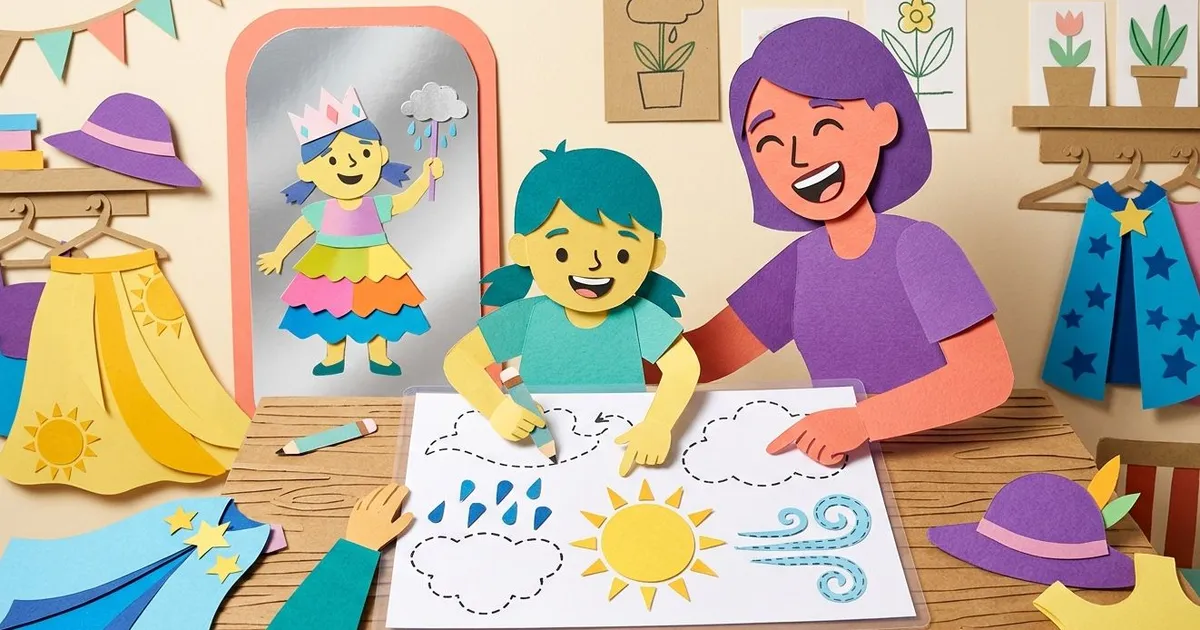
Weather word tracing combines letter formation, word recognition, and spoken practice in one short task. This Weather Word Tracing for Kids: English Words and Activities guide offers families a focused word set, sentence frames, and age-based games. Begin with weather outside, then add terms such as foggy or stormy. Let the child hear, say, trace, and use each word in a sentence. This sequence connects handwriting with meaning.
📥 Weather Word Tracing for Kids
Trace, write, and use everyday weather language
Leave your email — we'll send the PDF to your inbox.No spam — the PDF plus one short reminder. Unsubscribe anytime.
Core Weather Words to Trace
Start with words your child can see or feel. Say each word, point outside or to a picture, and ask your child to repeat it before tracing. In Weather Word Tracing for Kids: English Words and Activities, speaking matters as much as letter formation.
Teach related nouns and adjectives together: sun–sunny, cloud–cloudy, rain–rainy, wind–windy, and snow–snowy. Colour-code the shared root when spelling is difficult so the added letter pattern stands out.
Turn Tracing into Useful Language Practice
Tracing should lead to speech. After tracing rainy, ask, “What is the weather like?” The child might answer, “It is rainy.” Older children can extend it: “It is rainy, so we need our coats.” Each sentence connects the traced word to meaning.
Use Weather Word Tracing for Kids: English Words and Activities in three steps: say, trace, use. Say the whole word without spelling it aloud. Trace from left to right. Then cover the model and use the word in a phrase or sentence.
During online lessons, our tutors may model a word, check its sounds, and prompt a response. Families can repeat this pattern at home. Support the first correct attempt, then reduce help as confidence grows.
Weather Words in Context
Give beginners short frames: “It is sunny,” “I see a cloud,” and “The wind is strong.” Independent readers can add place, time, or a result: “It was foggy near our home this morning,” or “The ground is wet because it rained.”
- Today it is ___.
- I can see ___.
- I can feel the ___.
- When it is ___, I wear ___.
- We can ___ because the weather is ___.
- Yesterday was ___, but today is ___.
Avoid treating one climate as normal. A child in Spain may know dry heat, while a child in northern Europe may encounter snow more often. Multilingual children can compare weather terms across languages, then form a full English sentence.
Activities for Different Ages
The same word set can serve a 5-year-old and a 12-year-old through different tasks. The Weather Word Tracing for Kids: English Words and Activities approach should match handwriting control, reading skill, and attention span, not age alone.
Younger children can find picture cards around the room, then trace each matching word. Older learners can trace a model once, cover it, and write a forecast from memory. Teenagers may prefer practical terms such as temperature, forecast, degrees, and chance of rain.
A Short Practice Routine
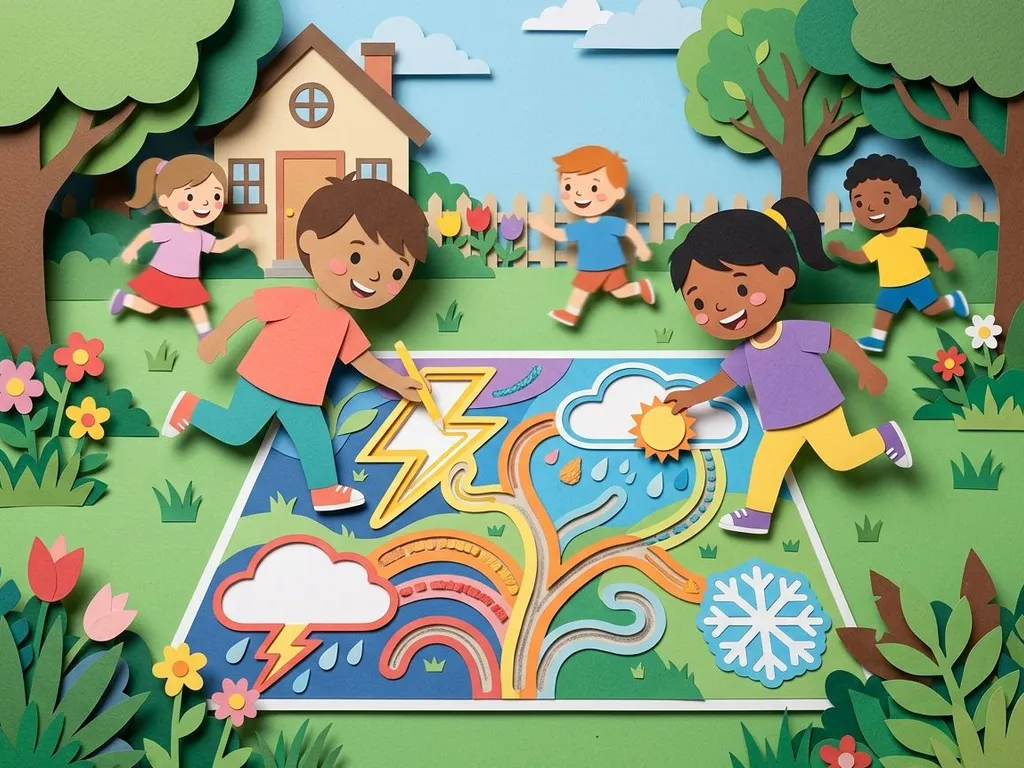
Practise for five to ten minutes. Choose three familiar words and one newer word, reviewing yesterday’s set first. Weather Word Tracing for Kids: English Words and Activities works beside a window, a weather app, or family photographs of different seasons.
Look, Trace, and Report
Look outside together. Choose the matching weather word and say it twice. Trace it with a finger, then a pencil. Complete “Today it is ___.” Add one detail: “I can see ___,” “I can feel ___,” or “We need ___.” Cover the word and write it once from memory.
Return to missed words after a brief gap instead of filling a page with repeats. A child may trace cloudy correctly ten times yet forget it tomorrow. One careful attempt, a spoken sentence, and a later recall check show learning more accurately.
Common Mistakes and Simple Fixes
Silent copying is the central trap. A neat page does not prove that a child understands or can say the word. Request one spoken response after each traced word. If pronunciation is inaccurate, model the whole word and have the child repeat it before discussing letters.
Another mistake is introducing pairs too quickly. Rain names the water or action; rainy describes the weather. Contrast them in sentences: “I can hear rain” and “It is rainy.” The distinction also applies to wind–windy and cloud–cloudy.
Do not correct handwriting, spelling, grammar, and pronunciation simultaneously. Set one goal before starting. During tracing, focus on letter direction and speech. During sentence practice, correct only errors that block meaning or concern the target weather pattern.
- Try tracing five weather words slowly with children aged four to six.
- Use thick pencils and large print to prevent cramped letter formation.
- Practice one confusing word daily, then say it aloud three times.
- Compare each traced word with a picture book before correcting mistakes.
- Praise careful strokes, erase one error, and let your child retry independently.
When a word has several meanings or pronunciations, Cambridge Dictionary is a useful check before turning it into child-friendly examples.
Frequently Asked Questions
How Long Should Weather Word Tracing Take?
Five to ten minutes suits most children, especially new online learners or those developing pencil control. Stop before accuracy drops. Include a quick review, three or four traced words, and one spoken sentence per word. Older children can work longer while writing forecasts or comparisons instead of repeating isolated words.
Should My Child Trace Uppercase or Lowercase Letters First?
Begin with lowercase letters because they appear most often in books and sentences. Add an uppercase first letter for a full sentence, such as “Today is sunny.” Follow the child’s school handwriting style to avoid conflicting models. Large letters suit young children developing pencil control.
What If My Child Traces a Word but Cannot Remember It?
Add meaning and retrieval practice. For Weather Word Tracing for Kids: English Words and Activities, have your child match the word to a picture, use it in a sentence, and recall it later without the model. Review it the next day and several days later. Independent recall matters more than copying a long page without understanding.
Can Multilingual Children Compare Weather Words Across Languages?
Yes. Comparison connects new English vocabulary with knowledge from another language. Let the child name the weather in each language, notice similar or different sounds, then complete an English sentence. Mixing languages during comparison is normal; the final English response sets a focused practice goal.
If your child needs steady speaking practice, start small — choose a trial lesson.
Stay updated on our latest tips and resources by following us on Instagram LearnLink.