Family Sentence Tracing for Kids
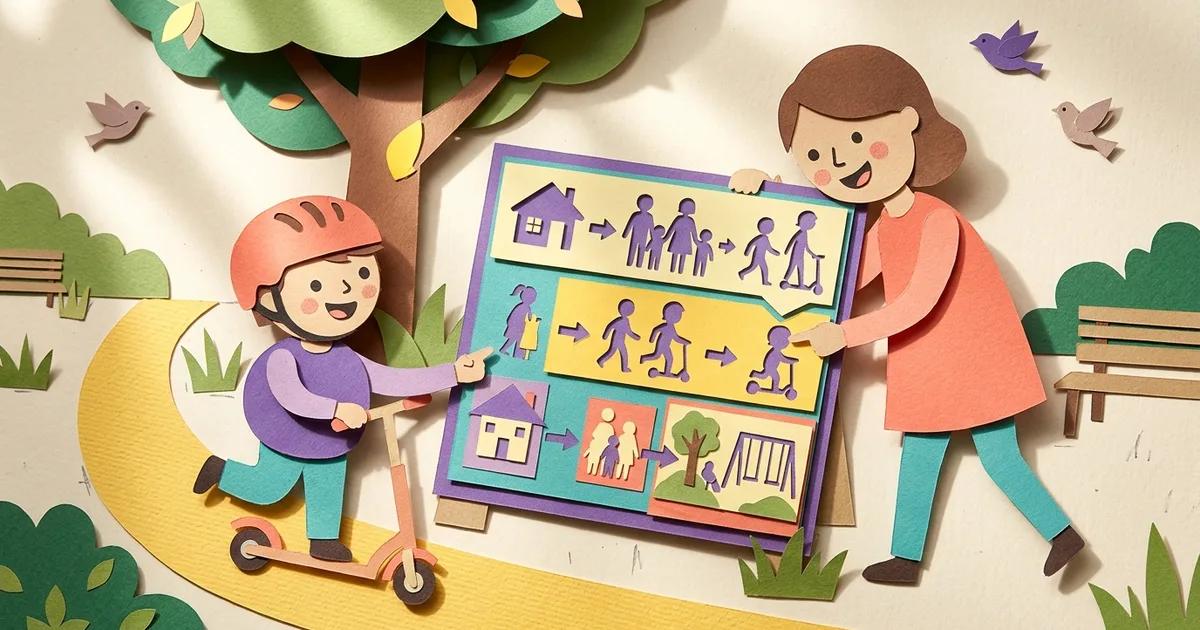
A six-step routine turns family vocabulary into handwriting and speaking practice: read, check meaning, repeat, trace, copy, and read aloud. Use short sentences such as “This is my sister” and “I live with my grandparents.” Each line connects letter formation with new words. The method supports beginners developing pencil control, multilingual children building English vocabulary, and older learners practising longer patterns. Start with the child’s family, then add relatives and descriptions as skills improve.
📥 Family Sentence Tracing for Kids
Trace, read, and write simple sentences about family life.
Leave your email — we'll send the PDF to your inbox.No spam — the PDF plus one short reminder. Unsubscribe anytime.
Core Family Words and Phrases
For Family Sentence Tracing for Kids: Words and Activities, start with words your child can use immediately: family, parent, mother, father, mum or mom, sister, brother, grandmother, grandfather, aunt, uncle, cousin, baby, and grandparents. Follow the English variety used at school while explaining alternatives such as mum and mom.
This is my mother.
My father likes music.
She is my sister.
My brother reads books.
My grandmother is kind.
I visit my grandfather.
My aunt lives nearby.
My uncle cooks dinner.
My cousin plays football.
They are my grandparents.
Family language should reflect the household instead of imposing one model. A child may live with one parent, two parents, grandparents, foster carers, or relatives abroad. Let the child choose truthful sentences or neutral lines such as “This is a family” and “They care for each other.”
Sentence Models in Context
Keep Family Sentence Tracing for Kids: Words and Activities concrete at first. Put one known family word and one familiar frame on each line. Read the sentence before examining letters. Meaning comes first; tracing must convey a message.
- This is my mother.
- He is my brother.
- She is my aunt.
- They are my grandparents.
- My cousin likes football.
- We speak two languages at home.
- I call my grandmother on Sunday.
- Our family celebrates together.
After tracing, change one element: brother to sister, football to music, or Sunday to Friday. Older learners can extend a line with because, but, or who: “My uncle lives far away, but we talk online.” The activity then builds sentences instead of testing copying alone.
A Simple Tracing Routine
Use a large model with ample spacing. Young children may trace with a finger before using a pencil. Older children can underline the family word, circle the verb, or mark the capital letter and full stop.
- Read the sentence aloud to your child.
- Check that every family word is understood.
- Ask your child to repeat the full sentence.
- Trace each word from left to right.
- Cover the model and copy the sentence.
- Read the new sentence aloud together.
Stop when the hand becomes tense or letters lose care. One well-read line beats a crowded page. For developing pencil control, use thick crayons, a whiteboard, or letters drawn in sand. The English goal remains unchanged across writing surfaces.
Activities for Different Ages
When adapting Family Sentence Tracing for Kids: Words and Activities, change both the thinking demand and letter size. A teenager needs age-appropriate images; a four-year-old should not copy a long family description.
For younger children, place family-word cards beside drawings or safe family photos. The child chooses a card, says the word, and traces its sentence. For ages seven to nine, cut a sentence into word strips and rebuild it before tracing to show word order.
Older children can create a family profile, compare relatives, or describe home languages and traditions. Across LearnLink lessons, our tutors adjust prompts to each child’s speaking level and family context without requesting private details.
Practice That Leads Beyond Tracing
Family Sentence Tracing for Kids: Words and Activities works when each written line prompts speaking or reading. Ask the child to identify the family word, use it in a new sentence, or answer “Who is she?” The response reveals whether the learner understands the sentence.
Trace, Change, and Say
Write “My cousin likes music” in pale or dotted letters. Your child traces it, then replaces cousin with another family word and music with another interest. Ask them to read both versions aloud. For a challenge, add: “What does your cousin like?”
Reuse the language away from the page. Sort family words into adults and children, match word-and-picture pairs, or describe a family in a book. Multilingual children can compare terms across languages, then speak the final sentence in English.
Common Mistakes and Practical Fixes
Do not give a beginner six new family words in one long sentence. Teach the words aloud and trace one pattern at a time. Avoid dotted fonts with ambiguous forms of a, g, or I. Match the school’s letter style and check spacing: “grand mother” is normally written as “grandmother.”
Correct language without filling the page with marks. Choose one focus: capital letters, the verb is, or spacing. If a child writes “She my aunt,” model “She is my aunt,” ask for repetition, and provide a fresh line. Keep personal questions optional; children may use an invented or book-based family.
- Try one family sentence with children ages four to six before adding more.
- Practice tracing three times, then copy the sentence once without dotted guides.
- Use a thick pencil and large-print workbook to reduce grip and spacing errors.
- Say each family word aloud before tracing to connect handwriting with meaning.
- Correct only one mistake per line, then praise one specific improvement.
When a word has several meanings or pronunciations, Cambridge Dictionary is a useful check before turning it into child-friendly examples.
Frequently Asked Questions
How Often Should a Child Practise Family Sentence Tracing?
Two or three brief sessions a week suit beginners. With Family Sentence Tracing for Kids: Words and Activities, prioritise careful reading and writing over page counts. Stop when grip, posture, or attention slips. Reuse the sentence frame with another family word next time.
Should My Child Trace Cursive or Printed Letters?
Use the style taught by the child’s school or main English programme. Printed letters usually suit early readers. Cursive suits older children who recognise words and form individual letters. Do not switch styles on one sheet; the change creates a separate handwriting task.
What If Our Family Does Not Match the Worksheet?
Change the worksheet. Replace unsuitable terms with parent, carer, grandparent, aunt, uncle, or your family’s preferred word. Children should not present a false family structure for an English task. Neutral sentences about a pictured or fictional family provide sound vocabulary practice.
Can Tracing Help a Child Who Already Speaks English Well?
Yes, with harder language and writing. An older or fluent speaker can trace possessives, comparisons, or linked ideas, then write independently. Try “My sister’s room is smaller than mine” or “Although my cousin lives abroad, we speak every week.” When tracing becomes easy, move to copying and free writing.
Turn the next practice session into a short learning cycle:
- Start with one familiar family word and a short sentence.
- Ask your child to read, trace, and copy the line.
- Change one word and say the new sentence aloud.
- Practice the same pattern later with a different relative or activity.
If your child needs steady speaking practice, start small — choose a trial lesson.
Stay updated on our latest tips and resources by following us on Instagram LearnLink.