12 Best Cartoons to Learn English for Kids

Children pick up a new language fastest when they barely notice they are studying. A good story, a catchy song, and a character they love do more for early fluency than any worksheet. That is why English cartoons work so well: kids hear natural speech, connect words to what they see on screen, and want to watch again tomorrow. The trick is choosing shows with clear voices and simple sentences rather than fast, slang-heavy ones.
📥 Cartoon English Watch-and-Say Pack
Kid-friendly words and phrases to practise while watching English cartoons
Leave your email — we'll send the PDF to your inbox.No spam — one email with your PDF. Unsubscribe anytime.
Why Cartoons Help Kids Learn English
Language sticks through exposure, not pressure. English cartoons give children a low-stakes way to hear authentic pronunciation, intonation, and rhythm from native speakers. Because the picture explains the meaning, a child links "jump", "splash", or "tired" to the action without needing a translation. Repeat viewings of the same English cartoons then turn those new words into familiar ones.
Stories also model how real conversation flows. From well-chosen English cartoons, kids absorb how questions are asked, how feelings are named, and how people respond to each other. That contextual learning beats memorising word lists, and it builds the kind of English listening skills that later reading and speaking depend on.
How We Chose These English Cartoons
Our picks reward clarity and engagement over flashy production. First, we checked the speech: the best English cartoons for learners use a steady pace and everyday vocabulary, so we skipped anything packed with idioms or rapid-fire jokes. Second, we looked for repetition, since shows that reuse key phrases help young viewers lock them in.
Third, we favoured an educational backbone — letters, numbers, science, or social skills. For a broader toolkit, we also flagged the top tools and shows for your child's learning journey. Finally, access matters, so every title on this list streams on YouTube, Netflix, Disney+, or another mainstream service you likely already use. The result spans accents, age levels, and subjects, from British nursery rhymes and phonics songs to American science adventures and vocabulary-driven superhero plots.
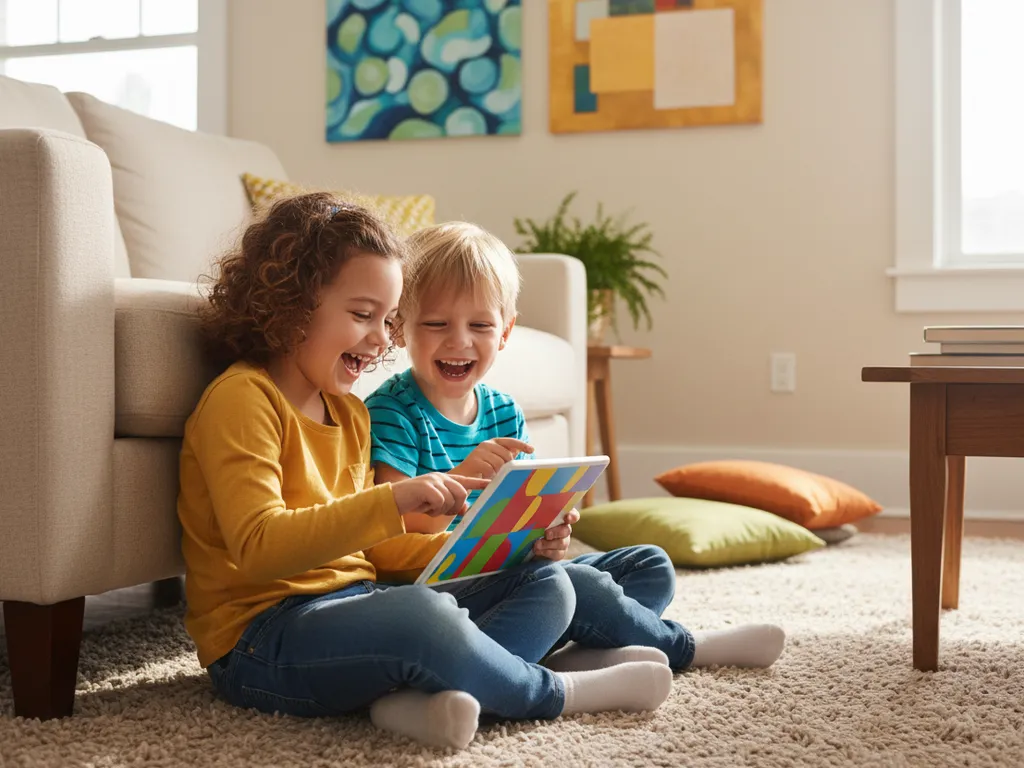
A Step-by-Step Guide for Parents
Passive watching alone rarely sticks, so a little involvement goes a long way. Start by choosing English cartoons that fit your child's age, then watch the first few episodes together to gauge how much they follow. Co-viewing lets you spot the moments where they need a hand and turns the screen into a shared activity instead of a babysitter.
Pause now and then to ask simple questions like "What colour is that?" or "How does she feel?" to keep listening active. Afterwards, tie a scene back to real life — if an episode visited a park, talk about your own park later that day. For follow-up practice, these printable English activities for young learners reinforce the vocabulary a show introduces.
The 12 Best English Cartoons for Young Learners
Here is the full list of English cartoons, ordered roughly from youngest to oldest viewers. Each entry notes who it suits best, where to stream it, and the language skills it builds. Treat these shows as a menu rather than a checklist — a favourite watched often teaches more than a dozen watched once.
Quick answer: the best English cartoons by age — Peppa Pig, Cocomelon and Numberblocks (4-5, daily words and counting); Bluey, Alphablocks and Paw Patrol (5-6, social skills and phonics); Ask the StoryBots, Octonauts and Arthur (6-8, science and real conversation); WordGirl, Magic School Bus and Daniel Tiger (8-12, advanced vocabulary). Start with one show, watch the first episodes together, and keep daily sessions short. For true beginners, choose English cartoons with no subtitles; switch on English subtitles only once your child starts reading.
1. Peppa Pig — Everyday Family Vocabulary
Best for: Ages 4-5. Watch: YouTube, Netflix. Short episodes and clear British narration make Peppa an easy first choice among English cartoons for beginners. Kids pick up family words, weather, food, and play through simple, repeated sentences they can copy out loud.
2. Bluey — Social Skills and Creative Play
Watch on: YouTube (search «Bluey»)
Best for: Ages 5-6. Watch: Disney+. Bluey's natural family dialogue models problem-solving, sharing, and imagination. Among English cartoons it is one of the warmest and most emotionally intelligent, and the conversational speech sounds like real life.
3. Numberblocks — Foundational Math Concepts
Best for: Ages 4-5. Watch: YouTube. Catchy songs turn counting and early arithmetic into something memorable. Like other English songs for kids, the tunes stick fast, making this a top pick for numbers and basic vocabulary at once.
4. Alphablocks — Phonics and Reading Skills
Best for: Ages 5-6. Watch: YouTube. Each letter is its own character, so children see exactly how sounds blend into words. Unlike most English cartoons, it puts phonics front and centre, making it a strong companion to early English reading for kids.
5. Ask the StoryBots — Answering Big Questions
Watch on: YouTube (search «Ask the StoryBots»)
Best for: Ages 6-8. Watch: Netflix. This one answers questions like "Why is the sky blue?" with songs and friendly explanations. Among science-leaning English cartoons, it is a favourite for curious kids who always want to know more.
6. Daniel Tiger's Neighborhood — Emotional Skills
Watch on: YouTube (search «Daniel Tiger's Neighborhood»)
Best for: Ages 4-5. Watch: PBS Kids. Gentle songs help children name and manage feelings. The slow, clear American English makes it one of the most accessible shows for early learners still getting used to the sounds.
7. PAW Patrol — Problem Solving and Community
Best for: Ages 4-5. Watch: Nick Jr. Action verbs and job titles come up constantly, and the repeated catchphrases make these English cartoons easy to remember. The predictable rescue formula gives kids a comforting structure to anticipate.
8. The Octonauts — Marine Biology Vocabulary
Best for: Ages 6-8. Watch: Netflix. Underwater adventures introduce sea creatures and clear, factual descriptions in steady British English. Few English cartoons mix excitement with real information this well, so kids learn animal names while chasing a story.
9. WordGirl — Advanced Vocabulary
Best for: Ages 8-10. Watch: PBS Kids. The hero defines two new words in every episode, so older children build richer vocabulary inside a superhero plot. It is one of the few English cartoons built specifically around word power, and a smart choice once the basics are solid.
10. Arthur — Complex Social Situations
Best for: Ages 6-8. Watch: YouTube. Arthur tackles friendship, honesty, and school life with realistic, conversational American English. It remains a classroom staple among English cartoons because the dialogue feels genuine rather than scripted.
11. The Magic School Bus Rides Again — Science Vocabulary
Best for: Ages 10-12. Watch: Netflix. Each field trip explains biology, astronomy, or chemistry in plain language. A high-value option for older kids who want science terms alongside their English practice.
12. Cocomelon — Nursery Rhymes — Songs and Repetition
Best for: Ages 4-5. Watch: YouTube. Bright nursery rhymes about daily routines teach basic English words through endless, kid-friendly repetition. A natural entry point for the youngest viewers.
Tips to Get More Out of English Cartoons
A little interaction multiplies the payoff from English cartoons. Encourage your child to sing along, repeat catchphrases, and point at the screen to name what they see. You can stretch the same vocabulary further by turning it into fun games to learn English during the day, so the words show up away from the screen too.
Handle subtitles with care. True beginners do best watching English cartoons without any text, which keeps their attention on sound. Once reading starts, English subtitles help connect spoken words to their written form. Avoid native-language subtitles, since they pull focus away from the English audio and quietly turn viewing into a reading exercise.
Frequently Asked Questions
How Much Screen Time Is Appropriate for Language Learning?
Aim for about an hour of high-quality screen time a day for preschoolers, and remember that consistency beats duration. A focused 20-minute session with English cartoons every day teaches more than one long weekend marathon, because the language gets reinforced little and often.
Should My Child Watch with or Without Subtitles?
Young beginners should watch without subtitles so they concentrate on listening. Older children with some reading ability can switch on English subtitles to link speech to text. Skip subtitles in your child's first language, as they stop the ear from doing its job.
What If My Child Doesn't Understand Much at First?
That is completely normal early on. Choose English cartoons with strong visual context, watch together, and point to objects as they appear. Repetition does the heavy lifting, and after a few viewings your child will start echoing recurring words and phrases without you prompting them.
Does British or American English Matter for These Shows?
For a beginner, consistency matters more than the accent. Both British and American English are understood worldwide, so pick one style for a while to build a steady phonetic base, then mix accents once the foundations are in place.
Quick Recap and Next Steps
- Match English cartoons to your child's age and interests rather than picking by popularity alone.
- Watch together at first and ask quick questions about what is happening on screen.
- Keep English cartoons sessions short but daily so the new language gets reinforced regularly.
- Use each show to target specific vocabulary, such as animals, numbers, or feelings.
- Bring words from the screen into dinner and playtime so they stick in real conversation.
Want to pair screen time with real practice? Personalised lessons turn what your child watches into words they can actually use — book a free trial lesson with LearnLink.