Sentence construction for young learners requires a foundational focus on three core components: a subject, a verb, and an object. This structural framework enables children to transform individual words into coherent, complete thoughts. Direct instruction in these basic elements simplifies the linguistic process for beginners.
📥 Sentence-Building Robot Cards
Word groups and a weekly tracker to help children build their first clear English sentences.
Leave your email — we'll send the PDF to your inbox.No spam — one email with your PDF. Unsubscribe anytime.
Building Blocks of a Sentence: Subject, Verb, Object
The first sentences for kids: build-a-bot method utilizes a "who" or "what" performing an action. The subject identifies the primary actor, while the verb describes the specific activity performed. The object represents the entity receiving that action.
Sentence examples include "The dog runs" (Subject-Verb) and "The boy eats an apple" (Subject-Verb-Object). Consistent practice with these structures establishes a grammatical foundation. Teaching present simple tenses typically occurs alongside this structural training to reinforce verb usage.
For preschool kids, this structure is easiest to grasp when each part has a visible role. A teacher can place three cards on the table: a blue subject card, a red verb card, and a green object card. The child chooses one card from each pile, then reads the sentence aloud: "The cat kicks the ball," "A girl draws a house," or "The robot opens the box." Using 6-8 nouns, 6-8 doing verbs, and 6-8 objects gives enough variety without overwhelming early readers. After each sentence, the child can point to the subject and answer "Who or what is doing it?" then point to the verb and answer "What is happening?" and finally point to the object and answer "What receives the verb's effect?" This repeated questioning helps the child connect grammar terms to meaning rather than memorizing labels.
A common mistake at this stage is treating every word after the verb as an object. In "The dog runs fast," the word "fast" tells how the dog runs, but it is not being acted on. A practical correction is to use the "touch test": if the subject can do the verb to the noun, the noun can be an object. "The boy throws the ball" passes because the boy can throw the ball. "The boy sleeps quietly" does not, because "quietly" cannot be slept as an object. Another frequent error is leaving out the verb, especially in picture-based tasks where a child may say "The girl the kite." Prompting with "What is she doing?" usually guides the child toward "The girl flies the kite." For short practice sessions, 10 minutes is enough: build three sentences with cards, sort their parts into subject-verb-object columns, then ask the child to change one card and read the new sentence. This small variation shows that sentence meaning changes when one building block changes.
The Core Structure: Crafting Simple Sentences
Effective sentence creation follows fixed patterns to ensure clarity. Educators use flashcards, color-coded systems, and physical gestures to make these patterns intuitive. The goal is to internalize the Subject-Verb-Object (Svo) sequence through repetition.
For early writers preschool kids, the structure is easiest to teach when each sentence part has a visible job. Use three cards: a blue “who” card, a red “does” card, and a green “what” card. Place them left to right, then ask the child to fill each slot with one word or picture before reading the whole line aloud. A 10-minute routine can include 4 model sentences, 4 shared sentences, and 2 independent attempts. For example, the teacher builds “The dog chases the ball,” then removes one card and asks the learner to replace it without changing the sentence order. This keeps attention on syntax rather than spelling. A common mistake is starting with the object because it is the most interesting image, such as saying “Cake eats girl.” The correction should be concrete: point to the actor card and ask, “Who is doing it?” before rebuilding the sentence.
Once learners can produce S-V and S-V-O sentences, add controlled variation without changing the core pattern. Keep the same subject and verb, then swap the object: “Sam kicks the ball,” “Sam kicks the cone,” “Sam kicks the box.” This helps children see that one part can change while the sentence frame stays stable. A build a sentence bot crafting first sentences activity can mirror this process by offering three limited choices for each slot instead of an open text box. For elementary kids, the next step is oral rehearsal before writing: students say the sentence, tap once for each part, then write it. The tapping sequence prevents missing verbs, one of the most frequent early errors in short written work, as in “The cat the milk.” If the verb is absent, the teacher can ask, “What is the cat doing?” rather than marking the whole sentence wrong. This keeps the feedback tied to the structure and gives the learner a repeatable repair strategy.
Common Mistakes When Crafting First Sentences
Beginners frequently omit essential components or apply incorrect word orders. Early correction prevents the formation of persistent grammatical errors. Instructors should explain the underlying logic of sentence construction rather than simply providing the correct answer.
🔤 Task: Complete the sentences using the correct form to craft first sentences for kids: build-a-bot method.
1. The cat ______ (sleeps / jumping) on the mat.
2. My friend ______ (read / reads) a book.
3. Robots ______ (help / helps) people.
4. He ______ (like / likes) to play games.
5. The flowers ______ (is / are) beautiful.
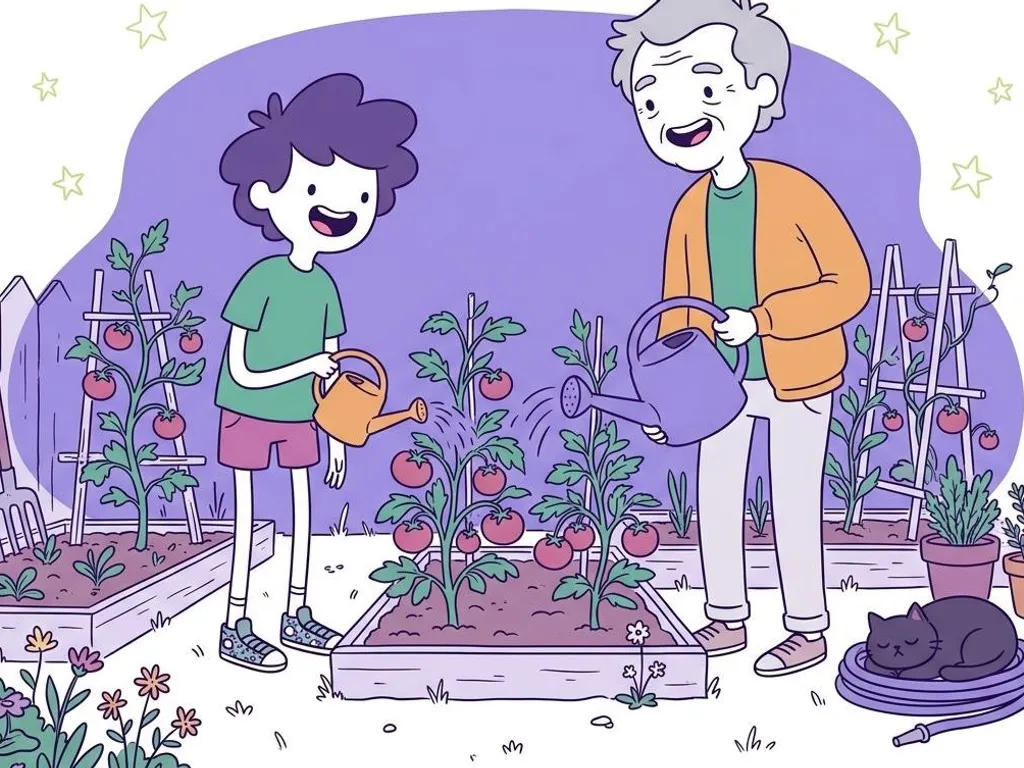
🔤 Task: Use the image as inspiration and describe what is happening.
1. Write 2–3 sentences about the scene.
2. Use the grammar rule (Subject-Verb-Object) in your sentences.
3. Combine ideas into longer sentences.
🔤 Task: Create your own sentences.
1. Write 3 sentences using the grammar rule (Subject-Verb-Object).
2. Use real-life situations, like describing your day.
3. Write one longer sentence about your favorite hobby.
Step-by-Step Learning Progression for Sentence Building
A structured five-step progression ensures students master first sentences for kids: build-a-bot method techniques. This pedagogical approach scales from passive observation to independent creative production.
Data current as of July 2026.
- Input: Exposure to simple sentences via picture books and flashcards.
- Controlled Practice: Matching words and completing sentence starters. Learning common vocabulary words facilitates this stage.
- Semi-Controlled Practice: Describing visual prompts using specific keywords.
- Free Production: Independent writing of stories or journals.
- Feedback: Constructive correction focusing on structural accuracy.
Why Parents Choose LearnLink
LearnLink serves 4,000+ families across 100+ countries with a staff of 200+ tutors. The curriculum emphasizes practical grammar application and functional communication. This global reach ensures diverse pedagogical expertise for every student.
Stay updated on our latest tips and resources by following us on Instagram LearnLink.
When a word has several meanings or pronunciations, Cambridge Dictionary is a useful check before turning it into child-friendly examples.
Stay updated on our latest tips and resources by following us on Instagram LearnLink.