Bus Stop Vocabulary in English for Kids
Bus Stop Vocabulary in English: Words and Activities for Kids teaches place words, travel phrases, and short games for waiting and boarding. Start with visible words: bus stop, sign, and driver. Add useful phrases: “Which bus do we need?” and “Is this seat free?” Teach a few words in context before expanding the set. These ideas suit different languages, transport systems, and learning levels.
📥 Bus Stop Vocabulary in English for Kids
A practical word bank, activities, and weekly practice tracker
Leave your email — we'll send the PDF to your inbox.No spam — the PDF plus one short reminder. Unsubscribe anytime.
Core Words and Phrases
Begin with concrete nouns. Point to a picture, toy bus, street map, or real object while naming it. Once the objects are familiar, add wait, arrive, board, and leave.
After your child learns the words, ask: “When is the next bus?”, “Does this bus go to the park?”, “Where should we get off?”, and “May I sit here?” Use Bus Stop Vocabulary in English: Words and Activities for Kids for speaking, not spelling tests.
Using the Words in Context
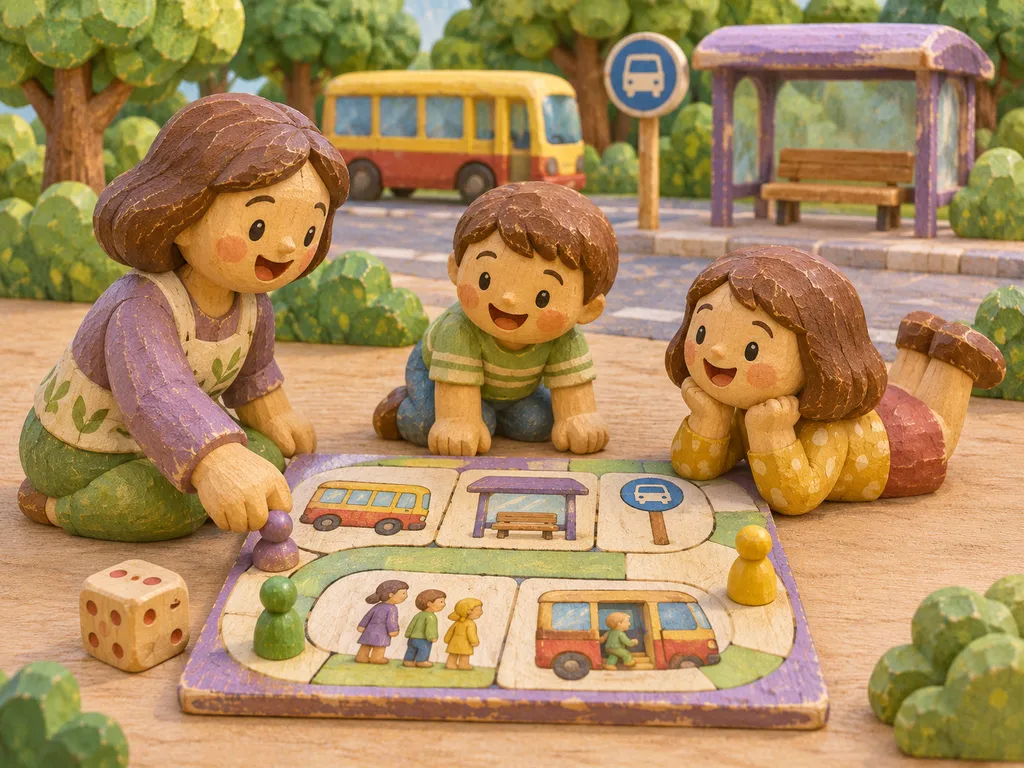
Give the words a purpose with a sequence: “We walk to the bus stop. We check the bus number. We wait in the queue. The bus arrives. The doors open, and we get on.” Your child can point, act, or arrange picture cards during each event.
Change one detail: the destination, service number, weather, or time. Say: “We need bus number twelve,” “The bus is late,” or “Let’s wait in the shelter because it is raining.” Each change makes children listen for meaning instead of reciting a script.
When you practise Bus Stop Vocabulary in English: Words and Activities for Kids, include questions and answers. One person asks, “Is this the bus to the museum?” The other replies, “Yes, it is,” or “No, you need the next bus.” These exchanges build real communication.
Activities for Different Ages
Match activities to your child’s language level, attention span, and interests. Use age as guidance, not a limit. New learners may need pictures at any age; confident younger children may enjoy longer role-play.
Correct lightly during play. If your child says, “I go down the bus,” respond: “Yes, we get off the bus here.” Repeat the corrected phrase together after the game. The conversation keeps moving while your child hears the correct model.
Practice Ideas for Home and the Classroom
Practise briefly across a few days. Cover one table column and ask for the missing word. Play “Which word does not belong?” with driver, passenger, banana, ticket. Or give a clue: “You look at this to find the bus time.” The answer is timetable.
To revisit Bus Stop Vocabulary in English: Words and Activities for Kids, have your child draw and label a bus stop. Older learners can add a bus line, arrival time, destination, and two passenger questions. This turns spelling into a meaningful task.
Three-minute Bus Stop Role-play
Choose a destination and bus number. One person asks, “Does this bus go to the sports centre?” The other answers with one instruction: “Wait here,” “Get on this bus,” or “Get off at the next stop.” Swap roles and destinations.
LearnLink tutors can adapt role-play with choices, directions, or a problem. Beginners name objects. Confident learners explain a delay, ask for help, or suggest another way to travel.
Correcting Common Mistakes
Bus expressions may not translate word for word. Teach complete chunks: get on the bus and get off the bus, not only get. Contrast similar terms with pictures or actions.
- Bus stop and bus station: a stop is usually one place along a bus line; a station is a larger transport point with several stops or services.
- Wait and expect: passengers wait for a bus. They may expect it to arrive at a certain time.
- On and in: English normally uses “on the bus” for travel, although passengers are physically inside it.
- Miss and lose: “We missed the bus” means it left before we boarded. “We lost the bus” usually does not express this idea.
- Queue and line: both can describe people waiting in order. Usage varies by region, so either word can be useful.
Practise pronunciation too. Contrast bus with boss, then work on the final sounds in stop, ticket, and route. Use a full phrase instead of an isolated sound: “The bus stops here.” Full phrases preserve meaning and rhythm.
- Practice saying bus stop, bus shelter, transit line, timetable, and fare clearly.
- Point to a real sign and ask your child to name it.
- Correct confusing pairs by contrasting bus stop with railway station aloud.
- Use one picture book to find buses, passengers, drivers, and tickets.
- Role-play buying a ticket, checking the route, and waiting safely.
When a word has several meanings or pronunciations, Cambridge Dictionary is a useful check before turning it into child-friendly examples.
Frequently Asked Questions
How Many Bus Stop Words Should a Child Learn at Once?
Start with four to six words: bus, stop, driver, ticket, wait, and get on. Add more after your child recognises and uses most without prompts. Bus Stop Vocabulary in English: Words and Activities for Kids works best in small sets repeated through games, drawings, and conversations.
What Is the Difference Between a Bus Stop and a Bus Station?
A bus stop is a marked place where a bus collects or drops off passengers. A bus station serves multiple buses or services and may have platforms, ticket points, or waiting areas. Because transport layouts differ, show your child a familiar example.
Should Children Learn Both British and American Transport Words?
Teach the words your child will hear, then introduce alternatives. British English often uses queue and timetable; American English often uses line and schedule. Neither form needs to be the only correct answer. Recognising both helps children communicate across regions.
Can a Child Practise Bus Stop Vocabulary Without Taking a Bus?
Yes. Use toy vehicles, printed pictures, a hand-drawn map, or chairs arranged as a bus. Your child can read a pretend timetable, choose a route, ask for the correct bus, and practise getting on or off. At a real stop, review the words while following local road-safety rules.
A short one-to-one lesson can show what level and pace fit your child — book a trial English lesson.
Stay updated on our latest tips and resources by following us on Instagram LearnLink.