Cambridge Flyers Vocabulary by Topic for Kids
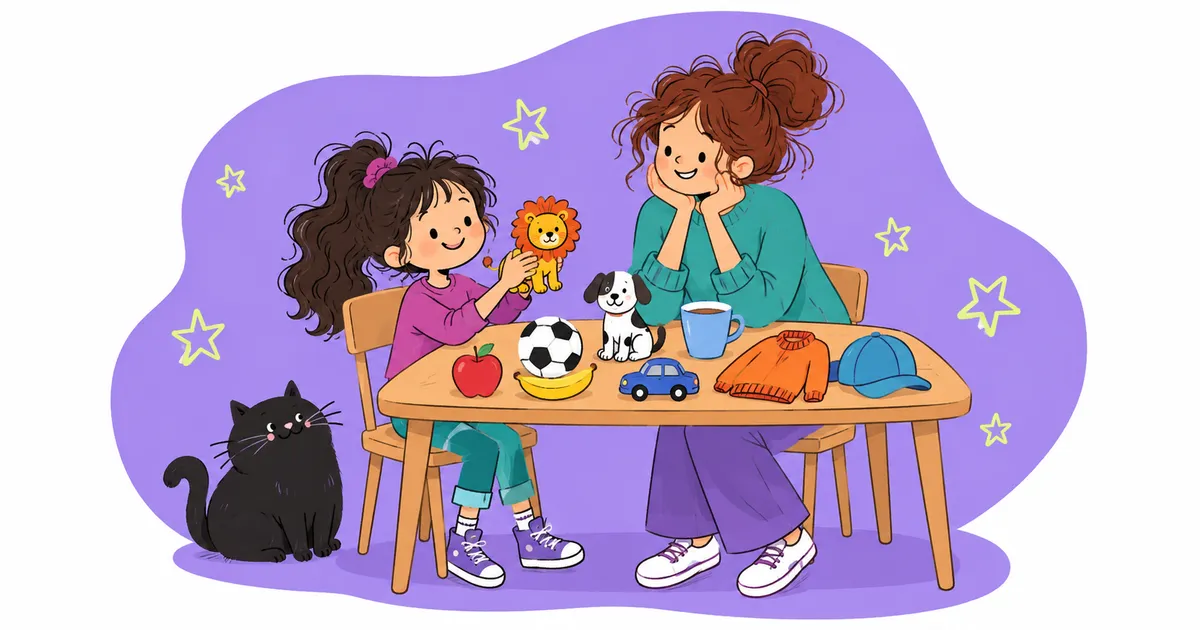
Cambridge Flyers Vocabulary by Topic for Kids organises practical A2 vocabulary around daily life. It covers animals, clothes, food, places, school, time, weather and work. The cumulative set includes vocabulary from Pre A1 Starters and A1 Movers alongside A2 Flyers words. Grouping words by meaning improves teaching, recall and use. Instead of memorising a long list, your child learns to recognise each word, pronounce it and use it in a short sentence.
📥 Cambridge Flyers Vocabulary Topic Practice Pack
Topic sorting, family revision, and active vocabulary tasks
Leave your email — we'll send the PDF to your inbox.No spam — the PDF plus one short reminder. Unsubscribe anytime.
What the Flyers Vocabulary Actually Contains
A2 Flyers is the third Cambridge English qualification for young learners and matches CEFR level A2. Cambridge Flyers Vocabulary by Topic for Kids includes everyday words plus language for descriptions, directions, stories and conversations. Cambridge covers familiar listening, speaking, reading and writing situations on its official A2 Flyers page.
In the official Cambridge English word list, S, M and F show whether a word first appears at Starters, Movers or Flyers. An F word is not more valuable than an S word. Children need earlier vocabulary to understand A2 texts and tasks.
The list extends beyond nouns. Verbs include agree, believe and borrow; adjectives include bored, striped and wild; other entries include anyone, anywhere and already. British and American forms may both appear, such as flat and apartment. Your child can use the form spoken at home while recognising both.
A Working Topic Map for Home Learning
A topic map converts the alphabetical list into manageable teaching units. These examples form a starting point, not the complete syllabus. Each row combines naming words with language for speaking and writing.
Cambridge Flyers Vocabulary by Topic for Kids connects each set to the next. Animals can lead to habitats, weather and travel; food can lead to shopping, quantities and health. Connected topics help children retrieve vocabulary instead of storing each group separately.
From Knowing a Word to Using It
Word knowledge develops in stages. Your child may point to a tortoise, understand it in a sentence, pronounce it, spell it and use it in a description. Cambridge Flyers Vocabulary by Topic for Kids supports each stage. A correct flashcard answer alone does not prove readiness for conversation.
Add a phrase to each new item: borrow a book, a striped shirt, cross the bridge or during the storm. Next, request a choice, reason or detail: “Would you visit a castle or a cave? Why?” The task moves from labelling pictures to expressing meaning at A2 level.
A Simple Way to Introduce Each Set
Begin with six to eight words in one setting. Show a picture, real object or action. Say each word naturally, ask your child to point or act, then repeat it inside a phrase. Check meaning before spelling. For difficult pronunciation, divide the word into spoken beats without misleading written sound spellings.
A Ten-minute Topic Routine
Spend two minutes reviewing known words, three minutes introducing new ones, three minutes asking questions with pictures, and two minutes recalling the words without help. End with one full sentence your child can say or write.
Revisit the set after a short gap instead of drilling it repeatedly in one sitting. Mix two or three older words into each lesson. Once recall becomes quick, request a definition, opposite, sentence or location where the object might appear.
Practice That Builds Recall
Use short games with a defined language goal. In picture detective, your child finds something striped, something with a wing and a mechanic’s workplace. In odd-one-out, they choose between camel, eagle, octopus and factory, then explain why. Accept different answers when the reasoning works.
For story practice, select five words from one or two topics and create three linked events. Your child might describe an astronaut arriving at a museum during a storm. Read the story aloud, retell it from pictures and write two sentences from memory. One vocabulary set now trains listening, speaking, reading and writing.
Adjusting the Work for Age and Language Background
For younger learners, use fewer words, more movement and short oral turns. Children aged eight to ten can sort words, write labels and expand sentences with place or time details. Older learners can define words, compare close meanings and write a longer story. Follow readiness instead of age alone; a first-time online learner may need extra time to master the lesson routine.
A multilingual child can continue using other languages. Connect English words directly to objects, actions or images, using translation only for quick checks. Cambridge Flyers Vocabulary by Topic for Kids provides a planning map, not an exam promise. Across LearnLink lessonsLearnLink helps your child build confident, everyday English that supports them at every stage.
For the rule wording, British Council LearnEnglish Kids is a useful reference while the practice examples here stay adapted for children.
Frequently Asked Questions
Is This the Complete Official Flyers Word List?
No. This article groups representative words and provides a teaching method. Consult the current Cambridge list for the exact official scope. Cambridge Flyers Vocabulary by Topic for Kids connects words by meaning but does not replace Cambridge English’s full alphabetical and thematic lists.
Does My Child Need to Be Taking the A2 Flyers Exam?
No. Your child can strengthen everyday English without taking an exam. The themes cover describing people, finding places, discussing food and telling short stories. For children taking A2 Flyers, combine general practice with official sample papers and guidance from the selected test centre.
How Many New Words Should My Child Learn at Once?
Start with six to eight related words. Reduce the set if your child cannot recall it after a short break, or add two words after they use the first set in sentences. Measure how well your child understands and retrieves vocabulary without prompts, not how many cards they have seen.
Should a Multilingual Child Translate Every New Word?
No. Connect words directly to pictures, objects, actions and situations. Translation can confirm an uncertain meaning, especially for abstract words, but should not become the only route to recall. Before requesting a translation, ask your child to point, act, choose or describe in English. The focus stays on practical use.
If your child needs steady speaking practice, start small — choose a trial lesson.
Stay updated on our latest tips and resources by following us on Instagram LearnLink.