Food and Drinks in English for Kids
Teaching food and drinks in English for kids starts with everyday words: water, milk, apple, bread, rice, egg, and juice. Food and drinks in English for kids belongs in real routines, not workbook pages alone. Children point, choose, ask, refuse, compare, and share likes at breakfast, beside a lunchbox, at a cafe, or during an online lesson. Parents can practise food vocabulary through calm mini-moments, clear repetition, precise words, and meaningful English choices.
Why Food and Drink Words Matter
Start with these core words and short examples before adding more specific vocabulary.
I eat an apple after lunch.
A banana is easy to pack.
We have bread for breakfast.
Cheese goes in the sandwich.
She drinks milk with cereal.
Drink water after playing.
A carrot is orange.
Rice is on the plate.
Food feels real early. A 5-year-old may not explain a holiday plan in English, but they can say, “I want milk,” “No banana,” or “More rice, please.” Short phrases give children a clear reason to speak.
With older children, this topic grows. An 8-year-old can sort foods into fruit, vegetables, meat, and snacks. A 12-year-old can read a menu, discuss healthy choices, or explain a family dish. Food and drinks in English for kids works across ages 4-15 when vocabulary fits each child’s level.
In multi-language homes, children may already know food words in two or three languages. That helps. The goal: keep home language strong while adding an English label and sentence pattern. Food and drinks in English for kids can sit beside family language, protecting connection while building new vocabulary.
Core Food and Drink Words to Teach First
Start with words your child can see or taste. A small useful set beats a long unused list. Choose kitchen, lunch, and family-meal words: fruit, vegetables, bread, rice, pasta, eggs, water, milk, juice, plus one or two favourite snacks.
Here is a starter set for food and drinks in English for kids. Use it for pointing games, lunchbox talk, flashcards, pretend shop play, or a quick “What’s on the plate?” check before dinner.
The table includes nouns and describing words. Children need both. “Apple” helps, but “The apple is red” and “I like sweet apples” create more speaking room. With food and drinks in English for kids, single words can quickly become real communication.
A Step-by-step Way to Introduce the Words
Step one: naming. Hold up a real item or picture and say “apple,” “milk,” or “bread.” Ask your child to point before speaking. Understanding often comes before speech, which is healthy. After three or four correct points, the word has started to settle.
Step two: choosing. Offer two options: “Apple or banana?” “Water or juice?” A child can answer with one word first. Later, shape it into a sentence: “I want apple,” then “I want an apple, please.” Polite phrases matter because food talk happens with parents, teachers, relatives, classmates, and cafe staff.
Step three: small talk. Add one idea: colour, size, taste, temperature, or feeling. Try “The soup is hot,” “The grapes are green,” “I am hungry,” or “I am thirsty.” Here, food and drinks in English for kids moves past naming. Children describe a real plate, cup, or choice.
Practice Ideas for Ages 4-15
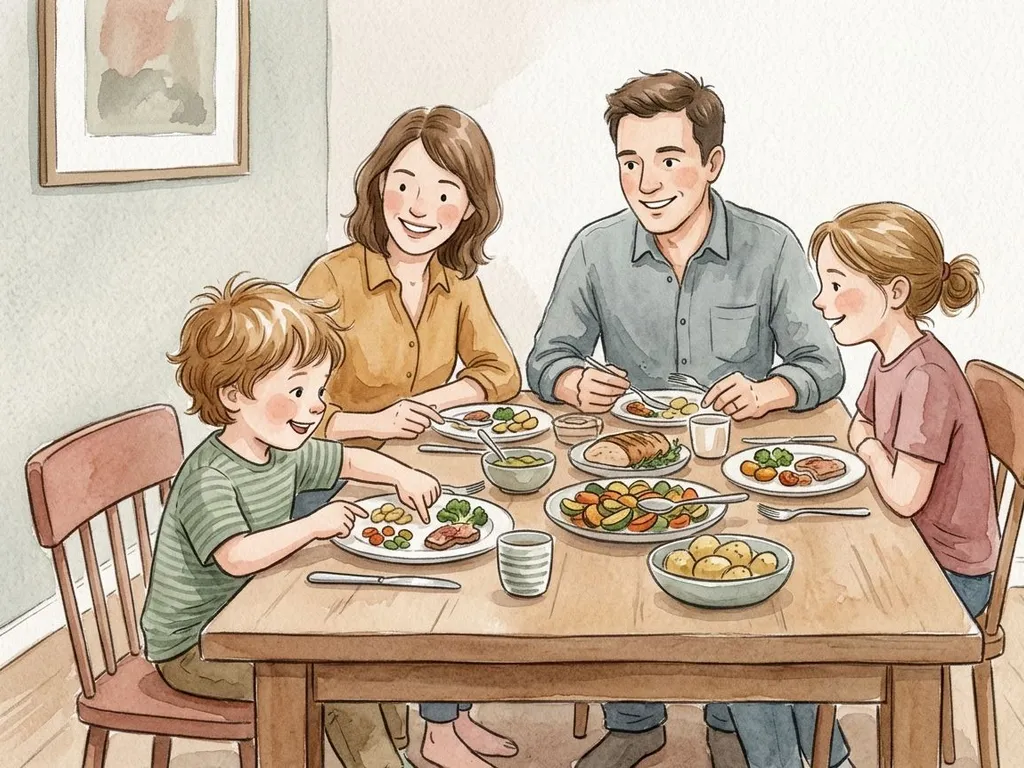
For school-age kids, keep practice physical and short. Put three foods on the table and say, “Touch the banana,” “Show me the milk,” or “Give me the apple.” Young children learn when body, eyes, and word work together. Keep the game fast: three commands, one smile, then stop before it feels like a test.
For school-age kids, use sorting and direct questions. Ask your child to make groups: fruit, vegetables, drinks, hot food, cold food. Then ask, “What do you like?” “What do you eat for breakfast?” “What is in your lunchbox?” These questions link food words with daily life and move children from remembering toward answering.
For older school-age kids and teenagers, use real tasks. Ask your child to read a short menu, write a shopping list, compare two meals, or explain how to make a snack. Across LearnLink lessons, our tutors use familiar routines like meals, school breaks, and family plans so new words feel easier. Food and drinks in English for kids stays useful when tasks feel age-appropriate.
Practice: Build a Mini Menu
Ask your child to choose one food and one drink for breakfast, lunch, and dinner. They can say or write: “For breakfast, I want bread and milk.” Older children can add a reason: “I want pasta because I am hungry.”
Useful Sentence Frames for Meals
Children need ready-made phrases as much as word lists. Sentence frames reduce pressure because each child changes only one part. Start with “I like…” and “I don’t like…” before longer patterns. This keeps food and drinks in English for kids practical, not abstract.
First frames include: “I like rice,” “I don’t like fish,” “Can I have water, please?” “This is hot,” “That is sweet,” and “I am full.” These phrases suit young learners and older beginners because they work at home, in class, at a restaurant, and during play.
When your child is ready, add questions. Try “Do you like carrots?” “What do you want?” “Is it sweet or salty?” and “What did you eat today?” Food and drinks in English for kids grows stronger when children ask as well as answer. Questions also help parents continue a short exchange without drilling.
Common Mistakes and How to Fix Them Gently
One common mistake: teaching too many words at once. A 60-food list may look rich, but a child may remember none. Teach 6-10 words, use them for a week, then add more. Depth matters more than speed. If your child can point, say, choose, and use a word in a phrase, that word is doing real work.
Another mistake: demanding perfect grammar too early. If a young child says, “I want banana,” answer naturally: “You want a banana. Here you are.” This gives the correct model without turning a real moment into a test. The child hears “a” in context and keeps confidence to ask again.
Avoid treating unfamiliar foods as wrong or strange. International families bring many food traditions to the table. English can name sushi, soup, curry, hummus, noodles, tortillas, olives, dumplings, and lentils. A wider food world makes language practice more respectful. It also shows children that English can describe actual family meals, not only textbook foods.
Tips for Parents and Teachers
Use English in short, stable routines. At breakfast, name two items. At snack time, ask one question. At the supermarket, let your child find three things: “Find apples,” “Find milk,” “Find bread.” These habits last better than a long weekly home lesson. Food and drinks in English for kids works best when English appears in small, predictable moments.
Mix listening, speaking, reading, and writing. A younger child can point and repeat. A middle-grade child can label pictures. A teenager can write a recipe or compare two meals. The same topic grows with the child, from “milk” to “Can I have milk, please?” to “This meal has protein, vegetables, and rice.”
Keep correction light. Praise meaning, then model the stronger phrase. If your child says “juice cold,” answer, “Yes, the juice is cold.” This protects confidence while giving accurate English. That balance sits at the heart of food and drinks in English for kids.
- Practice five food words daily with children ages four to seven.
- Use picture cards to review drinks before breakfast or snack time.
- Read one short food-themed book aloud twice each week.
- Try a pretend cafe game using food and drinks in English for kids.
- Ask children to name three healthy foods during grocery shopping.
When a word has several meanings or pronunciations, Cambridge Dictionary is a useful check before turning it into child-friendly examples.
Frequently Asked Questions
How Many Food Words Should My Child Learn First?
Start with 15-25 words if your child is new to English. Choose foods and drinks your child sees often, such as water, milk, bread, rice, apple, banana, egg, pasta, chicken, fish, carrot, tomato, juice, yogurt, and cheese. Once your child can understand and use these words in short phrases, add groups like desserts, breakfast foods, restaurant words, tastes, and simple cooking verbs.
Should I Translate Food Words into My Home Language?
Translation can help at the start, especially with a nervous beginner, but do not stop there. Show real food, say the English word, and use it in a sentence. For example: “This is rice. I eat rice.” In bilingual or multilingual homes, translation works as a bridge. The goal is helping your child connect the English word with the object and action.
What Is the Best Way to Practise Food and Drinks in English for Kids at Home?
The strongest practice is short, real, and repeated. Use meal times, shopping, cooking, and snack choices. Ask direct questions such as “What do you want?” or “Do you like apples?” Let your child answer with one word first, then model a full sentence. Five calm minutes several times a week usually works better than one long session. This rhythm keeps food and drinks in English for kids light enough to repeat and useful enough to remember.
How Can Older Beginners Avoid Feeling That Food Vocabulary Is Too Childish?
Give older children more grown-up tasks. Ask them to read a menu, plan a school lunch, compare healthy and occasional foods, or write a recipe. They can learn taste, texture, and cooking words, such as spicy, fresh, grilled, boiled, crunchy, and soft. The topic stays age-appropriate when the task matches the child’s maturity.
Start your child's English journey today — book a trial lesson with LearnLink.
Stay updated on our latest tips and resources by following us on Instagram LearnLink.