Clothes Word Tracing in English for Kids
Clothes word tracing in English for kids means children look at a clothing word, say it aloud, and write over the letters with a pencil or finger. One task engages eye, ear, hand, and voice. A young learner may trace “hat” and point to a hat. An older child may trace “jacket,” then write “I wear a jacket when it is cold.” Keep the pace light. Clothing words work because children can touch, sort, wear, and describe them daily.
📥 Clothes Word Tracing in English for Kids
Trace useful clothing words, read simple sentences, and practise everyday English at your own pace.
Leave your email — we'll send the PDF to your inbox.No spam — the PDF plus one short reminder. Unsubscribe anytime.
Core Clothing Words to Start With
Begin with clothing your child can see at home: shirt, pants, dress, shoes, socks, hat, coat, jacket, scarf, gloves, skirt, and shorts. These words fit daily routines across countries and climates, even when a child does not wear every item. Show the real object first, then the picture, then the written word.
I wear a blue shirt.
These pants are long.
She has a red dress.
Put on your shoes.
My socks are clean.
This hat is warm.
I wear a coat in winter.
The jacket is too small.
For clothes word tracing in English for kids, choose short words before long ones. Younger children may trace “hat,” “cap,” “shoe,” and “sock.” School-age kids can add “sweater,” “trousers,” “uniform,” and “raincoat.” Older children can use style and function words: hoodie, sandals, swimsuit, boots, belt, pocket, collar, sleeve, button, zipper.
Use one small set for a week. Ten words taught with care beat forty rushed once. Ask your child to say each word, trace it, and match it to an item. Meaning first, neat writing second.
Short Phrases Children Can Use
Words grow stronger in speech. Start with “a red hat,” “blue shoes,” “my coat,” “your socks,” “two buttons,” and “long sleeves.” These phrases connect clothing vocabulary with colors, numbers, and basic pronouns.
Then move to full sentences: “I am wearing a T-shirt.” “She has a green skirt.” “Put on your shoes.” “Take off your coat.” “My jacket is too small.” In a tracing sheet, leave space under the word for one spoken sentence. A child can trace “gloves” and say, “I wear gloves in winter.”
For clothes word tracing in English for kids, avoid silent copying. The spoken phrase gives the word use. If your child traces “shirt” three times but cannot use it in a sentence, return to real objects.
How to Introduce Tracing Without Pressure
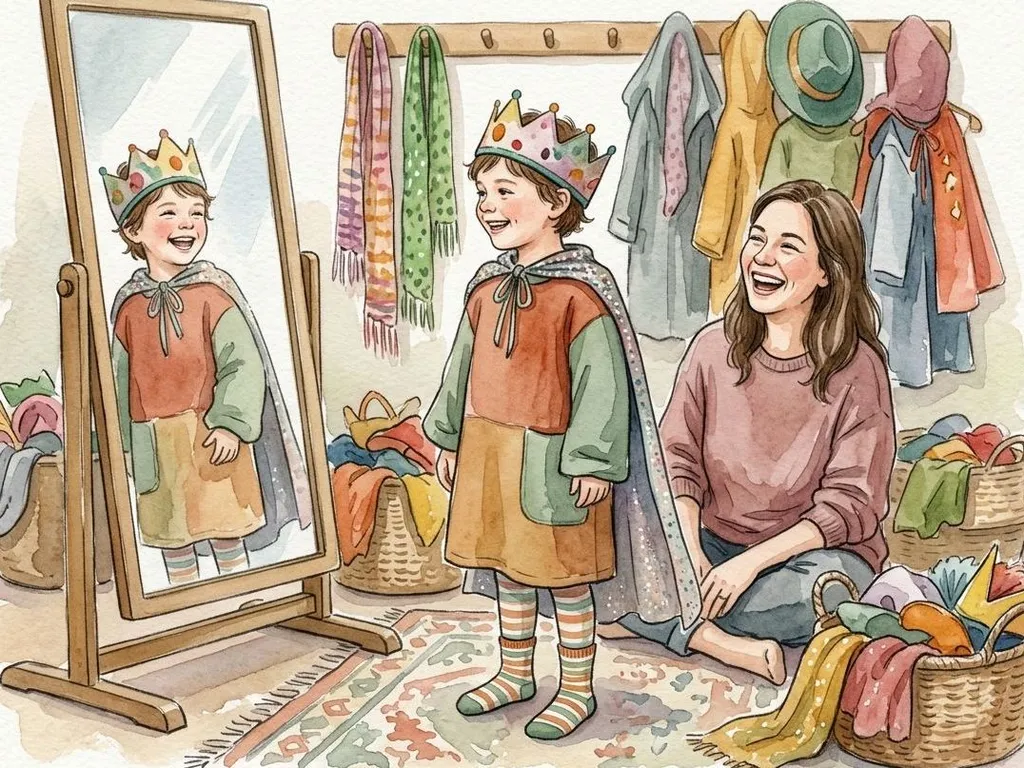
Set up tracing as a short routine, not a handwriting test. Put three clothing items on the table. Say each word together. Let your child touch the item, trace the word with a finger, then trace it with a pencil. Five minutes is enough for younger learners.
Children may need large letters, thick lines, and wide spacing. Others are ready for dotted letters and a blank line below. Left-handed children may need the model word on the right side too, so their hand does not cover it. Clean tracing sheets support independence.
Keep correction calm and concrete. Say, “Start at the top of the t,” or “This word has two o’s,” rather than “That is wrong.” The aim of clothes word tracing in English for kids is steady recognition: seeing the word, saying the word, and forming it clearly enough to read later.
Examples in Context
Use clothes words during real routines. In the morning, ask, “What are you wearing?” At laundry time, say, “Find two socks,” or “This shirt is clean.” Before going outside, use weather-linked language: “It is raining. Put on your raincoat.” Daily moments give each word a reason.
School-age kids often enjoy sorting. Make three piles: summer clothes, winter clothes, and school clothes. Trace one label for each pile, then place picture cards or real items under it. A bilingual child may know the concept in another language, so the English word attaches to known meaning.
Older children can write mini-dialogues after tracing: “Where is my hoodie?” “It is on the chair.” “Are these your boots?” “No, they are my brother’s.” This keeps clothes word tracing in English for kids age-appropriate for learners who still need spelling support.
Activities by Age
For ages 4 to 6, use movement and large motor skills. Tape word cards to a wall, say “touch coat,” and let your child tap the right card. Then trace the same word in the air, on a tray of sand, or on paper. Keep each activity brief and stop before tired writing begins.
For ages 7 to 10, add categories and choices. Ask your child to trace six words, then draw a suitcase for a beach trip or a cold weekend. They can label the items: shorts, T-shirt, sandals, sweater, coat, boots. This builds vocabulary and planning language together.
For ages 11 to 15, avoid babyish worksheets. Use fashion, sport, school, travel, or theatre costumes as the frame. A teenager can trace or copy harder words such as “sleeveless,” “waterproof,” “comfortable,” and “matching,” then write short opinions: “This jacket is waterproof, but it is not warm.”
Practice Ideas and Common Mistakes
Strong practice mixes tracing with choice. Give your child two words and ask, “Which one do you wear on your feet?” After they answer “shoes,” they trace the word. Another day, ask them to draw a person and label five clothes. The drawing can stay basic; the labels should be readable.
Prevent mistakes early. Children may mix up “shirt” and “skirt,” forget the silent feel of “clothes,” or use singular and plural forms wrongly: “one shoe,” but “two shoes.” With clothes word tracing in English for kids, place confusing pairs side by side and add a quick picture. The picture gives the brain a hook.
Try a Five-Word Wardrobe Trace
Choose five items your child can see now: shirt, pants, socks, shoes, and jacket. Say each word, trace it once, then ask your child to place the real item or a drawing beside the word. Finish with one sentence: “I am wearing…”
- Try three clothes word tracing in English for kids pages after breakfast.
- Use a finger-trace, pencil-trace, then rainbow-write routine for school-age kids.
- Practice five clothing words from a picture book, naming each item aloud.
- Check pencil grip and letter direction before adding two new words.
- Review one mistake gently, then let your child trace the word again.
When a word has several meanings or pronunciations, Cambridge Dictionary is a useful check before turning it into child-friendly examples.
Frequently Asked Questions
How Many Clothes Words Should My Child Trace in One Lesson?
For ages 4 to 6, three to five words are enough. For ages 7 to 10, six to ten words can work if your child already knows the items. Older learners may handle a longer list, but they still need context. A short clothes word tracing in English for kids session should leave your child able to say and recognize the words, not just fill a page.
Should My Child Trace Uppercase or Lowercase Letters First?
Use lowercase letters for most clothing words because children meet them that way in books, captions, and worksheets. Uppercase letters help with the first letter in names or sentence starts, but “hat,” “coat,” and “shoes” should usually be traced in lowercase. For beginners, large lowercase print with wide spacing is practical.
What If My Child Can Say the Word but Cannot Spell It?
That is normal. Spoken vocabulary often grows before spelling. Ask your child to say the word, clap the sounds, trace it, then cover it and try writing only the first letter. Build from there. For “shirt,” “skirt,” and “shorts,” use pictures and slow comparison so your child sees the spelling differences.
Can Tracing Help a Child Who Already Speaks Two Languages?
Yes, if the task is tied to meaning. A multilingual child may already know the idea of “coat” or “socks” in another language. Tracing helps attach the English spelling to that known meaning. Keep translation brief, then return to English use: “This is a coat,” “My coat is blue,” “Put on your coat.”
- Start with five real items your child can touch, name, and trace in one short session.
- Practice one spoken sentence after each traced word so handwriting stays connected to meaning.
- Try sorting, matching, and drawing before adding longer spellings or independent writing.
If your child needs steady speaking practice, start small — choose a trial lesson.
Stay updated on our latest tips and resources by following us on Instagram LearnLink.