Conditional Sentences and If-Clauses for Kids
A conditional sentence joins two clauses: an if-clause names a condition, and the result clause gives the outcome. In If the sun comes out, we will play outside, sunshine is the condition; outdoor play is the likely result. Conditional Sentences and If-Clauses for Kids: A Practical Guide explains four patterns for facts, likely results, imaginary situations, and unchangeable finished events. Teach meaning before grammar labels. Use spoken choices with younger children; older learners can compare forms, write examples, and justify choices.
📥 If-Clauses in Action
A practical guide, practice set, and weekly learning tracker
Leave your email — we'll send the PDF to your inbox.No spam — the PDF plus one short reminder. Unsubscribe anytime.
What Children Need to Understand
Every conditional contains a condition and a result. In If you mix blue and yellow, you get green, mixing colours is the condition; green is the result. Ask your child to identify each clause and answer, “What must happen first?” This tests the relationship before verb rules.
Conditions express facts, likely plans, imaginary situations, or unchangeable completed events. Children use these meanings daily: If I finish my book, can I choose a game? Grammar lessons reveal the pattern and accurate verb forms.
Use Conditional Sentences and If-Clauses for Kids: A Practical Guide as a reference, introducing one pattern at a time. A five-year-old may practise spoken cause and effect. A nine-year-old can compare real and imaginary choices. Teenagers can discuss missed chances and mixed time frames.
How If-clauses Fit Together
Conditional Sentences and If-Clauses for Kids: A Practical Guide begins with one structural rule: clause order may change without altering the meaning. We can say If a child feels tired, the child rests or A child rests if the child feels tired. Put a comma after an opening if-clause. A following if-clause normally needs no comma.
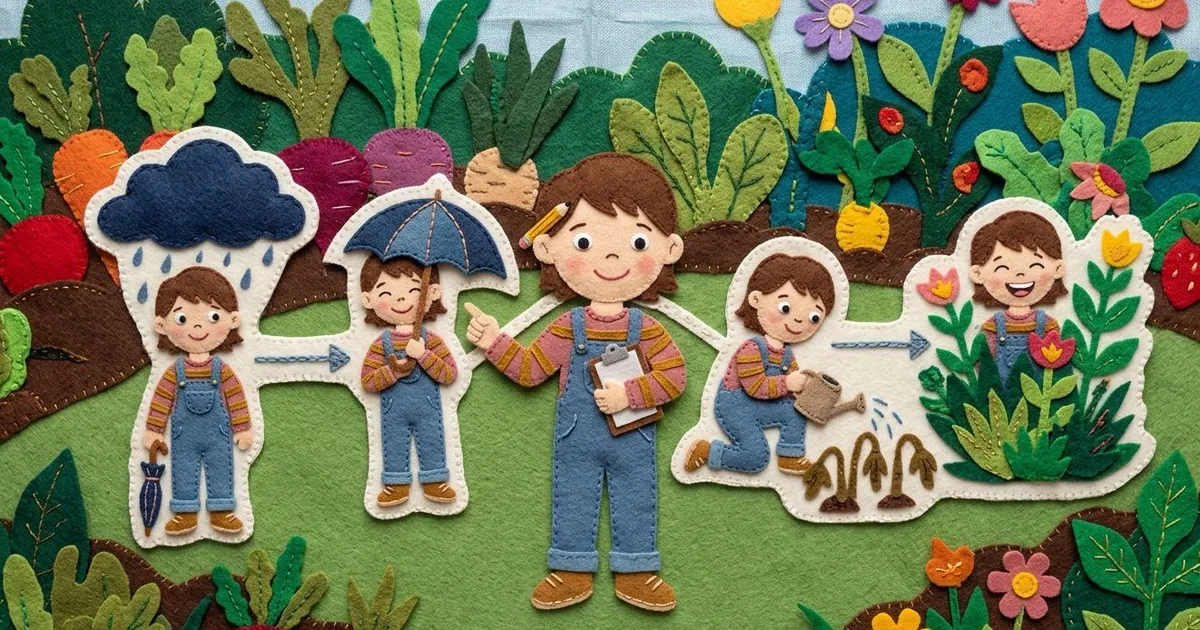
If makes the result depend on the condition. When presents an event as expected or regular. Compare uncertain rain in If it rains, we will stay inside with the expected ending in When the lesson ends, we will have lunch.
Offer a beginning such as If I find a shell... and ask the child to complete it. Then reverse the order: I will put it in my collection if I find a shell. Reordering highlights the relationship between clauses.
The Four Main Conditional Patterns
English teaching groups conditionals into zero, first, second, and third types. These numbers are labels, not fixed age stages. Start with meanings your child needs, then revisit each pattern in new contexts.
Conditional Sentences and If-Clauses for Kids: A Practical Guide presents each form as a meaning choice. The zero conditional states regular results. The first describes a real possibility. The second creates distance from reality. The third reimagines a finished event.
Choosing the Right Type
Start with the speaker’s meaning. For a rule, choose zero: If players touch the line, they lose a point. For a genuine future possibility, choose first: If our team finishes early, we will play another round.
The second conditional suits imagination: What would you build if you had a large empty room? In careful standard English, were works with every subject in hypothetical statements: If I were taller, I would reach the shelf. Informal speech may use if I was.
The third conditional describes an unchangeable finished situation. Follow three steps: identify what happened, confirm it cannot change, and imagine another result. For example, If the learner had charged the tablet, the learner would have joined the call. A timeline or two drawings makes the contrast visible.
Common Mistakes and How to Correct Them
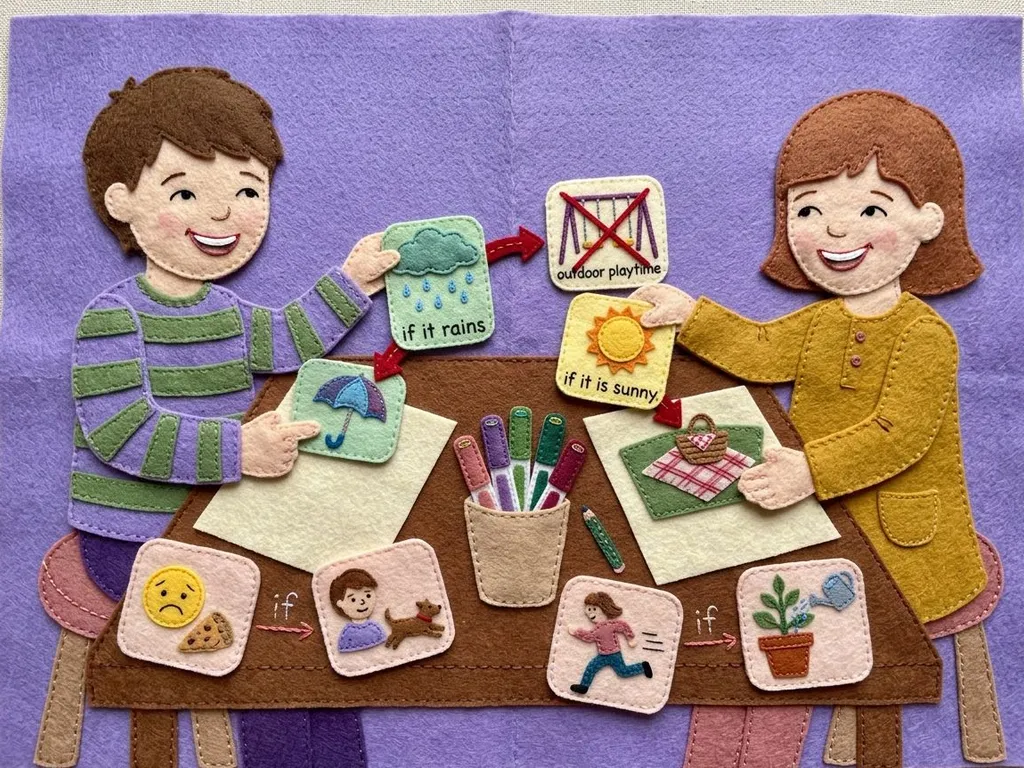
A frequent error puts will in a first-conditional if-clause: If it will rain, we will cancel the picnic. Write If it rains, we will cancel the picnic. Another error is If I would have time, I would help. For an unreal present situation, write If I had time, I would help.
Children may read the second conditional’s verb shape as completed time. In If I lived near the mountains, I would ski each week, lived marks an imagined present, not a finished event. Contrast the third conditional: If I had lived near the mountains, I would have skied more often.
Conditional Sentences and If-Clauses for Kids: A Practical Guide prevents two smaller errors. Do not pair unless with another negative when it means if not: say We cannot start unless everyone is ready. Check commas: If everyone is ready, we can start, but We can start if everyone is ready.
Practice That Builds Accuracy
Use familiar choices involving clothes, food, games, weather, or family routines. Ask older children to justify each form: “I used the first conditional because this event could happen tomorrow.” The explanation tests meaning and memory.
Correct one feature per round. First, check the verb in the if-clause. Next, check the result clause or punctuation. Multiple corrections can hide the target pattern.
Practice 1: Complete the Real Conditions
Fill each gap with the correct form of the verb in brackets.
1. If water reaches 0°C, it ________ (freeze).
2. If we finish our work, we ________ (play) a word game.
3. I will take an umbrella if it ________ (rain).
Answers: 1. freezes; 2. will play; 3. rains.
Practice 2: Imagine a Different Situation
Complete each second conditional with your own idea.
1. If I could speak to animals, I would ________.
2. If our home had one extra room, we would ________.
3. I would choose ________ if I could visit any place.
Check that the if-clause uses a form such as could or had and the result uses would plus a base verb.
Practice 3: Repair the Sentences
Correct each sentence.
1. If I will see my friend, I will give them the book.
2. If he would practise, he would improve.
3. If we had left earlier, we would catch the train.
Answers: 1. If we see our friend, I will give them the book. 2. If he practised, he would improve. 3. If we had left earlier, we would have caught the train.
When a word has several meanings or pronunciations, Cambridge Dictionary is a useful check before turning it into child-friendly examples.
Frequently Asked Questions
When Should a Child Start Learning Conditionals?
Start when a child connects a cause with a result: If I am cold, I wear my coat. Teach zero and first conditionals through speech and routines. Add written second and third forms when the learner can compare real and imaginary situations.
Does My Child Need to Remember the Conditional Numbers?
No. Numbers provide shorthand; meaning comes first. Ask the child to classify each example as a fact, possible plan, imagined situation, or unchangeable earlier event. Add zero, first, second, and third labels after those contrasts become clear.
Why Does the First Conditional Use the Present Tense for the Future?
After if, English uses the present simple for a normal future condition: If the shop is open tomorrow, we will go in. Tomorrow and the result clause mark future time. Compare complete examples instead of translating verbs separately.
Can the Result Clause Use Words Other than Will or Would?
Yes. The result may contain a modal verb, instruction, or question: If you finish early, you can draw, If the screen freezes, restart the app, and If we take the train, should we leave before eight? Introduce variations after the basic pattern becomes familiar.
How Can Multilingual Families Practise Without Direct Translation?
Use pictures, gestures, timelines, and real choices. Show two weather pictures and ask, What will we do if it rains? Draw an impossible invention and ask, What would you do if you owned this? The child may discuss the idea in another family language, then build one complete English conditional.
Want to see how these ideas work in a real lesson — try a LearnLink trial lesson.
Stay updated on our latest tips and resources by following us on Instagram LearnLink.