Sentence Building Games for Kids
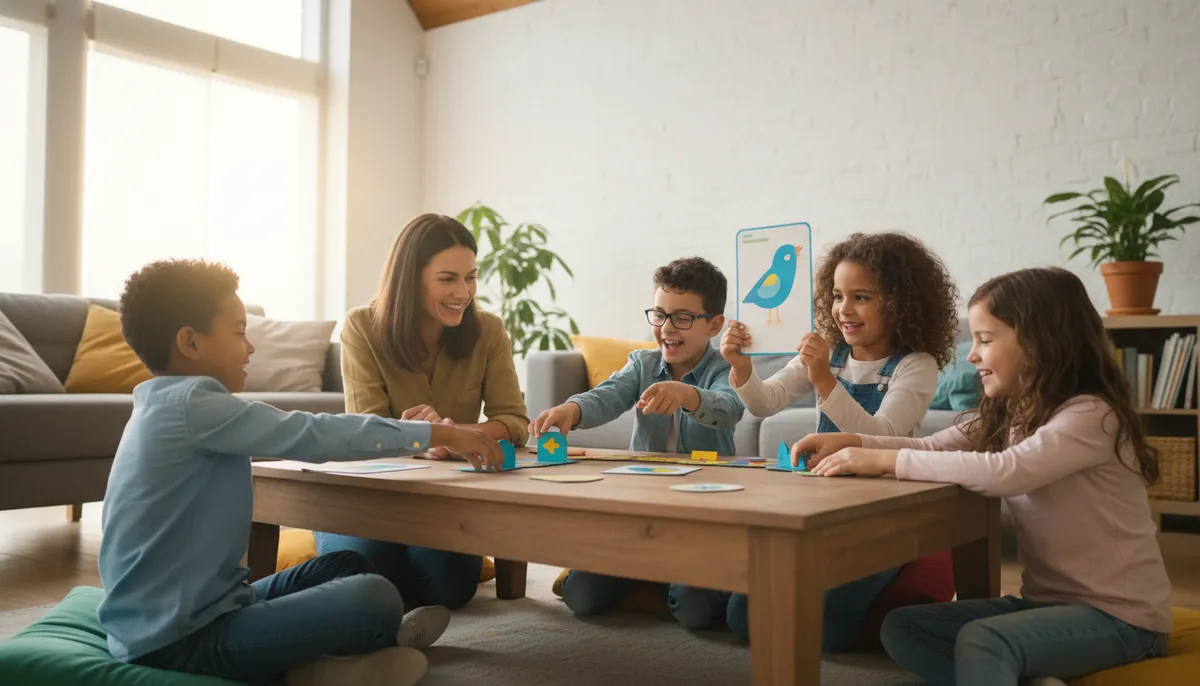
A 7-year-old named Noah used to cry whenever he had to write "I am happy" — grammar felt like punishment, and three workbooks had not helped. Then a tutor cleared the table, tipped out a pile of word cards, and asked Noah to build the silliest sentence he could. Forty minutes later he had written "My grandma kicks blue dragons" and begged for another round. That is the whole point of this guide: kids don't hate grammar, they hate worksheets. The fix is to turn sentence work into play. The sentence building games below are the ones that work in real homes and real classrooms — no printer required, no tears guaranteed.
📥 Sentence Builder Card Set
Printable word cards and a weekly practice tracker for making silly, correct English sentences.
Leave your email — we'll send the PDF to your inbox.No spam — the PDF plus one short reminder. Unsubscribe anytime.
Why Grammar Feels Boring to Kids (and How to Flip It)
The standard lesson asks a child to memorise a rule before they have any reason to care — and that order is backwards. Children learn grammar by doing, through imitation and small wins. Research summarised by the British Council shows young learners absorb grammar through playful use long before they can name a single rule. When a 6-year-old says "Daddy goed to work," they are already applying a rule (add -ed for the past); the job is to show the exception, not shame the mistake. So make sentence work the main activity, not a reward at the end. Cards, silly voices, drawings, or labelled Lego bricks are enough — the simplest sentence building games need nothing more. Kids who struggle with abstract articles in English (a, an, the) often grasp them once each article gets its own coloured block. Grammar becomes something you touch and move, not something you recite.
Six Sentence Building Games That Actually Work
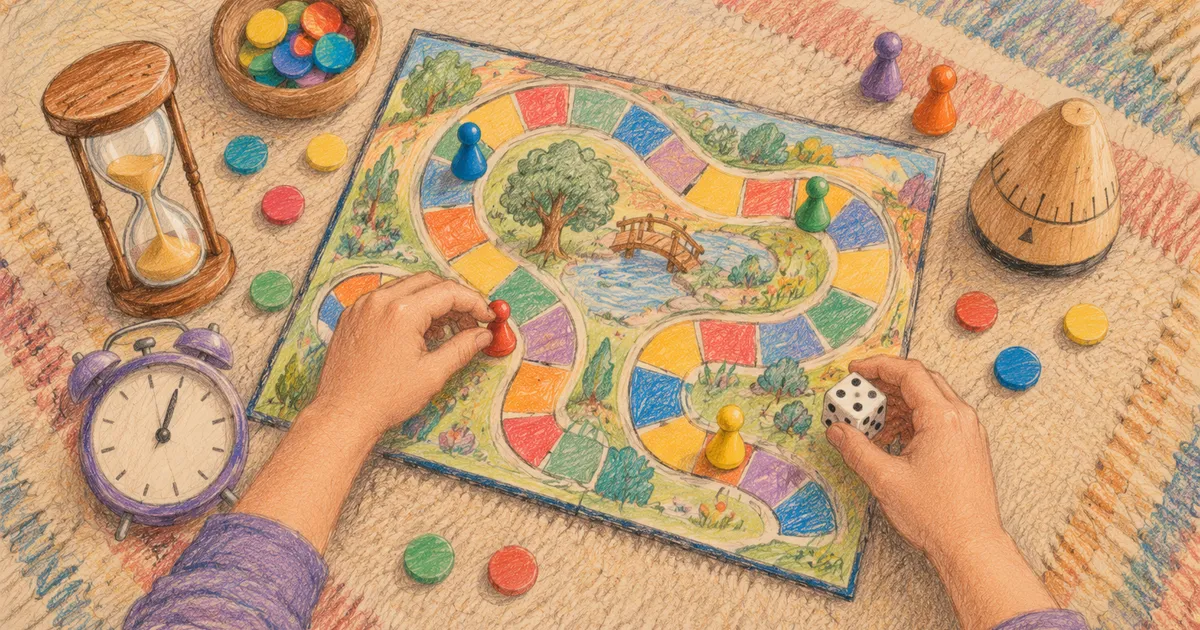
I keep a folder of about thirty games I have tested with primary-age students. Six of them work in almost every home, with almost every kid. Treat this as your activity-ideas menu: pick one, play for ten minutes, stop while it is still fun. These sentence building games need cards or dice and nothing else.
- Silly Slot Machine. Three stacks of cards — subjects, verbs, objects. The child draws one from each and reads the result out loud. "The cat eats homework!" Laughter is the reward. Pair it with the verb to be for younger kids who are still learning "is" and "are."
- Colour the parts. Highlight the subject in blue, the verb in red, the object in green. After ten sentences, kids start spotting the pattern without you saying a word.
- Dice and verbs. Roll a die — the number tells you which tense to use. This helps when you introduce the past simple tense or the future tense.
- Word relay. Two kids, one sentence. The first says the subject, the second adds the verb, the first finishes with an object. Speed turns grammar into sport.
- Story dice. Five picture dice rolled together — the child must use all five in one sentence. This stretches working memory and vocabulary at once.
- Add-a-word. Start with "I run." Each round add one word: "I run fast." "I run fast home." "I run fast home today." This grows adjectives and adverbs gently, one piece at a time.
Rotate two of these sentence building games per week so novelty stays fresh. If a child masters one, retire it for a month — the brain consolidates better with breaks than with repetition to exhaustion.
Subject + Verb + Object: The Formula Behind Every Game
Almost every English sentence under twelve words follows the same skeleton: someone, doing something, to something. Once children internalise this triplet, they can generate hundreds of sentences from a small pile of words — which is exactly why the sentence building games above feel so productive. Show them the table below as a placemat-sized poster and let them point at the columns as they speak. Lock the skeleton first; add description later with adjectives for kids.
When kids can swap any column without breaking the sentence, they are ready for the next layer. Compare two simple tenses with present simple vs present continuous so they feel the difference between "I eat" and "I am eating."
Put each set of words in the right subject-verb-object order, then read it aloud.
1. (cake / bakes / Dad) →?
2. (the song / sing / we) →?
3. (a kite / flies / she) →?
4. (apples / eat / monkeys) →?
Answers: Dad bakes cake. We sing the song. She flies a kite. Monkeys eat apples.
From Simple to Compound: Joining Ideas with "And" and "But"
Once a declarative sentence is automatic, you can show kids how two small sentences snap together into one bigger one. This is the bridge from short statements to real writing, and it needs only two words to start: and joins similar ideas, but signals a contrast. Keep it physical — write each short sentence on a strip of paper, then drop a card that says "and" or "but" between them and read the new, longer sentence aloud.
A handy mini-game: give the child two random sentence strips and a single "and"/"but" card, then ask which joining word makes sense. Choosing between them teaches meaning, not just mechanics — and it slots neatly into the same sentence building games routine you already run.
Common Sentence Mistakes Kids Make (and the Quick Fix)
Our tutors keep notes on the errors young learners repeat, and the same patterns appear by week three. The table below is the short list of fixes that pay off most. Don't correct every slip on the spot; pick one per session, name it, and watch for it next time.
When to Introduce More Complex Sentences
There is no fixed age — there is a fixed sequence. Children move through predictable milestones, and pushing the next stage before the current one is automatic creates the worksheet-tears effect we all want to avoid. Around school age, kids own the basic subject-verb-object skeleton in the present tense. Between 6-8, they handle the past simple confidently and start using opposite words to colour their sentences. Around 8-10, compound sentences with "and," "but," and "because" appear naturally — that is when joining words become teachable instead of confusing, and when you can move on to combining sentences into longer ones. By 10-12 most kids can handle relative clauses ("the boy who lives next door") and basic conditionals ("if it rains, we will stay home"). Keep the same sentence building games going at each stage — only the difficulty of the cards changes. The sign that you can move on is simple: the child uses the current structure on their own, without prompting, in three different sessions. If they still need scaffolding, stay another week. Slow progress on a stable foundation beats fast progress that collapses.
Frequently Asked Questions
Q: At what age should grammar lessons start?
Around age 5 for explicit lessons, but sentence play can start at 3 with simple subject-verb-object games. Before 5, focus on listening and imitation rather than rules.
Q: How long should a grammar play session last for a 7-year-old?
Fifteen to twenty minutes is the sweet spot. Anything longer and attention drifts. Two short sessions per week beat one long one.
Q: My child speaks fluently but writes ungrammatically. Why?
Spoken English forgives errors that writing exposes. Speech is fast and contextual; writing forces every word to stand alone. Address it by reading their writing aloud — kids often hear their own mistakes.
Q: Should I correct every grammar mistake my child makes?
No. Pick one focus per week. Constant correction kills willingness to speak. Model the right form back instead — if they say "I goed," reply "Oh, you went? That sounds fun."
Q: Are grammar apps as good as flashcards and cards?
Apps are convenient but lack the physical handling that helps young brains. Mix them: an app for review on car rides, real cards or blocks at home. Hands-on still wins for first exposure.
Want a tutor to turn these sentence building games into weekly lessons your child looks forward to — try a trial lesson with LearnLink.
Stay updated on our latest tips and resources by following us on Instagram LearnLink.