Second Conditional for Kids
The second conditional describes an unreal or unlikely situation: If I had a robot, I would make it tidy my room. Second Conditional for Kids: A Practical Guide shows children this pattern covers imagining, choosing, and explaining ideas—not real plans. For younger children it's "dream grammar"; for older children it supports advice, wishes, and results. Rule: past simple after if, then would plus the base verb.
📥 Second Conditional for Kids
Practice unreal or unlikely situations with clear patterns, useful phrases, and a weekly study tracker.
Leave your email — we'll send the PDF to your inbox.No spam — the PDF plus one short reminder. Unsubscribe anytime.
What Children Need to Understand First
Children need just one idea before the second conditional: this sentence describes something unreal now, or unlikely soon. If I lived on the moon, I would jump higher is not a science report—it is imagination.
Second Conditional for Kids: A Practical Guide should begin with meaning, not form. A 6-year-old can point to a picture and say, "If I had wings, I would fly." A 12-year-old can give advice: "If I were you, I would talk to the teacher." Same structure, deeper use.
At LearnLink, tutors link this grammar to drawing, stories, choices, and short role play—children learn faster when the unreal idea is visible. A child who can sort "real plan" from "imaginary idea" is ready for the rule.
How the Grammar Works
The second conditional has two parts. The if part gives the imagined condition; the result follows. Pattern: If + past simple, would + base verb. Example: If I found a magic key, I would open the secret door.
The past simple marks distance from real life, not past time—this answers older children who ask, "Why do we say had if we mean now?" English uses past forms for unreal, polite, or indirect ideas.
Second Conditional for Kids: A Practical Guide becomes clearer when children compare it with the first conditional. First conditional—real possible future: If it rains, we will stay inside. Second conditional—unreal or unlikely: If it snowed in July, we would build a snowman.
Rules and Examples Children Can Use
The rule is consistent: past simple in the if clause, would plus the base verb in the result clause. If my dog could talk, it would ask for snacks. If we lived near the sea, we would swim after school. If I knew the answer, I would tell you.
The two clauses can switch places. If clause first, add a comma: If I had a bigger bag, I would carry all my books. Result clause first, no comma: I would carry all my books if I had a bigger bag.
With be, school grammars often teach were for all subjects in the second conditional: If I were taller, I would reach the shelf. If she were here, she would help us. In speech, children may hear was with I, he, or she, but were is safer in school writing.
Examples by Age and Level
For school-age kids, keep language short and visual. Toys, animals, food, and actions work well: If I had a big red car, I would drive to the park. If my teddy bear could sing, it would sing at bedtime. The goal is repeated pattern exposure, not instant accuracy.
For school-age kids, add choices and reasons. If I had more free time, I would learn guitar because I like music. If our class had a garden, we would grow tomatoes. Children this age can explain results, not just name them.
For teens, the second conditional fits advice, values, and problem-solving. If I were in a new school, I would join a club. If people used less plastic, beaches would be cleaner. Second Conditional for Kids: A Practical Guide supports both grammar accuracy and thoughtful speaking.
Common Mistakes and Quick Fixes
A common mistake: would in both clauses. If I would have a bike, I would ride to school. Fix—use past simple after if. Correct: If I had a bike, I would ride to school.
Children also mix the second conditional with real future plans. If I go to the shop, I would buy apples blends both. Real trip: first conditional: If I go to the shop, I will buy apples. Imagined trip: second conditional: If I went to the shop alone, I would buy apples.
Children also forget the base verb after would. We say would go, would eat, would play—not would went or would ate. Classroom chant: would plus plain verb. If she found a map, she would follow it.
Practice Activities
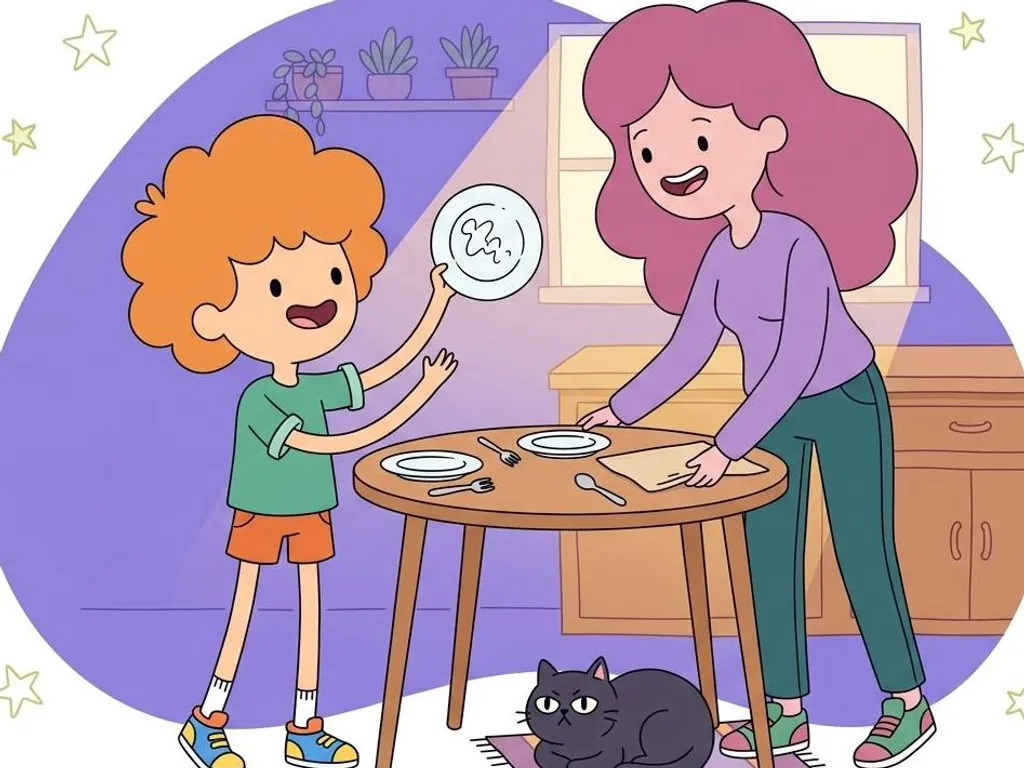
Practice moves from copying to free speaking: children finish sentence frames, choose between two endings, then build their own second conditional sentences about homes, school, games, animals, or future dreams.
Second Conditional for Kids: A Practical Guide works best when practice feels useful. Try these aloud, in a notebook, or as a parent-child turn-taking game. Younger children answer with one short clause; older children add because and explain.
Fill in the Blank
Complete each sentence with the correct verb form: 1. If I _____ (have) a time machine, I would visit the dinosaurs. 2. If she _____ (know) the song, she would sing with us. 3. If we lived near a forest, we _____ (walk) there every day. 4. If my shoes could talk, they _____ (tell) funny stories. Answers: had, knew, would walk, would tell.
Change Real Plans into Imagined Ideas
Rewrite each first conditional sentence as a second conditional sentence: 1. If I win the game, I will smile. 2. If we get a pet, we will feed it. 3. If he studies, he will pass the quiz. Possible answers: If I won the game, I would smile. If we got a pet, we would feed it. If he studied, he would pass the quiz.
Speak and Explain
Answer in a full sentence, then add one reason: What would you do if you found a lost puppy? What would you buy if you had ten extra coins? What would you change if you were the school principal for one day? Example: If I found a lost puppy, I would ask an adult for help because the puppy might be scared.
How Parents Can Help at Home
Parents can use the pattern in everyday talk. At dinner: If you could cook anything, what would you make? On a walk: If this tree were a house, who would live inside? These questions build grammar practice without turning home into a test room.
Keep correction light. If your child says, "If I would be a bird," respond naturally: "Yes, if you were a bird, you would fly high." The child hears the right model without breaking the conversation—heavy correction reduces speech.
At LearnLink tutors lessons, we make grammar active: children hear it, move it, say it, and use it for their own ideas. The second conditional is more than a rule—it's a tool for imagination, advice, and careful thinking.
- Try three "What would you do if…" questions during dinner tonight.
- Practice five second conditional sentences with your child after reading one story.
- Use one funny imaginary situation to make grammar feel natural.
- Ask your child to answer in full sentences, not single words.
- Review two mistakes gently, then repeat the sentence correctly together.
When a word has several meanings or pronunciations, Cambridge Dictionary is a useful check before turning it into child-friendly examples.
Frequently Asked Questions
What Is the Second Conditional in Simple Words?
The second conditional describes unreal or unlikely situations. Pattern: If + past simple, would + base verb. Example: If I had a spaceship, I would visit Saturn. The child imagines a situation and its result, not a real trip.
At What Age Can a Child Learn the Second Conditional?
Children can start with simple second conditional sentences from around school age, especially with pictures and play. Older children (upper elementary kids) learn the rule more directly and use it for advice, opinions, and longer answers. The best age depends on English level, not birthday.
Should Parents Correct Every Second Conditional Mistake?
No. Correct enough for your child to hear the right form, but don't interrupt every sentence. Recasting works well: your child says, "If I would be a bird," and you answer, "If you were a bird, you would fly high"—conversation keeps moving and models the correct form.
What Is the Difference Between First and Second Conditional?
First conditional covers real possible future events: If it rains, we will stay inside. Second conditional covers unreal or unlikely ideas: If it rained chocolate, we would catch it in cups. Second Conditional for Kids: A Practical Guide must always teach this meaning difference—form alone is not enough.
How Can My Child Practise Without Worksheets?
Use quick spoken games: "What would you do if…?" in the car, at dinner, or while looking at pictures. Let your child ask you questions too. Try themes: animals, space, school, sports, or fairy tales. A few lively sentences daily build stronger grammar than one long worksheet done in silence.
Start your child's English journey today — book a trial lesson with LearnLink.
Stay updated on our latest tips and resources by following us on Instagram LearnLink.