How English Fairy Tales Help Kids Build Vocabulary

English fairy tales for kids are among the most effective vocabulary tools for children aged four to nine — every word arrives wrapped in story context that makes meaning stick. A hungry wolf, a small cottage, a dark forest: your child absorbs those adjectives without a single flashcard. Reading one short tale together takes fifteen minutes and needs nothing beyond a picture book and a quiet spot.
📥 Fairy Tale Vocabulary Quest
Story words and phrases children can read, say, act out, and use in their own fairy-tale sentences.
Leave your email — we'll send the PDF to your inbox.No spam — the PDF plus one short reminder. Unsubscribe anytime.
Why Stories Beat Flashcards for Young Learners
When children hear english fairy tales for kids, they're not processing words in isolation — they're watching language work in real time. Brave lands differently when a small child faces a giant. Cunning means something precise when a fox outsmarts a farmer. That context is what a flashcard cannot supply, and it's why tale-based vocabulary sticks better than drilling alone.
According to Reading Rockets, children who engage regularly with narrative texts develop stronger phonological awareness and wider vocabulary than peers relying on word-list repetition. You don't need a teaching qualification to read aloud with expression or pause for one well-placed question — what works in classrooms translates directly to the living room.
LearnLink tutors see this pattern consistently: children from homes with a regular read-aloud habit arrive in sessions already listening actively in English, guessing meaning from context, and expecting the language to make sense rather than decoding it word by word. For shorter material to rotate between longer tales, a carefully chosen short story in English for kids works well alongside picture books.
Matching the Tale to Your Child's Level
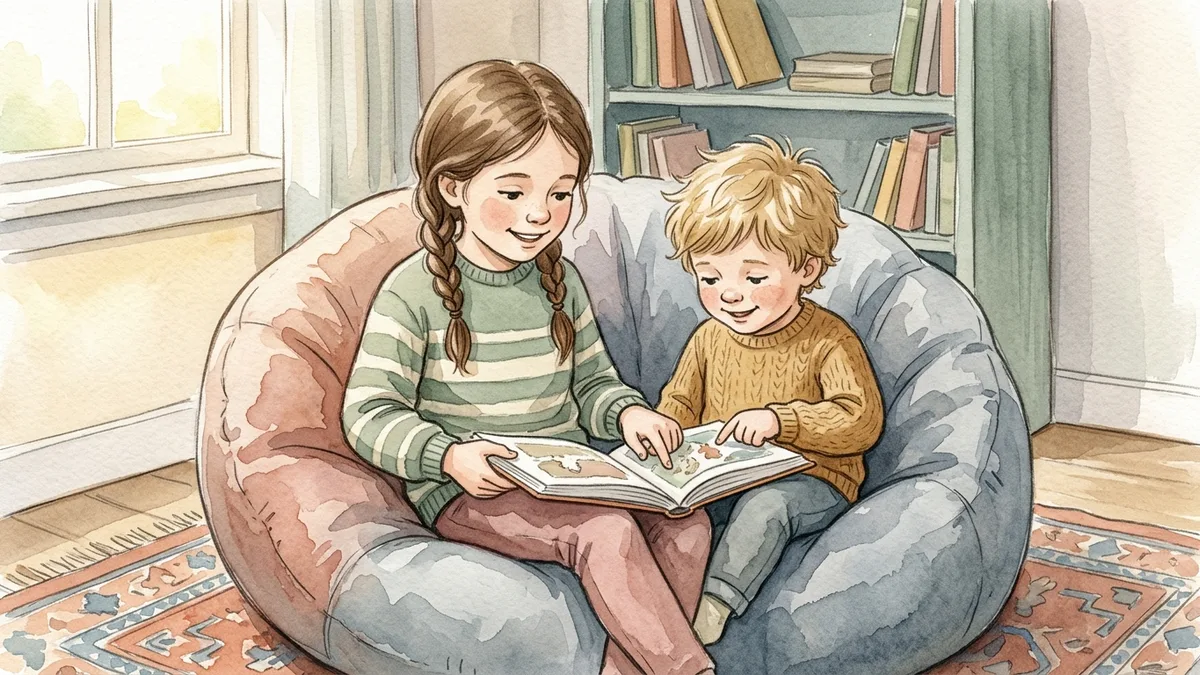
Picking a tale too far above or below your child's level is the fastest route to losing their attention. A well-matched book feels almost effortless: your child follows most of it, meets a handful of new words, and wants to hear it again.
School-age Kids: Short, Repetitive, Predictable
At this age, repetition is a feature, not a fault. Tales built around a repeated phrase — "I'll huff and I'll puff" or "Run, run, as fast as you can" — let children predict the next line, building listening confidence fast. Keep books to five or eight pages and choose editions with large, expressive pictures that carry meaning when a word is unfamiliar. Pairing regular read-alouds with English poems for kids reinforces those same rhythmic patterns in a shorter, repeatable format.
School-age Kids: Plot, Dialogue, and Emotional Stakes
By seven, children can follow a full plot arc and notice how characters speak differently from narrators. Longer tales — Cinderella, Puss in Boots, The Wild Swans — carry real emotional stakes and richer vocabulary older children are ready to absorb. After a read-aloud, one open question does more than ten drills: "Why do you think she kept the secret?" Let silence be comfortable. According to Scholastic, children who discuss books after listening show stronger comprehension and retention than those who simply move on. A broader plan for reading English with kids can extend the habit once a consistent rhythm is established.
A Simple Routine That Sticks
Fifteen minutes, three times a week: the pattern working most reliably for families new to english fairy tales for kids at home. Not every night, not an hour-long sit-down — just a short, relaxed read at a predictable time, as consistent as brushing teeth.
A practical starter week looks like this:
- Read the book through once without stopping — just flow, just expression, no questions yet.
- Two days later, read the same tale again. Pause before a repeated phrase and let your child say it first.
- On the third session, ask two or three questions in English after the final page.
After three weeks of that pattern, most children start asking for their favourite tale in English unprompted. That shift — from reluctant to requesting — is the earliest and most reliable sign that confidence is building.
Between sessions, a good English podcast for kids carries that narrative-language rhythm forward without extra preparation. Short episodes from the best English TV shows for kids reinforce the same vocabulary through a different medium and keep the habit from feeling like homework.
Habits That Slow Story-Time Progress

Most families don't fail at read-aloud time — they develop a few habits that reduce its effectiveness. Here are the three our tutors see most often.
For children beginning to write alongside listening, connecting tale vocabulary to early English writing practice for kids turns passive input into active language use. If you're comparing structured support to complement home reading, online English tutoring platforms for kids shows what a guided session adds beyond the living-room routine.
FAQ
At What Age Should Children Start Hearing English Fairy Tales for Kids?
Story exposure benefits children from around age three, before they follow every word — rhythm, repetition, and emotional arc are absorbed well ahead of formal comprehension. Starting between four and six, before school English lessons begin, gives children a natural feel for the language that structured teaching can build on later.
Does My Child Need to Understand Every Word to Benefit?
No. Children absorb vocabulary through context, pictures, and your tone of voice long before they can define a word on demand. Around eighty percent comprehension is comfortable — the remaining twenty percent soaks in passively, especially with repeated readings of the same tale.
How Long Before We See Real Vocabulary Growth?
With three short sessions per week, most families notice children reusing words from their books in daily conversation within four to six weeks. Watch for the moment a word from a tale turns up in play or in questions your child asks — that transfer from passive hearing to active speech is the clearest sign the routine is working. Pairing read-alouds with daily English conversation practice for kids can speed that transfer noticeably.
What If Our Family Already Speaks Two or Three Languages at Home?
Multilingual children often take to English books quickly because they already understand that different sounds carry the same ideas. Keep English read-aloud time in a consistent setting — a specific chair, a particular lamp, a clear ritual — so the child's brain codes it as its own context. LearnLink tutors apply this same principle of deliberate context-setting across spoken English classes for kids, and it works equally well at home.
Three Steps to Begin This Week
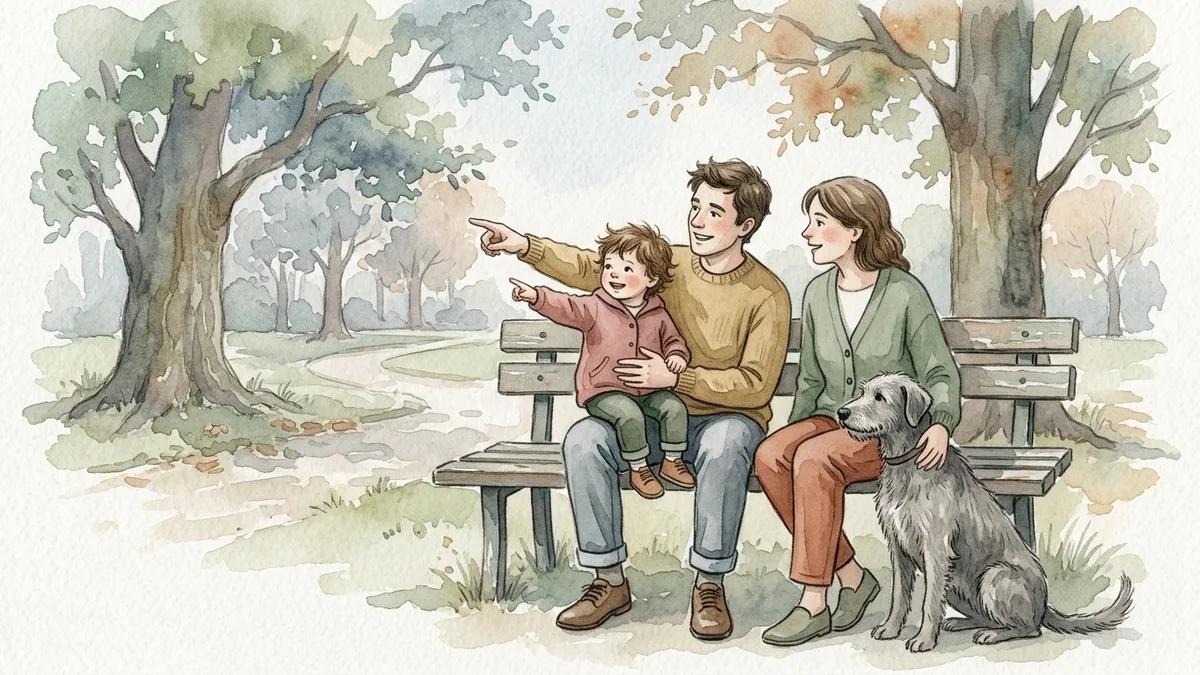
These work best as a routine, not a plan left on the shelf:
- Pick one tale this weekend — match it to your child's level (mostly familiar words, a handful of new ones) and commit to reading it three times over the next seven days.
- Set a fixed read-aloud window — same day, same time, fifteen minutes. A predictable slot is more reliable than good intentions alone.
- Ask one English question after the final page — just one. Let silence be comfortable. The habit of engaging in English is the lesson, not the accuracy of the answer your child gives.
Small, consistent steps accumulate faster than most parents expect — and english fairy tales for kids are one of the few learning routines children look forward to rather than resist.
A tutor can guide your child from enjoying tales to building real spoken confidence in English — and the first step costs nothing — book a trial lesson with LearnLink and see how one-on-one sessions can build on the reading habit you have already started at home.
Stay updated on our latest tips and resources by following us on Instagram LearnLink.